The African tech space is leading in the global digital revolution, with the largest youth population brimming with potential. This agile, young, and creative population is poised with problem-solving skills, motivation, and the ability to compete on a global scale
What This Means for Africa and The Tech Space
According to Statista, over 28 million jobs in Nigeria and 17 million in Kenya will require digital skills by 2030. The number of jobs requiring digital skills in Africa is expected to grow exponentially annually, with a high demand for skilled, vibrant, and motivated tech talent.
Africa is rightly positioned to take advantage of the current shortfall in the global tech workforce. This is due to a report from the World Economic Forum (WEF) in 2017, which stated that Sub-Saharan Africa is the world’s youngest region. By 2030, the continent’s working-age population is set to increase by two-thirds, from 370 million adults in 2010 to over 600 million in 2030.
Yet a significant gap persists between the skills available, access to work tools, opportunities, and demands of the rapidly evolving digital economy.
The Growing Problem
Sub-Saharan Africa has the world’s second-largest youth population after Asia. With more than 60% of its population under the age of 25, Sub-Saharan Africa is already the world’s youngest region today – and, by 2030 more than one-quarter of the world’s total under-25 population.
However, skilled professionals in the tech industry struggle to connect their skills to available opportunities. Many struggle with unreliable job postings and limited access to opportunities, such as a lack of data and a laptop, to help them on their career journey.
This is a far cry for a continent that currently has 13% of the world’s working-age population, which is set to increase rapidly to more than 17% by 2030.
A New Dawn for African Tech Professionals
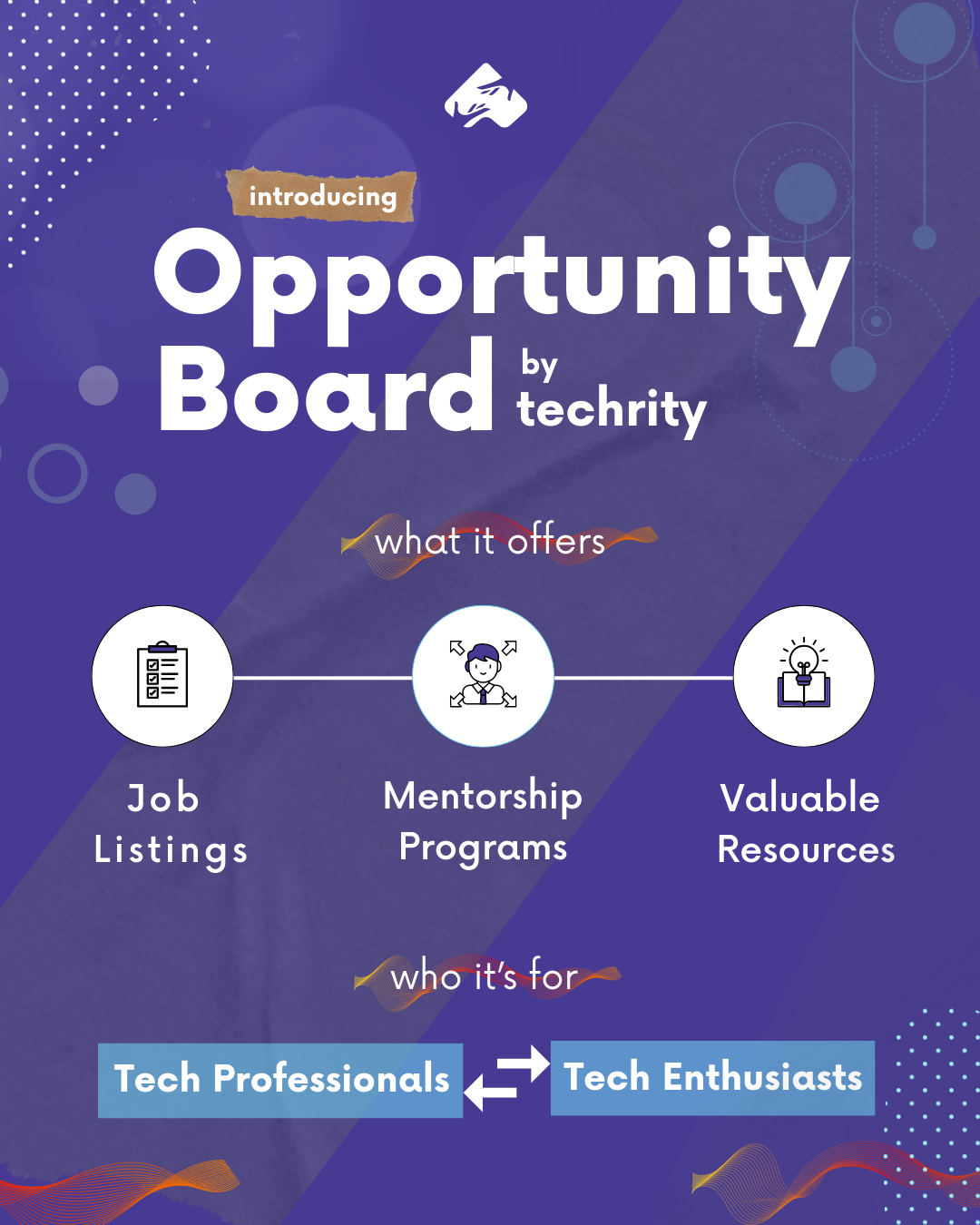
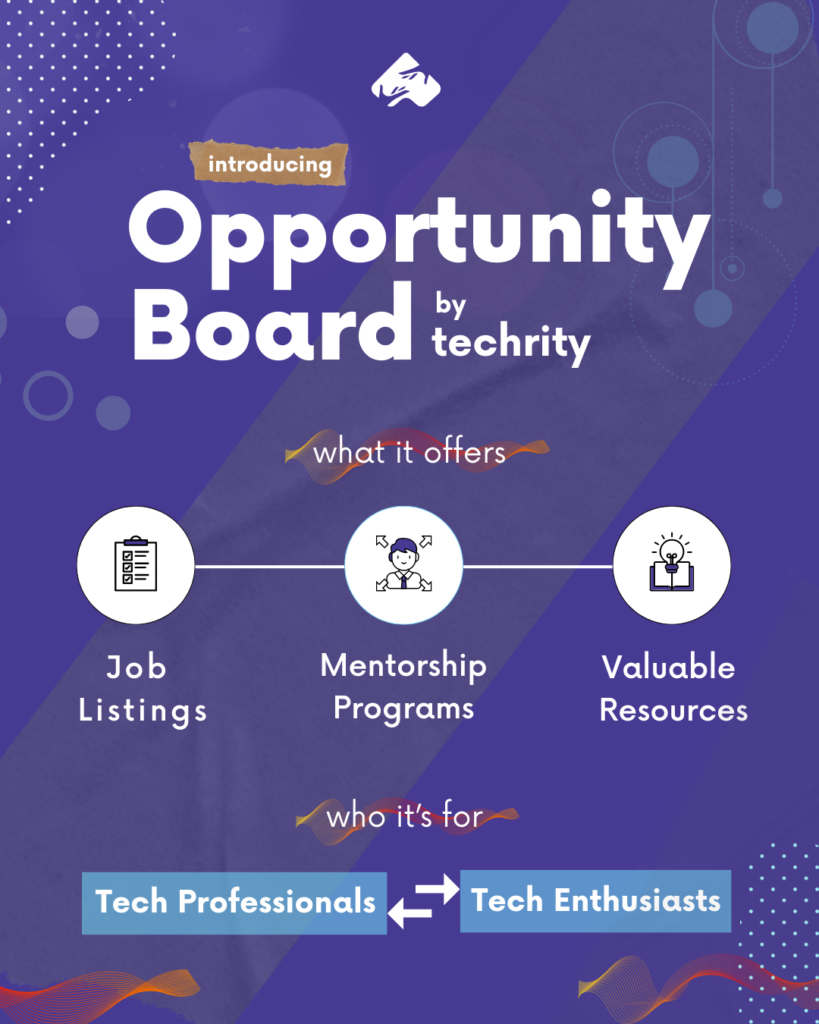
Techrity is stepping up to provide a bold and innovative solution; the Opportunity Board is a platform designed to connect aspiring African professionals with the resources and openings they need to amplify their hard work and talent.
The Opportunity Board will be more than just a job board; it is a home for techies like you and the next generation of professionals to gain access to everything they need to get a job, learn a new tech skill, get data support to enter the tech space, master a tech skill, and digital tools to aid their work.
Connecting Talents with Opportunities
At its core, the Opportunity Board is a vital link between African talent and the global marketplace. It curates a diverse range of opportunities, including:
Job Openings
The board features listings from companies across various tech sectors actively seeking African talent, from entry-level positions to senior management roles.
Internships
Recognizing the importance of practical experience, the platform highlights internship programs that allow students and recent graduates to gain valuable on-the-job training.
Mentorship and Training Programs
To address skills gaps, Techrity partners with leading technical professionals, educational institutions and tech companies to offer guided mentorship training programs, workshops, and certifications that equip individuals with in-demand skills.
Laptop and Data Support
Financial and connectivity constraints can often hinder further learning and training for tech enthusiasts in Africa. The Opportunities Board provides information on how to apply for unlimited access to laptops, grants, and data support from several organizations specifically targeted at African professionals.
Volunteer Opportunities
Get real-world experiences to master your skills with many listings and volunteer opportunities from credible tech companies. These opportunities allow individuals to give back to their communities and make a meaningful impact in the tech space.
Who is This Platform For?
Techies looking to compete globally from Africa
Motivated and enthusiastic tech talents that do not have access to data to continue learning and mastering a tech skill
African tech companies looking to hire the best tech talents in Africa
African tech talents looking to practice their skills in a reputable startup through an internship
African tech professionals looking for digital work tool support to enable them compete equally.
Empowering You for The Future You Deserve
Beyond simply listing opportunities, Techrity aims to empower individuals with all they need to make informed career decisions. The opportunity board also offers resources such as:
Career Guides
Providing insights into different tech roles, required skills, and career paths.
Salary Benchmarks
Helping individuals understand their market value and negotiate fair compensation.
Company Reviews
Offering insights into company culture and employee experiences
Conclusion
Techrity’s Opportunity Board is transforming tech hiring in Africa by addressing the core challenges faced by job seekers, tech enthusiasts and employers. The platform creates a more efficient and inclusive job market by connecting talents to unseen opportunities and facilitating global job access.
Whether you’re a tech professional seeking your next opportunity, need data support, workplace tools for productivity, or an employer looking for top-tier talent, Techrity’s Opportunity Board is the ideal solution.
It’s a platform to watch and that holds immense promise for unlocking the continent’s vast potential.
Software developers, programmers, designers, writers or testing professionals often face what we call mental blocks. These high levels of stress lead to decreased productivity and burnout as a result of constant switching between solving complex problems, tight deadlines, and juggling multiple tasks.
Mindfulness meditation can significantly improve mental well-being and productivity.
Mindfulness means paying attention to the present moment while acknowledging and accepting one’s thoughts and feelings without judgment. For developers, this practice can enhance focus during coding sessions, reduce stress during debugging, and improve overall problem-solving capabilities.
It helps you focus on your breath, bodily sensations, or surroundings while calmly acknowledging distractions and bringing attention back to the present. Mindfulness meditation is a powerful tool for software developers and tech professionals to maintain mental clarity and emotional balance.
What is Mindfulness?
Mindfulness means paying attention to the present moment while acknowledging and accepting one’s thoughts and feelings without judgment. For developers, this practice can enhance focus during coding sessions, reduce stress during debugging, and improve overall problem-solving capabilities. It helps you focus on your breath, bodily sensations, or surroundings while calmly acknowledging distractions and bringing attention back to the present.
Mindfulness meditation is a powerful tool for software developers and tech professionals to maintain mental clarity and emotional balance.
Why You Need to Meditate
According to several research reports, ample evidence validates the high impact of regular meditation practice on an individual. Meditation can increase gray matter in areas responsible for memory and learning, reduce mind-wandering activity, enhance error detection and bug-finding capabilities, and ultimately Improve focus during long coding or meeting sessions.
Proven Benefits of Meditation
Better Focus and Concentration
Meditation helps train the brain to maintain attention, reducing distractions and improving deep work sessions.
A calm and clear mind allows for better logic and decision-making in coding and troubleshooting.
Increased Creativity
Decluttering the mind, meditation fosters creative thinking and innovation.
Better Work-Life Balance
Mindfulness helps maintain a healthy separation between work and personal life.
Improved Collaboration
Being mindful enhances empathy and communication, making teamwork more effective.
These benefits directly translate to reduced stress, better code quality, increased productivity, and improved mental well-being.
Practical Mindfulness Exercises to Practice
To effectively integrate mindfulness into coding routines, developers can adopt several practical exercises:
Mindful Coding Sprints
Set a timer for 25 minutes to utilize the Pomodoro Technique. Before starting, take three deep breaths and set an intention for the session. After coding intensely for 25 minutes, take a 5-minute break to stretch or practice a quick mindfulness exercise.
Mindful Code Reviews
Approach code reviews with curiosity rather than judgment. Center yourself before starting the review process and focus on one line or block of code at a time.Breath Awareness: Before beginning work each day, spend a few minutes focusing solely on your breath. This simple practice helps clear mental clutter and prepares you for.
Code Block Meditation (5-10 minutes)
This practice helps maintain focus during intensive coding sessions:
What to do:
Sit comfortably at your desk
Take three deep breaths
Open your code editor
Focus on a single block of code
Read each line slowly, observing without making changes
Notice thoughts about “improving” or “fixing” the code
Let these thoughts pass without acting on them
Return focus to simply observing the code
This practice helps develop the ability to observe code objectively before making changes, leading to better architectural decisions.
Debug Breath (1-2 minutes)
Use this technique when feeling frustrated during debugging:
What to do:
Stop typing
Place your hands on your desk
Take five slow breaths, on each inhale, acknowledge the bug’s complexity, on each exhale, release the urge to solve it immediately
Return to debugging with renewed patience
Recommended Resources to Help You Practice Meditation
Books
Here are 11 go-to books to help you practice meditation and mindfulness:
A practical guide to mindfulness, this book teaches you how to be fully present in your daily life. Through simple meditation practices, it helps you slow down, reduce stress, and find peace in the moment.
This book explores the impact of digital overload and offers strategies to reclaim focus and happiness. Newport encourages intentional tech use, helping you disconnect from distractions and live more meaningfully.
A timeless classic on mindfulness, this book introduces meditation as a way to bring peace into everyday tasks. Whether washing dishes or walking, Hanh teaches how to be present in everything you do.
This quick read offers simple, 10-minute mindfulness exercises to reduce stress and boost well-being. It’s perfect for anyone looking to start a mindfulness practice without feeling overwhelmed.
Designed for families and educators, this book teaches mindfulness to children through fun activities. It helps kids (and adults) develop kindness, focus, and emotional resilience.
Osho offers a practical approach to meditation for modern, hectic lives. It offers easy techniques that fit into daily routines, helping you find calm without needing hours of stillness.
A deep dive into Transcendental Meditation, this book explains how meditation can unlock human potential, reduce stress, and create a happier, more fulfilling life.
This book blends mindfulness with modern science. It shows how to live in the present moment despite life’s distractions and offers practical tools to reduce stress and boost well-being.
A beautifully written guide on slowing down and appreciating life. Through short reflections, Sunim shares wisdom on love, work, and mindfulness in a fast-paced world.
A science-backed guide to using mindfulness for mental health and well-being. It provides practical exercises to manage stress, anxiety, and daily challenges.
This book uncovers the Japanese secret to a long and happy life: finding your purpose (Ikigai). It blends philosophy, science, and real-life examples to help you live passionately and meaningfully.
Mindfulness serves as an invaluable tool to regain control of your mind and calmness; the way we work and live is being challenged every day as the need to maintain work life balance continues to grow at a rapid pace; your ability to embrace these practices will not only support your performance as a developer or tech professional but also contributes to healthier ways of life, relationships with people, and positive moods to tap into productivity.
In today’s competitive job market, having a strong personal brand is essential for standing out, gaining credibility, and attracting new opportunities. This is especially true for tech professionals, where innovation, skill-sets, and the ability to solve real-world problems can be game-changers. Establishing a compelling personal brand can catapult your career to new heights, whether you’re a software developer, data analyst, product manager, or cybersecurity expert.
In this article, we will be looking at the details of building an attractive personal brand online. We will provide detailed strategies, case studies, and actionable steps to help you position yourself as a go-to expert in your field.
1. Understanding Personal Branding in 2025
What is Personal Branding?
Personal branding encompasses how you present your professional identity, both in the offline and online world. For tech professionals, this means highlighting your technical skills, problem-solving abilities, and personal values. It also involves showcasing your personality, work ethic, and vision. A well-established personal brand helps you connect with your target audience, employers, clients, or peers.
Why is Personal Branding Important?
i. Career Growth
In 2025, recruiters and hiring managers often review your online presence before considering your resume. A strong personal brand increases your chances of being found and recognized for opportunities that match your skill set. For instance, tech professionals who have made a name for themselves by consistently sharing knowledge and showing off their skills on platforms like LinkedIn or GitHub have potentials of attracting job opportunities.
ii. Networking
In tech, networking isn’t just about attending events and building relationships online. A powerful personal brand allows you to network effortlessly with like-minded people in your field.
Networking and meeting other professionals in your field exposes you to various opportunities.
iii. Influence and Authority
Tech professionals who consistently share valuable insights and content are perceived as thought leaders. Your expertise in a niche area can be recognized, allowing you to become an authority in your field. This is a significant advantage when it comes to personal branding.
iv. Opportunities
Having a personal brand can open doors to high-profile speaking engagements, collaborations with industry leaders, and opportunities for brand partnerships. Furthermore, a solid brand helps with business development, attracting potential clients or employers looking for your expertise.
Monetization
A personal brand also provides an avenue for monetizing your knowledge. Whether through content creation on YouTube, selling an online course, or consulting, your brand is the foundation for these income-generating opportunities.
2. Defining Your Unique Value Proposition (UVP)
What is a UVP?
Your Unique Value Proposition (UVP) is essentially the thing that makes you stand out from the crowd. Having a clear UVP helps you communicate your strengths effectively in a world filled with tech professionals. It’s what will help you attract the right audience—whether employers, clients, or peers.
How to Define Your UVP
i. Identify What Sets You Apart
Think about the skills, experiences, and values that distinguish you from others. Are you a developer who specializes in AI-driven applications? Are you a cybersecurity expert passionate about ethical hacking? Your UVP needs to highlight this uniqueness. Write down the things that make you different from others in your field. This could be technical skills, personal passions, or a unique problem-solving perspective.
ii. Focus on Solving Problems
A powerful UVP solves a problem. Ask yourself: “What problems do I help others solve with my skills?” Maybe you help startups optimize their data infrastructure or offer affordable, high-quality web development services for small businesses.
Example: A data analyst focusing on turning raw data into actionable insights for small businesses could define their UVP as “Helping small businesses make data-driven decisions with affordable, user-friendly solutions.”
iii. Your Mission
Your mission also drives your UVP. What is your greater purpose in the tech space? Are you focused on accessibility in tech? On solving a particular societal issue through technology? Your mission becomes your UVP’s foundation and should resonate with your target audience.
Actionable Tip: Write a mission statement that reflects your purpose in tech and tie it to your UVP. This mission statement can evolve but helps you maintain focus as your brand grows.
3. Optimizing Your Online Presence
Image Credit: Freepik.com
A. Crafting a Professional LinkedIn Profile
LinkedIn remains the one of the most powerful tool for professional networking in the tech world. To build a compelling personal brand, your LinkedIn profile must reflect your UVP and engage visitors immediately.
i. Profile Photo
Your profile photo is the first thing people see, so make it count. A high-quality, professional head-shot creates an impression of competence and seriousness. Avoid using casual pictures or selfies.
ii. Headline
Your LinkedIn headline is critical. Rather than just stating your job title, make it compelling by explaining what you do and how you create value.
Example: “Data Scientist | Empowering businesses with AI-driven solutions” or “Cybersecurity Specialist | Protecting organizations from evolving cyber threats.”
iii. Summary
The summary section is your opportunity to tell your story. Explain who you are, what you do, and why you do it. Use storytelling to make it engaging; this section is often the first one potential employers or clients read.
Example: “I’m a passionate data scientist who thrives on solving complex problems with innovative AI solutions. With over 5 years of experience working with Fortune 500 companies, I help businesses turn data into actionable insights that drive growth.”
iv. Experience and Skills
Your experience and skills should directly reflect your UVP. Showcase your most relevant work experience, achievements, and the projects that best demonstrate your capabilities.
Tip: Don’t just list your roles—talk about specific accomplishments. For example, if your SEO strategy increased website traffic by 30%, make sure that’s mentioned!
v. Engagement
Engage with others’ posts by commenting on trends, sharing your thoughts, or providing value through your posts. This boosts visibility and reinforces your expertise.
B. Creating a Personal Website or Portfolio
Image Credit:Freepik.com
A personal website or portfolio is essential for showcasing your work. It’s more than just a digital resume; it’s a space to display your achievements, thought leadership, and unique perspective.
i. About Page
The About page should introduce you to your visitors. Who are you, what do you do, and why are you passionate about it? This is where your personal story matters—let it shine!
ii. Blog Section
A blog section is a powerful way to share your thoughts and experiences. You can write about current trends, new technologies, or personal lessons you’ve learned in your career. Regularly posting to your blog boosts SEO, keeps your audience engaged, and positions you as an authority in your field.
iii. Portfolio Page
Your portfolio should showcase your best work, including case studies, code samples, or product designs. It’s essential to demonstrate your abilities rather than just talking about them.
iv. Contact Page
Make it easy for people to contact you for opportunities, collaborations, or advice. A contact form, email address, or even links to your social media profiles are essential.
C. Optimizing Your Twitter/X and Other Social Media
While LinkedIn is professional, Twitter (now X) allows you to engage with a broader tech community. Many tech thought leaders and industry experts have built their brands mainly on Twitter.
D. Share Valuable Content
Share your thoughts, experiences, and insights into the tech industry on Twitter. It is an excellent platform to discuss emerging trends, tools, and topics that excite you.
E. Engage with Industry Leaders
By commenting on and retweeting the content of industry leaders, you can catch the attention of others in your space. Engaging with key influencers can open doors to collaborative opportunities.
F.Use Relevant Hashtags
Hashtags like #AI, #DataScience, #DevOps, and #TechTips allow your content to reach a broader audience interested in your niche.
4. Content Creation: The Key to Thought Leadership
Image Credit: Freepik.com
Creating and sharing valuable content positions you as a thought leader and establishes your authority, allowing you to connect deeply with your audience.
A. Blogging
Writing blog posts on platforms like Medium and Dev.to, or your website can help showcase your knowledge and establish authority in your field. Topics can range from tutorials to industry insights.
B. Video Content
YouTube is an excellent platform for tutorials, sharing how you were able to solve various problems with your code, and product demos. You can also create shorter videos for platforms like TikTok or Instagram.
C. Open Source Contributions and GitHub Projects
Contributing to open-source projects on GitHub shows practical proof of your skills. It also helps you build connections with other developers and demonstrates your commitment to the community.
D. Podcasts and Webinars
Starting a podcast or hosting a webinar allows you to share knowledge, interact with other thought leaders, and engage with a broader audience.
E. Writing an E-book or Online Course
Creating an e-book or online course can significantly amplify your brand. Platforms like Udemy and Teachable provide the tools to monetize your knowledge while further establishing your authority in your field.
6. Networking and Community Engagement
Networking is a crucial component of building your brand. It’s not just about meeting new people; it’s about cultivating meaningful relationships with individuals with similar professional interests. Networking helps you to stay informed, receive support, and create collaborative opportunities.
Image Credit: Freepik.com
7. Personal Branding Strategies for Tech Professionals
A. Continuous Learning and Skill Development
A strong personal brand requires constant improvement. Technology evolves quickly, and staying up-to-date with the latest trends and acquiring new skills is essential.
i. Upskilling and Certifications
As technology rapidly evolves, staying relevant means learning new skills. Platforms like Coursera, Udemy, and edX offer certifications in various tech fields, including AI, machine learning, cloud computing, and cybersecurity. Obtaining certifications helps improve your knowledge and adds to your credibility.
ii. Attending Events
In addition to formal courses, attending events like Tech for Good and Hack for Good, is another great way to stay ahead of the curve. These events often provide insights into the latest technologies, tools, and frameworks shaping the tech industry.
B. Creating a Strong Online Presence with Consistency
Having an online presence is crucial, but consistency is key. Regularly posting valuable content on platforms like LinkedIn, Twitter, or personal blogs is essential for reinforcing your brand.
i. Consistency in Content Creation
Whether you post about industry news, share tutorials, or write blogs, your content should align with your expertise. Consistent posting increases your visibility and demonstrates your commitment to your niche.
ii. Branding Your Online Presence
All your online profiles—whether on LinkedIn, Twitter, or personal websites—should be cohesive and reflect your UVP. This includes your professional profile photos, bios, and content themes.
C. Leveraging Analytics and Feedback
Understanding how your audience engages with your content allows you to refine your personal branding strategy.
i. Monitor Engagement Metrics
Using analytics tools like Google Analytics for your website, or LinkedIn and Twitter insights for social platforms, helps you track how your content is performing. Are people engaging with your posts? Are they commenting or sharing?
ii. Gathering Feedback
Don’t be afraid to ask your network for feedback. This could be through surveys, informal conversations, or feedback on your blog posts. Feedback helps you understand how your brand is perceived and where you can improve.
8. Measuring and Adjusting Your Personal Brand
A. Setting Personal Branding Goals
Like any professional endeavor, personal branding requires goals. Without clear goals, it’s easy to become lost in the noise.
Short-Term Goals
Short-term goals could include tasks like optimizing your LinkedIn profile, writing a blog post, or getting more involved in online communities. Set clear deadlines for these tasks to ensure steady progress.
Long-Term Goals
Long-term goals might involve becoming a recognized thought leader in a specific area of tech, publishing a book, or landing speaking engagements at top tech conferences.
Tip: Write down your goals and revisit them regularly to track your progress. It will help keep you motivated and focused.
Conclusion: The Power of Personal Branding
Personal branding is no longer optional; it’s a necessity, especially in the ever-evolving world of technology. By understanding your unique value proposition, optimizing your online presence, creating valuable content, networking, and constantly improving your skills, you can build a powerful personal brand that will open doors to new opportunities, collaborations, and career growth.
The key is consistency, authenticity, and dedication. Personal branding is a continuous process, and as long as you remain engaged with your community, stay committed to learning, and build meaningful relationships, your brand will continue to grow and thrive.
Nigeria’s tech sector is on an exciting journey of rapid growth, playing a key role in contributing about 20% to the country’s economic progress. With the government’s inspiring 3 Million Technical Talent Programme, the goal is to empower three million individuals with training by 2027, greatly enhancing our industry’s talent pool.
In addition to governmental efforts, more people are getting remote work for local and international clients and companies. Preparing for your dream job in 2025 can be an exciting journey, and strategic interview preparation is key!
This guide is packed with friendly tips and valuable insights specially designed for tech professionals of all levels. Together, let’s navigate the changing interview landscape with confidence and ease!
The first step towards positioning yourself as a top candidate is being adaptable. Whether you’re looking for remote work, on-site, or hybrid, you need to be adaptable to the demands and needs of your industry.
Employers highly value professionals who swiftly adjust to new technologies and methodologies. Demonstrating a history of embracing change and learning new skills can set you apart.
Having soft skills in 2025 is another way to be adaptable. Beyond technical expertise, qualities such as effective communication, teamwork, and problem-solving are important. Employers seek individuals who collaborate seamlessly and contribute to a positive work environment.
Our Tip: Try to conduct thorough research on your prospective employers. Understand their technological frameworks, organizational culture, and some recent projects or achievements. That way, you can tailor your application and interview responses to align with the company’s specific vision and demonstrate genuine interest and initiative.
2. Master the Basics: Building a Strong Foundation
Sometimes, we find ourselves rushing to learn complex concepts and overlook the importance of the basics. It’s truly essential for everyone, whether you’re just starting out or already have experience, to have a solid understanding of these fundamental ideas.
If you’re a beginner, focus on understanding data structures (like arrays, linked lists, trees, and graphs) and algorithms (such as sorting and searching techniques). Engage in regular coding exercises to enhance problem-solving skills. Platforms like Khan Academy, freeCodeCamp, and even YouTube, offer a plethora of problems tailored for beginners.
For experts, be prepared to discuss your significant projects in detail. Highlight the challenges encountered, the solutions implemented, and the impact of your work. This showcases your depth of experience and problem-solving abilities.
Explore complex areas such as system architecture, scalability issues, and performance optimization. Demonstrating expertise in these select areas can separate you from other candidates.
Our Tip: Regularly participate in coding challenges and hackathons. These not only sharpen your skills but also provide practical experience in problem-solving under time constraints.
3. Ace the Behavioral Interview
In 2024, behavioral interviews became a standard recruitment practice, and they will remain essential in 2025. These interviews aim to evaluate how you have managed different situations in the past.
The picture that hiring managers get from your response will provide them with an insight into your future performance. To ace the behavioral interview, think of the highly effective STAR technique (Situation, Task, Action, Result) when answering your questions.
Our Tip: Reflect on your past experiences and identify key moments that highlight your skills and growth. Practice articulating these stories concisely, focusing on your specific contributions and the outcomes achieved.
4. Technical Interviews: Go Beyond the Code
In 2025, technical interviews will have evolved beyond the traditional sense of what job candidates were used to in 2024 to assess a broader range of competencies beyond mere coding.
There has always been a clamor for real-world problem-solving. Instead of generic technical interview questions, expect scenario-based questions that require you to devise solutions to complex, real-world challenges in the world you see and interact with daily. This tests your ability to apply theoretical knowledge practically.
While artificial intelligence and machine learning may not be directly related to the role you are applying to, understanding their basics can be beneficial. Familiarity with concepts like neural networks, supervised vs. unsupervised learning, and common algorithms can give you an edge.
Additionally, interviews for senior positions will emphasize creating scalable and efficient systems. It’s a great opportunity to showcase your understanding of system components, and data flow, and share how you would tackle potential bottlenecks!
Our Tips:
Use Coding Platforms like LeetCode, HackerRank, and AlgoExpert to practice coding problems. Also, consider system design resources and books that offer deep insights into building robust systems.
Enroll in introductory courses on platforms like Coursera or Udemy to build a foundational understanding. Finally, mock interviews with peers or mentors also help to simulate the interview environment. This practice can help reduce anxiety and improve your delivery during actual interviews.
The prevalence of remote work has made virtual interviews a standard part of the hiring process. Nowadays people wear sweatpants under their very formal shirt and tie to seal 6 figure job interviews in their bedroom.
There is a high need to make a good impression and your technical setup is one way. Ensure your internet connection is stable, and your webcam and microphone are functioning correctly. Always test your setup before the interview to avoid technical glitches.
Our Tip: Keep your interview environment as professional as possible. Pick out a quiet, well-lit space free from distractions. A neutral background minimizes potential distractions and keeps the focus on you. As always, maintain eye contact by looking at the camera, using appropriate gestures, and nodding.
Conclusion
2025 is all about making conscious efforts that bring you closer to your dream tech job and understanding the hiring landscape. Industry experts expect rapid advancements and changes in employer expectations.
Remember, interviewers often look for foundational knowledge to make sure candidates can confidently tackle core responsibilities. Look out for resources and tips from the Techrity blog as we update our community with goodies from time to time.
What are the most common technical questions asked in 2025?
Questions often revolve around algorithms, data structures, and system design. For example, you might be asked to optimize a large-scale search engine query.
How should I prepare for AI-related interview questions?
Start by understanding basic AI concepts like neural networks and machine learning models. Use beginner-friendly courses on platforms like edX or Coursera.
What should I focus on as a beginner in tech?
Build a strong foundation in coding and problem-solving. Highlight any projects, internships, or certifications to showcase your skills.
How do I negotiate salary after an offer?
Research market trends using platforms like Payscale or Levels.fyi. Clearly articulate your value, and don’t hesitate to counteroffer professionally.
How can I handle rejection after an interview?
Seek constructive feedback, analyze areas of improvement, and focus on upskilling. Rejection is part of the process so use it as a learning opportunity.