Categories
General Kickstart Mentorship News Social Tech Uncategorized

Empowering a Continent: Five Years of Techrity Championing “Tech for Good” in Africa.

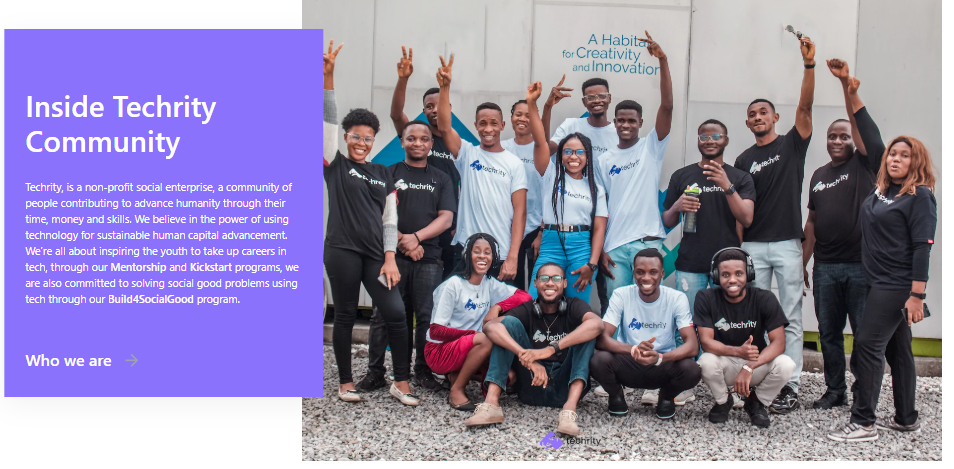
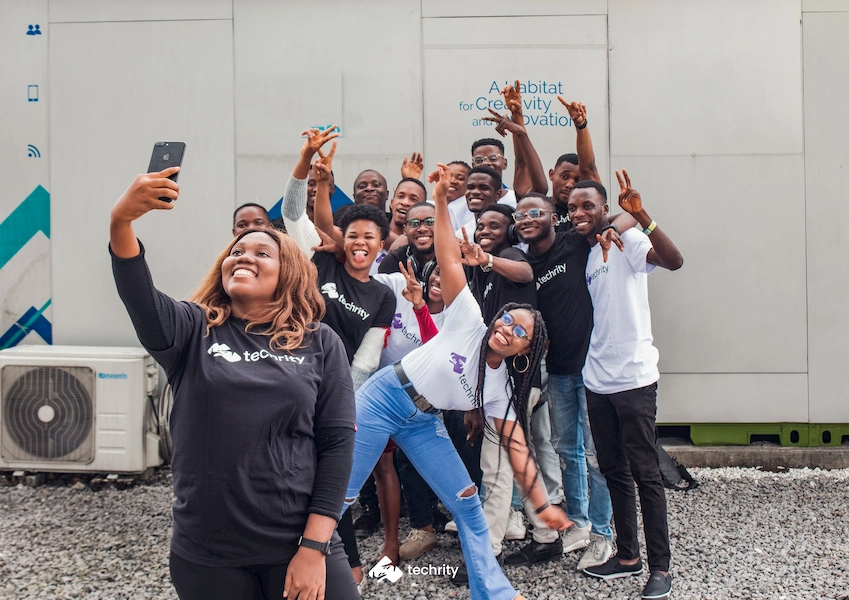
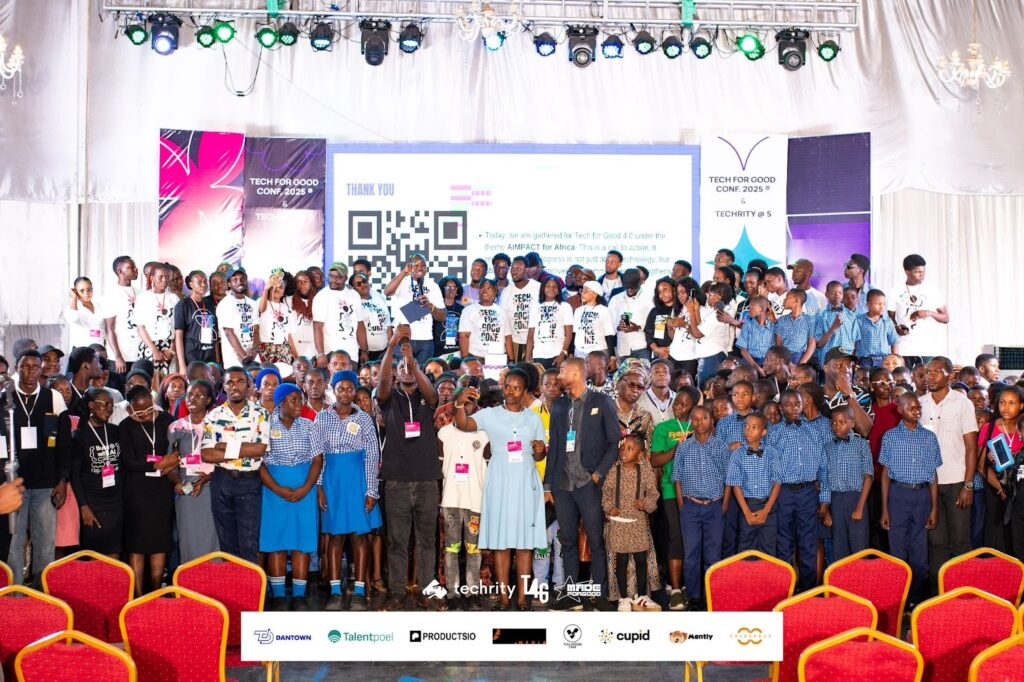
For half a decade, the Techrity Innovation Foundation has been on a steadfast mission to transform Africa’s digital landscape. What began in December 2020 has evolved into a continental movement dedicated to bridging the digital divide. On October 25, 2025, Techrity marked its 5th Anniversary by celebrating this journey of empowerment at the fourth edition of its flagship conference, themed AIMPACT Africa, held in Port Harcourt.

The milestone event brought together over 500 innovators, entrepreneurs, and educators to explore how Artificial Intelligence (AI) and emerging technologies can drive inclusion, digital literacy, and sustainable development across the continent.

Grassroots Impact: The Road to Tech for Good

Techrity’s commitment to “Empowering a Continent” begins in the classroom. Leading up to the anniversary conference, the team embarked on the “Road to Tech for Good” outreach, visiting Rumuokuta Girls Secondary School and Community Secondary School. The mission was to inspire young students to view technology not just as a subject, but as a critical tool for shaping their futures and solving real-world problems.

To solidify this commitment to early access, Techrity sponsored 120 students from public and private secondary schools across Rivers State to attend the conference. A powerful highlight of their participation was the emergence of Emmanuel Amaechi, an SS1 student from Christ Army Educational School, as the winner of the interschool Q&A session. He received a ₦50,000 cash prize and a full Tech Scholarship from Mr. Chinoso Chijoke, Founder of Cupid Technologies.

Key Takeaways: The Moments and Highlights That Shaped the Conference

Opening the conference, Islamiat Arinola Oseni, Senior Project Officer at Techrity, described Tech for Good as “more than an event, it is a movement to leverage technology for empowerment, community growth, and social impact.” She highlighted Techrity’s commitment to bridging the digital divide through mentorship, capacity building, and inclusion-focused initiatives.

Delivering the 5th anniversary speech and  Impact story, Techrity’s Founder and Team Lead, Mrs Owanate Amachree, reflected on the foundation’s growth since its establishment in 2020. She said Techrity has evolved into “a pan-African force for social innovation and digital empowerment,” citing initiatives such as Hack for Good, the Techrity Mentorship Program, the Kickstart Initiative, and the Laptop Support Scholarship. “Technology has the power to redefine Africa’s growth narrative. At Techrity, we are building an ecosystem that enables learning, innovation, and impact,” she said.

The Keynote Sessions offered thought-provoking insights into the transformative power of technology in shaping Africa’s digital future. Mr Kenneth Nwokoro opened with “Building an Inclusive Digital Economy: Empowering Communities and Closing the Digital Divide,” emphasising the need for equitable access to technology and digital opportunities across all communities. Chimene Chinah followed with “AI for Inclusive Growth: Harnessing Artificial Intelligence to Drive Africa’s Transformation,” exploring how artificial intelligence can catalyse sustainable development and inclusive progress across the continent.

The Guest Speakers further enriched the discussions with practical perspectives on innovation and empowerment. Mrs Amarachi Stanley-Duru delivered a compelling session on “Shaping Africa’s Workforce for the Future: Embracing Digital Transformation and Skills Development,” highlighting the importance of upskilling and adaptability in a rapidly evolving world. Mrs Karla Obakpolor rounded off the segment with “Building for Social Good: Scaling Innovation and Creating Impact,” emphasising the role of purpose-driven innovation in driving meaningful change across Africa.

The Speaker Session featured Harmony Elendu, who delivered an insightful presentation titled “People Behind Models: How AI is Elevating Careers and Skills Expansion.” Her talk shed light on the human side of artificial intelligence, exploring how AI is transforming industries and empowering individuals to build new skills, enhance their careers, and thrive in the digital age.

The conference also featured engaging panel sessions, lightning talks and a fireside chat that explored innovation, inclusion, and Africa’s digital future. The first Panel Session focused on the topic, From Learner to Leader: Forging a Resilient Tech Talent Pipeline through Ecosystem Collaboration hosted by Bliss Isioma Ajie (HR/Operations Manager, Mently) and the Panelists were Richard Pepple (Founder, Technoville) and Shammah Nei (Director, Engineering Philanthrolab), The second Panel session focused on Navigating The New Financial Frontier: Regulation, Innovation and The Future of Crypto in Nigeria hosted Mr Godwin Jimmy (CTO, Dantown HQ) and the panelists were Godfrey Kelechukwu (Founder, Boardroom), Favourite Henry (Product Marketing Manager), Chininso Chijioke (Founder, Cupid Technologies), The Third Panel session focused on the topic, The Global Talent Playbook: Unlocking Remote Opportunities and Building a Competitive African Workforce, was moderated by Fano Oyin Jessica, Techrity’s Chief Administrative Officer. Panellists included Lloyd Otu, Co-Founder of TalentPoel, and Newton Adiari Newton, Product Manager at Cre8Space Africa, shared insights on remote work, digital tools, and how African youths can compete in a borderless economy.

The fireside chat with Julian Duru (ex Moniepoint engineer and now an independent researcher) hosted by Daniel Obiyo (Founder, Quint Impact Initiative), offered an inspiring story of resilience and leadership, as he discussed personal experiences and lessons from Africa’s evolving innovation space.

The Lightning Talk Breakout Sessions featured a series of simultaneous, high-energy presentations where speakers shared unique insights on technology, creativity, and artificial intelligence. Chibuzo Madumere explored “From Curiosity to Code: How AI and Creativity Empower Tech Beginners,” emphasising how innovation often begins with curiosity. Opuine Kayode Fowora presented “AI for Differentiated Instruction & Inclusivity: A Teacher’s Perspective on Empowering Every Learner with AI,” shedding light on AI’s role in inclusive education. Yves Kwameh V. delivered “Beginner Skills You’ll Need Before the Boots Take Your Briefs,” a dynamic talk on essential skills for those starting their tech journey. Numbere Tehila Tamunobakam discussed “Agentic AI and Liability: Who Bears the Burden When Mishaps Occur?” examining accountability in the age of intelligent systems. Meanwhile, Precious Sunday inspired attendees with “Unlocking the Future: Navigating Tech’s Uncharted Territory,” encouraging bold exploration of technology’s evolving landscape.

A key highlight of the event was the official launch of Made for Good, presented by Peculiar Akinloye, Techrity’s Operations Manager. Made for Good is a purpose-driven brand that embodies the spirit of paying it forward using proceeds from its merchandise and initiatives to support causes such as providing laptops, internet data, and digital tools for young Africans. The initiative also connects startups, organisations, and innovators working on technology-driven impact projects across the continent. According to Akinloye, the platform aims to “promote partnerships, shared learning, and scalable innovation for development.

In addition, there was the Techrity Laptop Support Scholarship presentation. This initiative equips young Nigerians with laptops, internet access, and mentorship to enhance their digital skills and create career growth opportunities. Following a transparent selection process guided by passion, need, and commitment to social good, 11 (eleven) young Nigerians were awarded laptops, data support, and mentorship to boost their digital careers at the conference. Among these beneficiaries were Ikordeme Confidence Barikui, Onaeko Emmanuel Oladipupo, Ozuru Irenma Pearl, Ozuru Olanma Jewel, Philomena Nkereuwem Nyah, Iyke Victor Chidera, Winner Osinachi Offor, Elekwachi Zion Chibuchi, Emeka Victor Chigozie, Okonkwo Ckaima Peniel, and Ebubechukwu Osy-Uzoekwe. “We believe in using technology to transform lives, one person and one community at a time,” Oseni said.

Another major highlight of the day was the Techrity Social Impact Awards, which honours individuals and organisations using technology to drive mentorship, digital inclusion and social good. The award recipients included Renaissance Innovation Labs (Tech Community Partner of the Year), Kenneth Nwokoro ( Social Impact Award (Mentorship), Stakeholders Democracy Network (Social Impact Award – Tech for Gender Equality), Bright Chinenyeze (Social Impact Award (Digital Inclusion Advocate), Richard Sodienye Pepple (Social Impact Award – Mentorship), and Richard Tamunotonye (Social Impact Award – Mentorship).

A Five-Year Legacy and a Call to the Future

In just five years, Techrity has grown into a global community of 886 innovators with over 12,000 digital followers across Nigeria, Kenya, India, Botswana, Ghana, Rwanda, and Uganda. Through initiatives like the Kickstart Initiative, which has provided 35 laptops and ₦5 million in data support, and a mentorship program engaging over 100 participants, Techrity is actively nurturing Africa’s next wave of tech talents.

The success of the 5th anniversary celebration was bolstered by several partners, including Dantown (Key donor and partner for the Laptop Support Scholarship), Productsio, TalentPoel, Cre8Space, Artful Media, Cupid Technologies, Volunteers Crib, Mently, and Made for Good.

In her closing remarks, Owanate Amachree thanked all partners, speakers, and volunteers for their contributions, noting that “the true impact of Techrity lies not only in its social impact programs but in the lives we transform.” She reaffirmed the foundation’s goal to continue empowering Africans through technology, mentorship, and innovation — inspiring, coaching, and building for social good.

As part of its five-year milestone, Techrity is extending an open call to corporate partners, development organisations, startups, and philanthropists to collaborate in building the future of young Africans through mentorship, digital education, and social impact programs designed to bridge gaps in unemployment, inclusion, and opportunity across Africa. 

Let us drive this mission together by equipping young people with laptops, internet access, and digital skills, fostering innovation through SDG-focused hackathons and mentorship programs, and promoting inclusion and gender equality through technology-driven education.

Organisations and individuals interested in partnering can reach out via hello@techrity.org or visit www.techrity.org to learn more.

Categories
Mentorship Tech Techrity Programmes Uncategorized

From Cobbler Dreams to Tech Innovation: Stella’s Journey of Impact with Techrity Mentorship Program 

Introduction

When you think about a cobbler, what comes to mind?

Maybe an old workshop, the scent of leather, and someone hammering away on a sole.

For Stella, becoming a cobbler wasn’t just a fleeting childhood dream. It never sounded demeaning because it was an unusual and deeply personal ambition.

While her peers imagined hanging stethoscopes around their necks or being seen in courtrooms and called “the law”, Stella was sketching shoe designs and pulling apart worn-out sandals to see how they were made. It was raw curiosity and creativity in its purest form.

But life, as it often does, had other plans for her.

The Tech Path That She Never Had in Sight

Francis Odeyemi via Unsplash

Years later, Stella found herself studying computer science at university. It was a prestigious degree by most standards, future-proof, globally relevant, and full of possibilities. But for Stella, it didn’t feel like a calling. While she passed her courses and learned to write code, there was a lingering question that never left her: what exactly do I want to build?

She knew she was creative. She knew she liked working with her hands. She even liked tech a bit. But she hadn’t yet figured out how all these passions could intersect.

That’s when the Techrity’s Mentorship Programme came into the picture.

Finding Clarity and Her Calling Through Community

Stella joined the programme, unsure of what to expect. What she found was a structured yet warm environment, mentors who listened, peers who were on similar paths of discovery, and sessions that focused not just on skills but also on purpose.

Stella took her time immersing herself in the mud of the program, but it wasn’t long before Stella began connecting the dots to her lightbulb moment.

What if she could combine her childhood love for shoemaking with her knowledge of technology? What if she could create something truly African, handcrafted but scalable, an innovative brand that bridges tradition and tech?

These bubbling questions became the seeds of a powerful idea:

A home-made leather shoe brand with a tech-driven twist.

Today, Stella is not just building shoes; she’s building a tech brand. A sustainable business that uses tech to improve production, reach more customers, and tell a unique story of African tech talents.

And it all began with clarity, the kind of clarity that can only come from having the proper support, structure, and mentorship.

The Bigger Picture: Techrity’s Mission

Stella’s story is inspiring, but it’s not rare.

At Techrity, we’ve seen countless young Africans grappling with purpose, creativity, and a desire to build something meaningful. Often, all they need is a spark, a guiding hand, a community, a structured programme that helps them align their skills with their dreams.

We created our Mentorship Programme for exactly this reason. And the results? They speak for themselves.

From fashion tech to fintech, from storytelling to software, our mentees are launching startups, building solutions, and rewriting the narrative of what’s possible for the African youth.

Be a Witness: Join the Techrity Impact Series

If Stella’s story moved you, you’re not alone. That’s why we created the Techrity Impact Series, an Instagram live storytelling experience that showcases the journeys of real people whose lives have been transformed by mentorship, tech, and community.

Hear their voices. Learn from their journeys. Be part of the impact.

Whether you’re a student, a builder, a dreamer, or someone searching for direction, these stories might just spark something in you, too.

Hear Stella’s full story here 

We are featuring others just like her to share their inspiring stories because every impact begins with a moment of clarity. And that moment could start here for you, too.

Don’t miss the next session of our Impact Series on 1st August 2025

I am in right away.

Categories
Uncategorized

The Rise of New Jobs: 10 Careers That Will Thrive by 2030

Introduction

Rapid technological advancements, climate change, and evolving societal needs are shaping the future of work globally. By 2030, the job market will look vastly different, with roles that seems exciting.

From designing and communicating through the virtual worlds to auditing AI systems and navigating the decentralized economy, future careers will require a unique mix of technical expertise, creativity, and adaptability.

In this article, we’ll explore some of the most intriguing and unexpected jobs that will emerge by 2030 due to advancements in artificial intelligence, machine learning, data analysis and other emerging technologies.

10 Job roles that will trend by 2030

1. AI and Machine Learning Specialists

Artificial intelligence is becoming increasingly sophisticated, intelligent systems that perform tasks on behalf of humans will play an important role in the workforce.

AI/machine learning specialists design and develop AI models to automate processes and solve complex problems. They use machine learning concepts to optimize data processing and create predictive models.

What they’ll do:

  • Designing and validating AI models.
  • Extracting insights using AI tools.
  • Fine-tune AI systems to improve accuracy and efficiency.
  • Working with teams to integrate AI solutions.
  • Develop and train AI systems to automate processes, analyze data and improve decision-making.

This will be a key role because their work will efficiently revolutionize industries by leveraging AI to enhance efficiency and decision-making across industries. automating repetitive tasks, and enabling humans to focus on higher-value work.

Opportunities will be open in several companies, such as OpenAI, Google (DeepMind), Microsoft, Facebook (Meta) and Apple.

2. Prompt Engineers

As AI language models like ChatGPT become more sophisticated, prompt engineers will specialize in crafting adequate inputs to optimize AI outputs.

What they’ll do:

  • Develop strategies for interacting with AI systems.
  • Train teams on how to use AI tools effectively.
  • Continuously refine prompts to improve accuracy and relevance.

Prompt engineering is a hotcake, most especially with the adoption of AI in almost every business case, from note-taking to research and marketing.

Having a skill that can unlock the full potential of AI and bridge the gap between human intent and machine understanding is crucial and will be heavily rewarded.

Companies interested in these skills include serial marketing companies, research institutes, and tech companies.

3. Metaverse Planners

The metaverse, a collective virtual shared space, is no longer a futuristic concept. It is here to stay and by 2030, Metaverse planners will be in high demand and big companies like Meta, Microsoft, and Roblox are investing heavily in building immersive digital worlds.

What they’ll do:

  • Design and manage virtual environments for work, education, and entertainment.
  • Collaborate with architects, game designers, and software developers.
  • Ensure user-friendly and inclusive experiences in the metaverse.

With multibillion-dollar tech companies investing in creating the metaverse and rapidly integrating it into everyday life, the need for Metaverse planners will shape how we interact with digital worlds.

4. Blockchain Technology Developers and Experts

The future of decentralization, spanning blockchain technology and the decentralized internet or Web3, depends heavily on the skills of developers, key opinion leaders or KOLs, content creators, marketers, and others to influence the rapid digital economy movement. Companies with high interest include Coinbase, Binance, Ripple, Consensys, IBM Blockchain, JP Morgan, and Accenture.

What they’ll do:

  • Build decentralized applications (dApps) and smart contracts.
  • Develop and manage blockchain-based financial systems.
  • Educate businesses and individuals on Web3 technologies.

User ownership of the internet, Defi, and other decentralized technology use cases are revolutionizing industries like finance, gaming, and supply chain management, creating a demand for skilled professionals to tap into by 2030.

5. Environmental Engineer

Climate change and social issues are on the rise daily. Climate change has led to increasing the frequency and intensity of natural disasters, including earthquakes, fire outbreaks in America, and floods in Africa and other parts of the world.

Environmental engineers will leverage technology to design systems to prevent, control, or remediate environmental hazards. They work on waste treatment, pollution control, and environmental compliance.

What they’ll do:

  • Design systems for pollution control.
  • Create and coordinate waste treatment and recycling.
  • Create digital systems to ensure environmental regulations are met.
  • Analyze geological data to identify patterns and risks.
  • Develop and implement technologies to reduce atmospheric carbon.

Other roles like earthquake forecasters, climate change reversers, and change advocates will help reverse the effects of climate change, save lives, reduce economic losses, and ensure a sustainable future.

These engineers will play a vital role in protecting public health and the environment by developing sustainable solutions.

Companies hiring include environmental consultancies, NGOs, government agencies such as UNICEF, WHO, Bill and Melinda Gates Foundation, Ford Foundation ad more.

6. Big Data Specialist

Big Data Specialists are crucial in today’s world, where every decision is influenced by numbers. Their role involves using statistical and analytical techniques to collect, analyze, identify trends, correlations, and anomalies in large datasets to provide actionable insights that inform business decisions.

What they’ll do:

  • Collect, gather and analyze data from various sources.
  • Applying statistical data analysis techniques to extract insights.
  • Creating visual representations of data for stakeholders.
  • Identifying recurring patterns for strategic planning.
  • Building predictive models for future trends.

Big Data Specialists bridge the gap between raw data and strategic business decisions, making them indispensable in a data-centric economy.

Companies hiring include Tech firms (Google, Amazon), financial institutions, healthcare institutes.

7. AI-Powered Healthcare Specialists

Medical professionals like doctors, nurses and other healthcare workers provide critical healthcare services, addressing aging populations and global health demands.

AI is revolutionizing the way healthcare is administered by healthcare professionals from using AI-driven solutions for diagnostics, treatment planning, and personalized medicine to building custom healthcare solutions.

What they’ll do:

  • Interpret medical data using AI tools.
  • Providing patient care in various settings.
  • Managing remote healthcare services.
  • Coordinating with healthcare teams.
  • Develop personalized treatment plans based on AI insights.
  • Collaborate with doctors and researchers to improve diagnostic methods.

Background knowledge of AI, healthcare informatics, and medical knowledge would be of great advantage to enable early detection and personalized care, transforming healthcare outcomes.

Mental health care will leap forward with VR therapy, exploring VR environments to treat conditions like PTSD, anxiety, and phobias.

You can work in hospitals, clinics, telehealth providers such as IBM Watson Healthcare, NVIDIA Clara, John’s Hopkins Hospital, Healthcare, Philips, Siemens Healthineers, and Tempus.

8. Cyber-security Specialists

Cybersecurity is a field that will always need skilled talents. Cybersecurity specialists protect digital and physical assets from threats by developing, improving, and monitoring security measures. They assess risks, manage encryption protocols, and respond to cybersecurity incidents.

With recent account hacks and cyber attacks on financial institutions and large corporations using AI, these specialists are vital for safeguarding sensitive data and infrastructure.

What they’ll do:

  • Actively search for and neutralizes cyber threats before they can cause harm.
  • Ensure that organizations comply with data protection regulations and safeguard user data.
  • Carryout risk assessment to identify security risks to data and systems.
  • Applying encryption protocols to manage encryption.
  • Responding to cybersecurity incidents, threats and attacks.

Certain skills make this job role exceptional for professionals such as knowledge of data privacy laws, risk management, and cyber ethics can get you started.

Companies such as Palo Alto Networks, CrowdStrike, IBM Security, Darktrace, FireEye, Cisco, Symantec, McAfee, and Fortinet.

9. FinTech Analyst

FinTech analysts analyze financial technologies to optimize digital banking, payments, and blockchain systems. They assess the impact of new technologies on finance and develop strategies for emerging FinTech solutions.

What they’ll do:

  • Forecasting financial trends using AI and data models.
  • Evaluating the impact of new technologies.
  • Creating strategies for emerging FinTech solutions.

FinTech Analysts play a crucial role in shaping the future of digital finance by integrating technology and financial expertise.

Companies that will hire actively include Banks (JPMorgan Chase), cryptocurrency platforms (Coinbase), payment processors (PayPal).

10. Robotics Engineer

You must have heard of Silas Adekunle, who is currently the highest paid robotics engineer in the world. Known for creating the first intelligent gaming robot, MekaMon and other innovative works like Reach Robotics and Awarri.

Robotics engineers design and implement robotic systems to enhance automation and efficiency. They develop algorithms for motion control and collaborate with cross-functional teams.

What they’ll do:

  • Creating robotic systems for business needs.
  • Programming motion control algorithms.
  • Working with teams to integrate robotic solutions.

Robotics Engineers drive innovation by developing cutting-edge automation technologies.

You can get started in Automotive companies like Tesla, GAC, Ford, Toyota, Ecommerce and manufacturing giants like ABB, Walmat, etc.

Conclusion

Technological innovation, environmental challenges, and societal evolution will shape the jobs of 2030. The future workforce is brimming with new and exciting roles however, a recent report from the World Economic Forum (WEF) suggests that about 50 – 59% of workers will need reskilling by 2030 to avoid losing their jobs.

This has been validated by a huge decline in roles such as administrative assistants, cashiers, and content writers due to the implementation of AI in those case studies.

The possibilities are endless for those willing to embrace change and develop new skills.

Are you ready to step into the careers of tomorrow? Take that step now.

Categories
How-Tos Tech

How Techrity is Building Africa’s Tech Workforce with The Opportunity Board

Introduction

The African tech space is leading in the global digital revolution, with the largest youth population brimming with potential. This agile, young, and creative population is poised with problem-solving skills, motivation, and the ability to compete on a global scale

What This Means for Africa and The Tech Space

According to Statista, over 28 million jobs in Nigeria and 17 million in Kenya will require digital skills by 2030. The number of jobs requiring digital skills in Africa is expected to grow exponentially annually, with a high demand for skilled, vibrant, and motivated tech talent.

Africa is rightly positioned to take advantage of the current shortfall in the global tech workforce. This is due to a report from the World Economic Forum (WEF) in 2017, which stated that Sub-Saharan Africa is the world’s youngest region. By 2030, the continent’s working-age population is set to increase by two-thirds, from 370 million adults in 2010 to over 600 million in 2030.

Yet a significant gap persists between the skills available, access to work tools, opportunities, and demands of the rapidly evolving digital economy.

The Growing Problem

Sub-Saharan Africa has the world’s second-largest youth population after Asia. With more than 60% of its population under the age of 25, Sub-Saharan Africa is already the world’s youngest region today – and, by 2030 more than one-quarter of the world’s total under-25 population.

However, skilled professionals in the tech industry struggle to connect their skills to available opportunities. Many struggle with unreliable job postings and limited access to opportunities, such as a lack of data and a laptop, to help them on their career journey.

This is a far cry for a continent that currently has 13% of the world’s working-age population, which is set to increase rapidly to more than 17% by 2030.

A New Dawn for African Tech Professionals

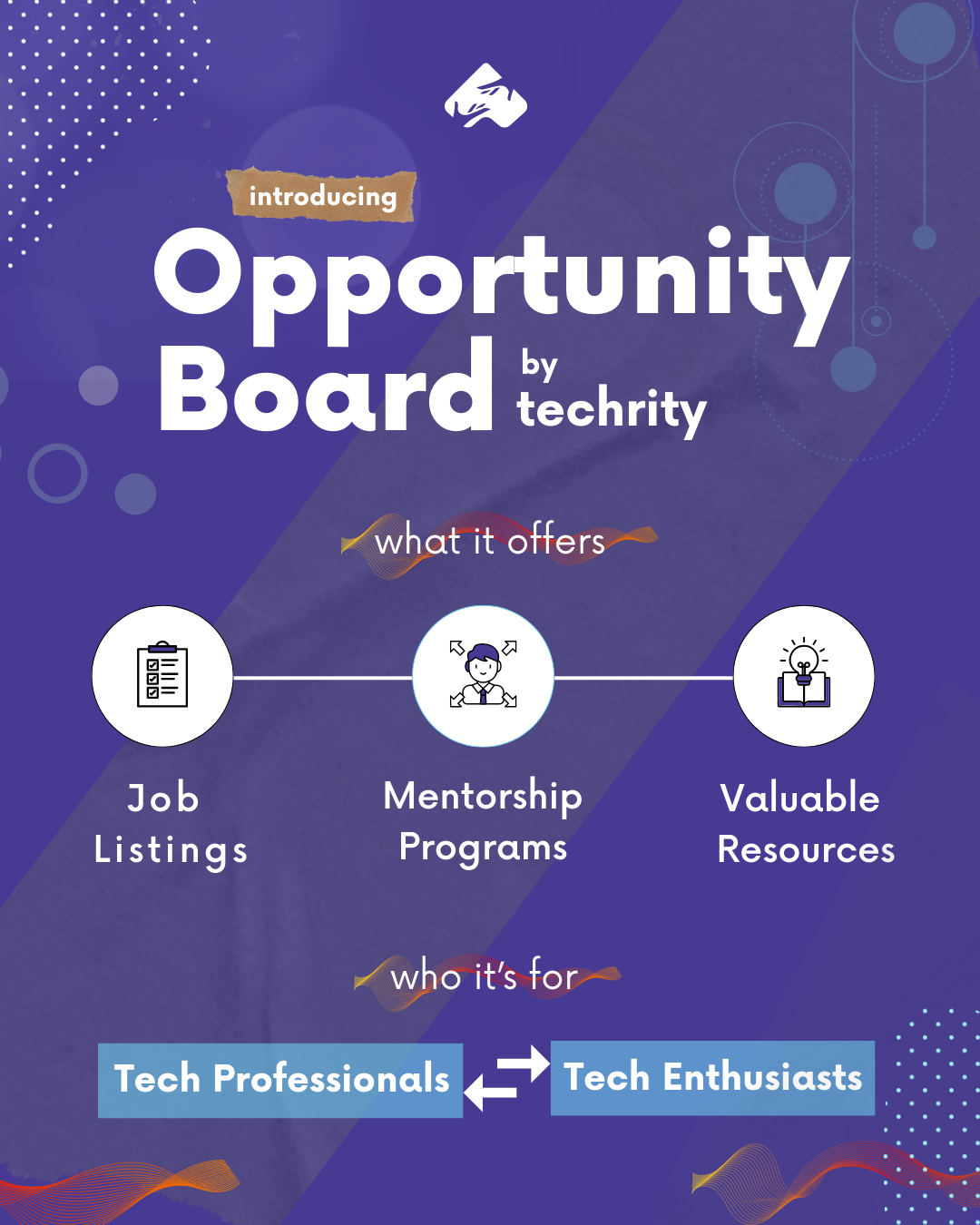
Techrity is stepping up to provide a bold and innovative solution; the Opportunity Board is a platform designed to connect aspiring African professionals with the resources and openings they need to amplify their hard work and talent.

The Opportunity Board will be more than just a job board; it is a home for techies like you and the next generation of professionals to gain access to everything they need to get a job, learn a new tech skill, get data support to enter the tech space, master a tech skill, and digital tools to aid their work.

Connecting Talents with Opportunities

At its core, the Opportunity Board is a vital link between African talent and the global marketplace. It curates a diverse range of opportunities, including:

Job Openings

The board features listings from companies across various tech sectors actively seeking African talent, from entry-level positions to senior management roles.

Internships

Recognizing the importance of practical experience, the platform highlights internship programs that allow students and recent graduates to gain valuable on-the-job training.

Mentorship and Training Programs

To address skills gaps, Techrity partners with leading technical professionals, educational institutions and tech companies to offer guided mentorship training programs, workshops, and certifications that equip individuals with in-demand skills.

Laptop and Data Support

Financial and connectivity constraints can often hinder further learning and training for tech enthusiasts in Africa. The Opportunities Board provides information on how to apply for unlimited access to laptops, grants, and data support from several organizations specifically targeted at African professionals.

Volunteer Opportunities

Get real-world experiences to master your skills with many listings and volunteer opportunities from credible tech companies. These opportunities allow individuals to give back to their communities and make a meaningful impact in the tech space.

Who is This Platform For?

  • Techies looking to compete globally from Africa
  • Motivated and enthusiastic tech talents that do not have access to data to continue learning and mastering a tech skill
  • African tech companies looking to hire the best tech talents in Africa
  • African tech talents looking to practice their skills in a reputable startup through an internship
  • African tech professionals looking for digital work tool support to enable them compete equally.

Empowering You for The Future You Deserve

Beyond simply listing opportunities, Techrity aims to empower individuals with all they need to make informed career decisions. The opportunity board also offers resources such as:

Career Guides

Providing insights into different tech roles, required skills, and career paths.

Salary Benchmarks

Helping individuals understand their market value and negotiate fair compensation.

Company Reviews

Offering insights into company culture and employee experiences

Conclusion

Techrity’s Opportunity Board is transforming tech hiring in Africa by addressing the core challenges faced by job seekers, tech enthusiasts and employers. The platform creates a more efficient and inclusive job market by connecting talents to unseen opportunities and facilitating global job access.

Whether you’re a tech professional seeking your next opportunity, need data support, workplace tools for productivity, or an employer looking for top-tier talent, Techrity’s Opportunity Board is the ideal solution.

It’s a platform to watch and that holds immense promise for unlocking the continent’s vast potential.

Categories
Uncategorized

Mindfulness Meditation for Tech Professionals: A Guide to Regaining Focus and Power

Introduction

Software developers, programmers, designers, writers or testing professionals often face what we call mental blocks. These high levels of stress lead to decreased productivity and burnout as a result of constant switching between solving complex problems, tight deadlines, and juggling multiple tasks.

Mindfulness meditation can significantly improve mental well-being and productivity.

Mindfulness means paying attention to the present moment while acknowledging and accepting one’s thoughts and feelings without judgment. For developers, this practice can enhance focus during coding sessions, reduce stress during debugging, and improve overall problem-solving capabilities.

It helps you focus on your breath, bodily sensations, or surroundings while calmly acknowledging distractions and bringing attention back to the present. Mindfulness meditation is a powerful tool for software developers and tech professionals to maintain mental clarity and emotional balance.

What is Mindfulness?

Mindfulness means paying attention to the present moment while acknowledging and accepting one’s thoughts and feelings without judgment. For developers, this practice can enhance focus during coding sessions, reduce stress during debugging, and improve overall problem-solving capabilities. It helps you focus on your breath, bodily sensations, or surroundings while calmly acknowledging distractions and bringing attention back to the present.

Mindfulness meditation is a powerful tool for software developers and tech professionals to maintain mental clarity and emotional balance.

Why You Need to Meditate

According to several research reports, ample evidence validates the high impact of regular meditation practice on an individual. Meditation can increase gray matter in areas responsible for memory and learning, reduce mind-wandering activity, enhance error detection and bug-finding capabilities, and ultimately Improve focus during long coding or meeting sessions.

Proven Benefits of Meditation

Better Focus and Concentration

Meditation helps train the brain to maintain attention, reducing distractions and improving deep work sessions.

Reduced Stress and Anxiety

Regular mindfulness practice lowers cortisol levels, helping developers manage stress better.

Improves Problem-Solving Skills

A calm and clear mind allows for better logic and decision-making in coding and troubleshooting.

Increased Creativity

Decluttering the mind, meditation fosters creative thinking and innovation.

Better Work-Life Balance

Mindfulness helps maintain a healthy separation between work and personal life.

Improved Collaboration

Being mindful enhances empathy and communication, making teamwork more effective.

These benefits directly translate to reduced stress, better code quality, increased productivity, and improved mental well-being.

Practical Mindfulness Exercises to Practice

To effectively integrate mindfulness into coding routines, developers can adopt several practical exercises:

Mindful Coding Sprints

Set a timer for 25 minutes to utilize the Pomodoro Technique. Before starting, take three deep breaths and set an intention for the session. After coding intensely for 25 minutes, take a 5-minute break to stretch or practice a quick mindfulness exercise.

Mindful Code Reviews

Approach code reviews with curiosity rather than judgment. Center yourself before starting the review process and focus on one line or block of code at a time.Breath Awareness: Before beginning work each day, spend a few minutes focusing solely on your breath. This simple practice helps clear mental clutter and prepares you for.

Code Block Meditation (5-10 minutes)

This practice helps maintain focus during intensive coding sessions:

What to do:

  • Sit comfortably at your desk
  • Take three deep breaths
  • Open your code editor
  • Focus on a single block of code
  • Read each line slowly, observing without making changes
  • Notice thoughts about “improving” or “fixing” the code
  • Let these thoughts pass without acting on them
  • Return focus to simply observing the code

This practice helps develop the ability to observe code objectively before making changes, leading to better architectural decisions.

Debug Breath (1-2 minutes)

Use this technique when feeling frustrated during debugging:

What to do:

  • Stop typing
  • Place your hands on your desk
  • Take five slow breaths, on each inhale, acknowledge the bug’s complexity, on each exhale, release the urge to solve it immediately
  • Return to debugging with renewed patience

Recommended Resources to Help You Practice Meditation

Books

Here are 11 go-to books to help you practice meditation and mindfulness:

  1. “Wherever You Go, There You Are” by Jon Kabat-Zinn

A practical guide to mindfulness, this book teaches you how to be fully present in your daily life. Through simple meditation practices, it helps you slow down, reduce stress, and find peace in the moment.

2. “Digital Minimalism” by Cal Newport

This book explores the impact of digital overload and offers strategies to reclaim focus and happiness. Newport encourages intentional tech use, helping you disconnect from distractions and live more meaningfully.

3. “The Miracle of Mindfulness” by Thich Nhat Hanh

A timeless classic on mindfulness, this book introduces meditation as a way to bring peace into everyday tasks. Whether washing dishes or walking, Hanh teaches how to be present in everything you do.

4. “The Little Book of Mindfulness” by Dr. Patrizia Collard

This quick read offers simple, 10-minute mindfulness exercises to reduce stress and boost well-being. It’s perfect for anyone looking to start a mindfulness practice without feeling overwhelmed.

5. “Planting Seeds” by Thich Nhat Hanh

Designed for families and educators, this book teaches mindfulness to children through fun activities. It helps kids (and adults) develop kindness, focus, and emotional resilience.

6. “Meditation for Busy People” by Rajneesh Osho

Osho offers a practical approach to meditation for modern, hectic lives. It offers easy techniques that fit into daily routines, helping you find calm without needing hours of stillness.

7. “The Science of Being and Art of Living” by Maharishi Mahesh Yogi

A deep dive into Transcendental Meditation, this book explains how meditation can unlock human potential, reduce stress, and create a happier, more fulfilling life.

8. “Awakening the Mindless Life and How to Live in the Present Age” by Dr. Sanjeev Goel

This book blends mindfulness with modern science. It shows how to live in the present moment despite life’s distractions and offers practical tools to reduce stress and boost well-being.

9. “The Things You Can See Only When You Slow Down” by Haemin Sunim

A beautifully written guide on slowing down and appreciating life. Through short reflections, Sunim shares wisdom on love, work, and mindfulness in a fast-paced world.

10. “The Mindfulness Solution” by Ronald D. Siegel

A science-backed guide to using mindfulness for mental health and well-being. It provides practical exercises to manage stress, anxiety, and daily challenges.

11. “Ikigai” by Hector Garcia & Francesc Miralles

This book uncovers the Japanese secret to a long and happy life: finding your purpose (Ikigai). It blends philosophy, science, and real-life examples to help you live passionately and meaningfully.

Applications

Conclusion

Mindfulness serves as an invaluable tool to regain control of your mind and calmness; the way we work and live is being challenged every day as the need to maintain work life balance continues to grow at a rapid pace; your ability to embrace these practices will not only support your performance as a developer or tech professional but also contributes to healthier ways of life, relationships with people, and positive moods to tap into productivity.

Categories
Career advice General Software Tech

10 Must-Have Skills for Job Ready Developers in 2025

Introduction

The labour market is consistently flooded with several tech talents quarterly and recruitment agencies failing to keep up with the rapidly evolving nature. Recruiters have gone beyond the common desirable skills in developers such as writing good codes, completing projects, and shipping products. 

Developers are no longer just coders; they are becoming pivotal players in shaping digital futures this means recruiters are looking for candidates who possess a blend of cutting-edge technical abilities and essential soft skills. But what are these in-demand skills, and how can developers stand out in a competitive job market?

Must-Have Skills for Developers in 2025

If you are out there, searching for your first job, planning to change jobs, or transitioning from a non-tech role to a more technical role. These skills will help you stand out as a candidate to beat the system and stay on top of the talent pool for recruiters to find you and your experience attractive.

  1. Ability to Communicate

A developer\’s ability to share or pass information simply and effectively is key, especially in remote work environments. The need for developers to be able to articulate ideas, provide updates, outline processes, and collaborate seamlessly across teams and different time zones is on the rise and you have to adapt to meet this need.

  1. Knowledge of Artificial Intelligence

The ability to use Artificial Intelligence and Machine Learning tools to build and deploy models and solutions within a fraction of the time is an essential skill. We are rapidly moving past the era of searching for ways to do things with Google and using Stackoverflow to find solutions. Developers who can build and deploy AI models, and work with frameworks, will be highly sought after in 2025.

  1. Management of Limited Resources

Being able to effectively manage time, projects, and limited resources efficiently is a key skill that recruiters seek when hiring developers. Most times in remote settings, developers would have to work on several projects with tight deadlines, your ability to prioritize tasks, meet deadlines, and ship products on time with little or no direct supervision will make recruiters want to hire you.

  1. Cloud Computing Experience

Having experience using cloud platforms like AWS, Azure, and Google Cloud will remain critical. According to a report from grandviewresearch.com, the cloud computing market is projected to grow from USD 602.31 billion in 2023 to USD 2,390,184 with a CAGR of 21.2%. This means more organizations are migrating to the cloud to streamline operations, improve agility, and unlock new levels of efficiency. As a developer, you need to focus more on understanding how to deploy products on the cloud and manage cloud services efficiently.

  1.  Version Control Tools

In a world where new versions of software and products are shipped out every second, gaining mastery of version control tools like Jenkins, GitLab, and GitHub is paramount to your success. Understanding continuous integration and continuous deployment (CI/CD) processes work is an added advantage in the hiring process.

  1. Debugging

Do you know how to use tools to identify and resolve code issues swiftly? It is not enough to know how to write clean code, what can you do when something goes wrong with the working code – this is a key area that recruiters aiming to know about you. Your ability to use debugging tools and techniques to maintain high code quality and quickly address any problems that arise will be tested during interviews and assessment tests. Knowing how to debug efficiently takes you from “it doesn’t work” to here is how I can make it work mentality.

  1. Ability to Extract Relevant Information

Your ability to quickly read, understand, and extract relevant information from large volumes of text and documentation is an essential commodity. This skill will help you as a developer to stay updated with trends and respond to changes in projects or technologies.

  1. Ability to Predict the Future

Having the foresight to know what will happen in the next 5 or 10 years in a particular industry or space is a great skill. It can be as simple as predicting what language or tool will become more useful in your skill – will allow you to anticipate future challenges and plan accordingly. This proactive approach helps prevent potential issues, so you can stay ahead of digital trends.

  1. Accountability

It is a common occurrence in remote and autonomous work environments, for employees to be unaccountable when it comes to completing tasks, meeting deadlines, and attending meetings to get the needed information on what to do. Recruiters want to hire developers who are not only good at what they do but also take responsibility for their tasks, outcomes, and continuous improvement.

  1. Keyboard Mastery

Your ability to be able to use keyboard shortcuts, and touch typing without having to look down and up while typing should be developed upon if it is currently low. Fast and accurate typing is an underrated but valuable skill for developers in this digital century. Mastering your keyboard shortcuts and efficient coding techniques can significantly boost productivity and save you tons of time.

You can measure your typing skills and improve your typing speed here

Current Job Openings for Developers

For more resources visit these links:

Why is this new direction important? 

Recruiters in the digital space are liaison agents between tech talents and companies. They find and assess job candidates through interviews and propose hiring suggestions based on the outcomes of those processes. Over the years they have become strategic talent scouts, exploring advanced tools like Applicant tracking systems (ATS), AI, and data analytics to find the perfect candidates. While they do so, the focus is not only on technical expertise; they want developers who can excel in and adapt quickly to changing environments.

Conclusion

Your success as a developer in 2025 is based on your ability to anticipate future work trends, understand the required technical and soft skills, and develop in those areas.

Now is the best time to refine these skills in communicating, making presentations, managing time and projects, and being accountable to stay competitive with the demands of the digital-first world.

Categories
Best practices General Tech

Staying Ahead Of Cyberattacks

Cyberattacks are becoming more sophisticated with the rise of the digital age, leading to more targeted and frequent breaches. From individuals to large organizations, everyone is a potential target – no one is safe. Staying ahead of cyberattacks requires not only understanding about existing cyber threats but also implementing effective measures to protect and secure important data and information from intruders. This article will simplify what cyberattack means to you, help you explore the types and sources of cyberattacks, highlight measures for staying safe, and discuss growing challenges and trends in cybersecurity.

What is a Cyberattack?

In its basic definition, a cyberattack is generally an attempt by malicious individuals or groups to gain unauthorized access to computers, networks, or data. These kinds of attacks often aim at stealing, disrupting, or destroying information or leveraging it for financial or political gain.

Types of Cyberattacks

Cyberattacks come in many flavors and faces, with different methods and intentions. Here are the common types:

Phising

Photo from Pixabay

This attack is one of the common cyberattacks in which phishing attacks, attackers impersonate any credible entity through emails, messages, or websites and influence people to reveal sensitive passwords or credit card details, etc. Usually, these attacks involve psychological means, social engineering, whereby conditions for urgency or fear are attached to prompt victims into precipitating actions such as clicking malicious links or downloading harmful attachments.

Common Types of Phishing Attacks

  1. Email Phishing: The most common method in which an attacker sends thousands of emails that are originally from seemingly legitimate sources, containing links to fake web pages designed to capture user credentials.
  2. Spear Phishing: A targeted attack at specific individuals or organizations utilizing personalized information to gain credibility. This method poses a great danger since it is addressed to high-level executives.
  3. Whaling: A form of spear phishing targeted at high-profile targets, such as the CEO or CFO, by using their authority to gain access to sensitive information from employees.
  4. Smishing and Vishing: These are phishing methods via SMS (smishing) or voice calls (vishing), in which the attackers deceive victims into revealing personal information either over the phone or via text messages.
  5. Clone Phishing: Entails the almost exact reproduction of an already sent legitimate email from a trusted organization but this time with malicious links.

Instances of some phishing attacks

  1. The Google and Facebook Phishing Attack 

A Lithuanian scammer defrauded Google and Facebook of $100 million between 2013 and 2015 by sending fake invoices that appeared to be legitimate requests from a Taiwanese supplier, Quanta. The fraud was discovered, arrests were made, but only $49.7 million was recovered.

2. Elara Caring Incident

In 2020, healthcare provider Elara Caring became the target of a phishing attack where the personal data of over 100,000 patients was compromised. The attackers accessed employee email accounts through phishing tactics targeting two employees.

3. Levitas Capital Whaling Attack

This was a whaling attack in 2020 which involved the co-founder of Levitas Capital through a fraudulent zoom link. The incident turned into malware deployment on the corporate network and the appearance of fraudulent invoices for approximately $8.7m.

Malware

Photo from Pixabay

Malware refers to a wide range of malignant software programs that are written to infect and destroy systems. The common types are:

  1. Viruses: Malicious code attached to clean files that spread to a computer system.
  2. Ransomware: A kind of malware that encrypts the files on the victim’s device and demands payment for the decryption keys.
  3. Spyware: Software used to secretly observe user activity and gather personal information without consent.

Phishing attacks are often the initial vector for malware distribution, with many ransomware incidents starting from phishing emails. 

An instance of this kind of attack is the ransomware attack against the Colonial Pipeline in May 2021 which disrupted fuel supply across the U.S. East Coast for nearly a week. The attack vector had been linked to phishing emails that gave the DarkSide gang an entrance into the company’s systems, which eventually made the company pay a ransom of $4.4 million1.

Denial of Service (DoS) and Distributed Denial of Service (DDoS)

The intent of Denial of Service attacks is to make the network or server unavailable for the authorized users by overwhelming it with traffic. This is augmented in DDoS to involve hundreds of compromised systems or ‘botnets’ to literally flood the target with requests, with which the defenses may hardly cope. A notable DDoS attack occurred in October 2016 against Dyn, a major DNS provider, which disrupted services for many high-profile websites like Twitter and Netflix for several hours.

Man-in-the-Middle and Insider Attacks

In Man-in-the-Middle (MitM) attacks, cyber criminals intercept communications between two parties to steal data or inject malicious content. Insider attack: When employees or contractors misuse their access rights to harm the organization or steal sensitive information. An example is the ransomware attack the City of Atlanta suffered in March 2018 initiated through spear phishing emails sent from compromised accounts of trusted contacts within the city government.

Social Engineering and Credential Stuffing

Social engineering is a method of tricking people into revealing confidential information by gaining their confidence. Credential stuffing refers to when an attacker uses stolen credentials from one breach to access accounts on other platforms where users have reused passwords. This technique leverages the common user behavior of password reuse, thus simplifying the process for the attacker to gain unauthorized access. In 2016, attackers exploited stolen credentials from previous breaches to access accounts at various online services, leading to widespread unauthorized access incidents across multiple platforms.

 Zero-Day Exploits

Zero-day exploits involve those vulnerabilities in software that the developers are unaware of at the time the attack occurs. These exploits tend to be exceptionally effective because they can be utilized at a time before patches become available, which leaves the systems vulnerable until they get updated. The 2017 Equifax data breach was partly attributed to an unpatched vulnerability in Apache Struts software, which attackers exploited before Equifax could deploy a fix.

Advanced Persistent Threats (APTs)

APTs are long-term targeted attacks where hackers infiltrate networks and remain undetected for extended periods. Their goal is usually data theft or surveillance of operations over time, making them particularly dangerous for organizations that handle sensitive information. The infamous APT group APT28 (Fancy Bear) has been linked to numerous high-profile cyber espionage campaigns targeting government entities and organizations around the world, including the Democratic National Committee during the 2016 U.S. presidential election.

What Motivates Cyberattacks?

Motivations behind cyberattacks vary and may include one or many of the following:

  1. Financial Benefits:  Most the attackers seek ransom through ransomware, phishing, or even selling stolen data on the dark web.  
  2. Revenge/Personal Vendetta: Disgruntled employees, ex-partners, or competitors target organizations or people.
  3. Hacktivism: Attacks for political, social, or ideological motives to bring attention to a cause or disrupt an adversary. 
  4. Terrorism: Cyberterrorists disrupt critical infrastructure-such as energy grids, transportation systems, or healthcare services-to instill fear in a population. 
  5. Thrill-Seeking or Fame: Some attackers seek the challenge or notoriety associated with a successful breach of a high-profile system.  
  6. Market Manipulation: Businesses or markets are targeted by hackers to manipulate stock prices, cryptocurrencies, or commodities for financial gain.  
  7. Corporate Sabotage: Competitors may wish to attack any given rival business for the purpose of damaging its reputation, disrupting operations, or attracting some of its clients.  
  8. Political Influence: These are usually employed to influence the outcome of an election, manipulate public opinion, or bring instability to governments. 

How to Stay Ahead of Cyber-attacks

The nature of the threat means that the best way to protect oneself or one’s organization against it is through proactive measures. Some such key measures include:

  1. Be security conscious: Use strong passwords by creating unique, complex passwords and change regularly.  Also add another layer of security to your accounts by enabling Two-Factor Authentication (2FA), Encrypt data so that only authorized parties can read it. From email encryption, encryption of data in transit, or encryption of data at rest, it ensures that even if attackers intercept your data, they can’t understand or misuse the data without the encryption keys.
  2. Put early warning systems in place: Put in place mechanisms that can monitor for potential threats in real time and send an alert. 
  3. Back-up data and update software regularly: Perform regular backups that will let you recover your information in case of an attack. Install updates and patches that will close vulnerabilities in your systems. Ensure that any new software and systems are thoroughly tested in isolated environments to avoid vulnerabilities before going live (this is called Cleanroom testing).
  4. Train and educate: Educate yourself and your team regularly about state-of-the-art threats and security best practices. Provide training and awareness on being very cautious before trying to click on suspicious links or attachments that come from unknown sources.  
  5. Continuous Vulnerability Assessments: Regularly scan and identify weaknesses in your infrastructure to address them promptly. Simulate cyberattacks to evaluate the effectiveness of your defenses and uncover potential vulnerabilities.
  6. Security conferences and newsletters: Participate in security webinars, conferences to gain an invaluable opportunity to learn from experts and peers about emerging threats, trends, and best practices. Common security newsletters are also good sources of information to help you stay informed about current and future threats.
  7. Lead with intelligence and creativity: Utilize advanced analytics along with innovative methods to identify and neutralize emerging malicious activities. Embrace a security model wherein no one is trusted by default, and everybody’s request to access should be authenticated.  
  8. Be prepared to defend your fort: Incident response plans should be kept maintained and your team prepared to take immediate action upon threat detection.  
  9. “Shine your eye”: This is a security slang from Nigeria, that talks about knowing what to do to avoid danger, this can be applied to cyberattacks too, as one can ensure that there is knowledge of the current tools and ways attackers use to steal data and infiltrate systems.
  10. Context-aware security: Context-aware security adjusts its level of protection according to the situational or environmental context where access is being requested. If a user logs in from an unrecognized location or device, for instance, the system may prompt further verification or block the access. This ensures that only authorized users interface with sensitive systems, further reducing breach chances. 
  11. Behavioral analytics tools: These solutions monitor and analyze user behavior to identify unusual activities that could signal a security threat. For instance, if an employee suddenly starts to download unusually large volumes of sensitive data or accesses systems that they do not normally use, then the tool can flag this behavior for investigation. Behavioral analytics are a critical layer of defense against insider threats and advanced persistent attacks.

Challenges and Trends To Keep Tabs On

Technology, and its development, means the continuously changing landscape of cybersecurity attacks also. To counter the probable risks, every organization needs to be on their toes and gain as much information as possible on upcoming challenges and trends that influence cybersecurity. The following areas present important concerns driving the direction in the field of cybersecurity today.

  1. A.I Driven Attacks: AI is being weaponized increasingly by cybercriminals to make their attacks more sophisticated and effective. Hackers utilize deepfake technology to create fake but realistic audio and video contents, which, in turn, mislead their targets into revealing sensitive information or executing unauthorized transactions. One instance of the CEO scam happened when the attacker was mimicking a CEO’s voice asking employees for wire transfers. With AI tools generating highly personalized phishing emails resembling human communications in both style and content, they become a lot more plausible, often replete with riveting storytelling and urgent requests for action-compelling events that might easily persuade the gullible beyond ordinary phishing. AI-powered malware can change its behavior to avoid detection by traditional security measures. The ability of malware to adapt to new situations makes it difficult for organizations to detect and neutralize threats effectively.
  2. IoT and Smart Device Vulnerabilities: The increasing use of Internet of Things (IoT) devices and modern connected-vehicle technology makes more vehicles smarter, but it opens greater avenues for security exploitations and cyber-attacks. Most IoT devices are designed with either very poor default passwords or no regular software updates, thus being highly vulnerable for any kind of exploitation. Attackers compromise such devices to create botnets for launching DDoS attacks or to steal sensitive data. Cyber criminals might use vulnerability in vehicle software to take control over the vehicles unauthorized. Connected vehicles may be tracking several information sets which can become a victim of theft and misuse.
  3. Cyber-Physical System Attacks: Cyber-physical systems, incorporating physical processes with networked computing, are increasingly targeted by cybercriminals. Examples include everything from critical infrastructure like power grids, transportation systems, and autonomous vehicles.
  4. Human Error and Third-Party Risks: Poor training and awareness result in employees sometimes doing silly things, like clicking on a phishing link or mishandling information. The Solar Winds breach is an example of attackers breaching a trusted third-party vendor to gain entry into several organizations at the same time.
  5. Scarcity of Qualified Professionals in Cybersecurity: The increasing demand for cybersecurity has developed a serious gap in skilled professionals within the industry. Organizations struggle to find qualified personnel who can defend against these increasingly sophisticated attacks.

Cybersecurity is an ever-evolving field-one that requires watching out, preparing for, and adapting to constantly changing elements. By understanding cyberattacks, staying up-to-date on the latest trends, and putting in place some tough security, you can make yourself and your organization resilient in the face of potential compromise. Remember, the best defense is a proactive one-stay sharp, stay informed, and stay secure.

Categories
Tech Tech For Good

 Emerging Trends in Technology

The trends in technology are vast. We have since grown from the invention of ICs, Transistors, and Microprocessors to the Internet in the 1990s. Most especially the late 1950s and early 1960s marked a pivotal era as Integrated Circuits, commonly known as ICs invented by Jack Kilby and Robert Noyce were used to power the digital revolution.

Some Notable Trends In Technology

Health-tech

The Healthcare Industry has experienced a massive improvement in patient healthcare services due to recent trends in technology.

Technologies like brain-computer interfaces (BCIs) are being developed to help individuals with disabilities control prosthetics or communicate through thought alone. Companies like Neuralink are at the forefront of this innovation, aiming to treat neurological conditions and potentially enhance cognitive capabilities.

Biotechnology leverages biological systems to develop products and solutions for healthcare, agriculture, and more. CRISPR gene editing, for instance, allows for precise modifications to DNA, offering potential cures for genetic disorders. Editas Medicine and CRISPR Therapeutics are pioneering this field, promising revolutionary treatments.

Quantum Computing Technologies

Quantum computers use the principles of quantum mechanics to perform calculations at unprecedented speeds. These computers can solve complex problems in cryptography, material science, and pharmaceuticals. Companies like IBM and Google are making significant strides, with IBM’s Quantum Experience and Google’s Sycamore processor leading the charge.

Artificial Intelligence (AI)

Artificial Intelligence (AI) is transforming industries by automating tasks, providing insights through data analysis, and enabling new levels of personalization. OpenAI’s GPT-4 and Google’s DeepMind are examples of AI systems pushing the boundaries of what machines can do.

AI-powered virtual assistants like Amazon’s Alexa, Apple’s Siri, and Google Assistant are becoming increasingly sophisticated. They help users with tasks ranging from setting reminders to controlling smart home devices, providing a more intuitive and interactive user experience.

Knowledge graphs organize information in a way that machines can understand, enabling better data analysis and AI applications. Companies like Google use them to improve search results and enterprises to enhance data management.

Smart Spaces

Digital twins are virtual replicas of physical objects or systems that support real-time monitoring and simulation. They are used in various industries, including manufacturing, healthcare, and urban planning, to optimize performance and predict maintenance needs. Siemens and General Electric are leaders in developing digital twin technologies.

Smart spaces integrate digital and physical environments to create interconnected, intelligent systems. These include smart homes, cities, and workplaces that enhance convenience, safety, and efficiency. Companies like Cisco and Microsoft are developing solutions to integrate IoT devices and AI to create smart spaces.

Autonomous Vehicles

Self-driving cars, flying cars, and drones represent significant advancements in transportation and logistics. They promise to reduce accidents, improve traffic management, and increase delivery efficiency. Tesla’s Autopilot and Waymo’s self-driving cars are leading examples of autonomous vehicle technology.

Computer Vision

Recent developments in computer vision enable machines to interpret and make decisions based on visual data. Applications include facial recognition, autonomous navigation, and quality inspection in manufacturing. Companies like NVIDIA and Intel are advancing computer vision capabilities and integrating them into various products and services.

Blockchain and Decentralized Identity

Blockchain technology provides a secure, decentralized ledger for recording transactions. It is the foundation of cryptocurrencies like Bitcoin and Ethereum, and it also has applications in supply chain management, finance, and digital identity. Companies like IBM and ConsenSys are exploring diverse use cases for blockchain technology.

The Decentralized Identity approach allows individuals to control their personal information without relying on central authorities. Blockchain technology underpins decentralized identity solutions, providing enhanced privacy and security. Projects like Microsoft’s Decentralized Identity and Sovrin Network are pioneering this field.

Renewable Tech and Sustainable Tech

Technologies focused on harnessing renewable energy sources like solar, wind, and hydropower are crucial for a sustainable future. Companies like Tesla (with its solar products) and Vestas (wind turbines) are at the forefront of renewable tech.

Sustainable Tech involves developing technologies that minimize environmental impact and promote sustainability. Innovations in this area include biodegradable materials, energy-efficient systems, and circular economy solutions. Companies like Patagonia and Beyond Meat are examples of businesses integrating sustainable tech.

Green Technology focuses on reducing environmental impact through innovation. This includes everything from electric vehicles to green building materials. Tesla’s electric cars and LEED-certified buildings are prominent examples of green technology.

No Code Development

No-code platforms enable users to create applications without needing to write code. This democratizes software development, allowing more people to build solutions. Platforms like Bubble and Webflow are making no-code development accessible and powerful.

Internet of Behaviour (IoB)

Internet of Behaviour (IoB) combines data from various sources to influence behavior. It uses data analytics and behavioral science to understand and guide user actions. Applications include personalized marketing, healthcare interventions, and workplace productivity tools.

Benefits of Emerging Technologies to the Tech World

Innovation and Efficiency

Emerging technologies drive innovation, leading to the creation of new products and services. They enhance efficiency in various processes, reducing costs and time.

Problem-Solving

They offer solutions to complex problems, from healthcare to climate change, improving the quality of life and sustainability.

Economic Growth

By fostering new industries and job creation, emerging technologies contribute to economic growth and competitiveness.

Accessibility and Connectivity

Technologies like 5G and blockchain improve connectivity and accessibility, enabling more people to participate in the digital economy.

Challenges Posed by Emerging Technologies to the Tech World

Security and Privacy

As technology advances, so do the risks of cyberattacks and data breaches. Protecting sensitive information becomes increasingly complex.

Ethical Concerns

Issues such as AI bias, surveillance, and the impact on employment raise significant ethical questions.

Regulation and Compliance

Keeping up with rapid technological advancements poses challenges for regulatory bodies to ensure safety and compliance without stifling innovation.

Environmental Impact

The production, use, and disposal of new technologies can endanger the environment if not managed sustainably.

Remember, as these technologies evolve, staying informed and adaptable will be crucial for leveraging their full potential and addressing the critical challenges they pose.

Categories
Best practices Coaches General Hackathon

Tips For Winning A Hackathon Challenge

Hackathons are tools that drive creativity and innovation by tackling challenges to provide solutions. In a hackathon competition,  individuals with similar interests collaborate to deliver a solution to an existing or predicted problem. The hackathon organizers, sponsors, or partners usually outline the challenges and the judges decide the winners after the presented solutions, provided criteria and guidelines are met. It is an opportunity for creatives and innovative minds to leverage communication, teamwork, and presentation skills to solve problems and challenges quickly.

HOW HACKATHONS WORK

Hackathons are carried out online, onsite, or hybrid depending on the sponsor. When COVID-19 brought the world to a standstill in 2020 and different country-specific restrictions and measures were put in place, most hackathons were organized virtually. But in recent times, there has been a gradual return to fully onsite hackathons. 

The various technologies, tools, and challenges that participants can use and work on are announced 1–2 days before the hackathon begins. Partners and sponsors introduce the challenges to all participants including important information regarding the competition even if you don’t understand the challenge to work before coming, the explanations will dig deeper into them for you, so listen carefully.

Eventaully, each hackathon submission is judged by a metric to determine the winning team or solution. The success metric is measured differently depending on the organizers, judges, or themes. Common metrics used include quality of prototypes, minimum viable product(MVP) development, website functionality, improvement in engagement scores, reduction in implementation time, and Participation metrics.

TYPES OF HACKATHONS

Hackathons come in many forms and depend on the objective, goal, or sponsors. They all fall into one of the types listed below:

Niche/Theme Based: Niche or theme-based hackathons are specially crafted by single or multiple sponsors to provide solutions to challenges by using a specified or company-created tool and resource such as API. Common theme-based hackathons include Finance, Healthcare, Diversity, and Open Source. For instance,  Digital Healthcare is a hackathon focused on driving solutions to the healthcare sector. The required outcome could be to create a web application, video game, or anything significant.

Custom Hackathons: A hackathon is custom if it addresses solutions to problems by leveraging a language, framework, or profile. For instance, a hackathon that uses a programming language such as Java, Python, or Ruby on Rails to solve a problem. In this type of hackathon, how you use the programming language is preferred above what you can build. For profile-based hackathons, this involve student-only or female-only hackathons that accept only people in those categories as participants to work on challenges or topics to claim a reward.

MISTAKES YOU SHOULD NEVER MAKE DURING A HACKATHON

To succeed in a hackathon there are mistakes you should avoid. These mistakes are not bound to first-timers or amateurs alone but also applicable to experienced hackathon participants and previous winners of one or more hackathons.

  • Avoid changing teammates along the way or quickly selecting teammates based on their appearances, stickers on laptops, or gadgets. Doing this may jeopardize your team’s strength and efficiency since the competition is constrained by time.
  • Avoid using tools that you and your teammates are not familiar with. Hackathons are good places to learn new tools but do not try to build using a new tool without understanding the basics of that tool, it might not end well.
  • Avoid trying to build a solution that is too complex to be done within the stipulated time. You’d be requiring too much from your teammates.
  • Avoid allotting unreasonable time frames for the accomplishment of major product milestones.
  • Avoid working alone. Seek support from teammates, mentors, or sponsors when you have to.
  • Avoid imposing your opinions and thoughts on your teammates without considering other alternatives from their perspective.
  • Avoid prioritizing aesthetics over functionality.
  • The hackathon rules are very important and must be adhered to if you don’t want your team to be disqualified. Familiarize yourself with the hackathon’s rules and fundamental problem statements.
  • Do not repeat an already existing solution by modifying some features to wow the judges.

HOW TO WIN AN HACKATHON

Here are 10 tips for first timers, and experienced hackathon participants to ace any hackathon competition with ease

  • Have a complete team: Diverse your team skills and abilities to include developers, UI/UX designers, product/project managers, marketers, and those with social skills.
  • Teamwork is the key: Teamwork is important for winning a hackathon. Listen to the opinions of your teammates, appreciate their contributions and ideas, and be open generally to a variety of ways to achieve the same goal.
  • Apply empathy: Be kind enough to understand your teammates, and discover their strengths and weaknesses to coordinate your team, delegate properly and motivate each other.
  • Build only key components within the given time: Focus on building the key features the solution needs and distribute the most important features to your teammates, ensuring each team member knows what is to be built individually.
  • Focus on the hackathon 100%: Hackathons are filled with distractions demanding your attention. You must stay fixed on the solution you are building.
  • Appreciate the uniqueness of your solution: If you have a novel solution that you can pull off with the hackathon time frame then go for it and pay less attention to what other teams are building. Some might just be reinventing the wheel when there is no need.
  • Prepare your presentation: Invest ample time to work on your presentation, including your demo, and make it as simple and interactive as possible. Your presentation is the second most important part of the hackathon, after your solution. Highlight the problem statement, key features, and why you made the product, how it works, and how it solves the problems of the end users”. 
  • Document all the ideas: Write down the ideas, concepts, and complaints of each team member during the brainstorming session and use the Prioritization Matrix to pick between what is important and needed, important and not needed for the product.
  • Gather some information: Gather basic knowledge of your sponsors, judges, and audience to help you customize your presentation and demo to fit their needs. Use social media sites like LinkedIn, X, and Pinterest or strike up conversations at the hackathon during lunch or Q&A sessions.

WHERE TO FIND HACKATHON RESOURCES

If you have been having a hard time searching for hackathons, here are some resources for you to explore.

  • DevPost: DevPost is an epicenter for hackathons. It is stocked up with different types and categories of hackathons by level, length, theme, location, and status. You will also find guides, tricks, and tips for organizers and participants in hackathons.
  • NaijaHacks:  NaijaHacks is a go-to spot for all things on hackathons. It offers guides on team formation, mentors, prizes, and workshops. It also has tutorials broken down into sectors including Blockchain, VR/AR, Machine Learning,  Mobile/Web Development, Hardware, Miscellaneous, and an introduction to Git for beginners.
  • DoraHacks: This is the hub for Web3 hackathons, it features ongoing and upcoming hackathons to browse and participate in. Individuals and communities can also use their platform to host hackathons
  • Hackathons International: Hackathons International is a global organization that provides problem-solving strategies, toolkits, and resources for participants and organizers to host/successfully participate in hackathons globally.
  • GitHub: GitHub is a repository of hackathon projects and resources including tutorials, templates, code from past hackathons, and tools to help you practice your skills, and provide key tips to winning projects.  It is a good source of inspiration and insight into successful hackathon approaches. Typing “hackathon projects” into the search box on GitHub will return a curated list of hackathon resources.
  • Stack Overflow: If you are encountering a coding roadblock, this is your centre for solution. Stack Overflow is an online Q&A forum for experienced and beginner developers. It contains several solutions to common problems. Whatever you are struggle with, someone else has faced it before and shared a solution on the platform.  
  • API Docs: Application Programming Interface description documents include, tutorials, references, and examples that show and explain to developers what is possible with your API and how to use it. This depends on the hackathon theme or your project idea, you can leverage APIs from various platforms. Ensure to always refer to the official documentation for specific instructions and usage examples to be sure. You can check out Spotify documentation Spotify Web Documentation.

WHY YOU SHOULD PARTICIPATE IN A HACKATHON

Immediate Recruitment: Many participants in hackathons got jobs only by participating. Companies organize most hackathons to provide solutions to an existing problem or desire to launch a new product to target a market. The solution you build can come in handy, which can ultimately lead to you being recruited to continue the development of the solution.

Find out more: Due to the practical nature of hackathons, it provides a unique opportunity for beginners, intermediate, and experts to gain more experience and insights into a particular tool, application, or technology. For example, a participant may have theoretical knowledge of a programming language but may have yet to have the chance to apply it in a real-world project. By participating in a hackathon focused on that language, they can learn new techniques, best practices, and shortcuts from their peers.

Opportunity to Network: Hackathons attract a diverse group of participants, including students, professionals, entrepreneurs, and industry experts. Through team collaboration, workshops, and networking sessions, participants can forge valuable connections with people who share similar interests or work in related fields.

Build Technical and Problem-Solving Skills: Hackathons present participants with time-sensitive challenges that require innovative solutions. These challenges often span across a wide range of domains, from software development and data analysis to hardware prototyping and social impact projects. By tackling these challenges, participants can enhance their ability to think creatively, break down complex problems into manageable tasks, and adapt to unexpected obstacles.

Grow Your Social Skills: Hackathons foster a collaborative environment where participants must effectively communicate and work together to achieve their goals. Team members may come from different backgrounds, disciplines, or even countries, requiring them to bridge cultural and language barriers. Through brainstorming sessions, code reviews, and project presentations, participants can improve their verbal and written communication skills, as well as their ability to give and receive constructive feedback.

Launch a Career: Hackathons are real-world opportunities to meet your first and long-term mentors, business partners, and angel investors.  A hackathon is an opportunity to build a solution to a challenge that enables you to spot a market that is open to exploit creating a new career role for you.

Strengthen your Resume: Hackathon participation is highly regarded by employers as it demonstrates a candidate’s practical skills, creativity, and passion for learning. Including hackathon projects on a resume can showcase a candidate’s ability to work under pressure, collaborate with others, and deliver results within a limited timeframe. Moreover, winning a hackathon competition can further validate a candidate’s abilities and differentiate them from other job applicants.


Categories
Career advice General

Become A Mentee Or Be Self-Taught?

The question is this: should you seek guidance through mentorship or embark on a self-taught journey? The answer, fortunately, isn’t a binary “either-or.” Both approaches offer distinct benefits, choosing one over the other can seem like a binary dilemma, but the reality is far more nuanced.

Who Is A Self-Taught Person?

A self taught individual is anyone who engages in learning without external monitoring or guidance. What is learnt could be anything, be it acquiring a new skill or developing oneself in already acquired skills.

We have had various examples of programmers, developers, testers and other fields choosing to go through the route of self administered learning either learning how to code from reading a book, choosing to download a pack of tutorial videos in batches to learn from, take the projects and assignments or enrolling for an online bootcamp – all these are without a mentor or any form of guidance.

We have also hugely witnessed a whole lot of successful self taught programmers and developers in various tech roles. Successful in the sense that, they have become dependable pillars of most companies by becoming entrepreneurs who go on to build successful startups and products, reducing the unemployment gap or rate by employing thousands and driving technological and economic growth.

The Bright Side of Being Self-Taught

Becoming a self taught or autodidact can help you to explore some of your innate abilities and help you to thrive individually. Some of the positive benefits of following the self taught path are:

  • It affords you the opportunity to adapt and learn quickly – Self learning is all about pushing yourself to search for resources and opportunities to gather skills and knowledge on your own, this indicates that they are proactive and enthusiastic about making quick decisions and taking on responsibilities, making quick adjustments to difficulties and challenges without monitoring.  One key strength they possess is being adaptable and transitional when necessary, they can foresee a change course and adjust their strategy to fit in to succeed.
  • They are extremely resourceful in learning – Self-taught individuals are commonly very resourceful and can search and exploit the tools they find, such as books, workshops, online learning platforms, and networking opportunities. They are also adept at coming up with creative solutions to aid learning and advancement of their skills. They are not held down by conventional thought processes, so they are much more naturally adaptable and flexible in their approach to learning and development of creative solutions to problems.
  • They are passionate and highly driven – When you take a swipe at various self taught masters over the decade such as Elon Musk, Steve jobs, Richard Brandson and Bill Gates, you discover that the two essential qualities commonly linked to them are undivided passion and drive. These people possess strong motivation and are passionate about everything they do.
  • They are innovative and creative champions – Going beyond the norms of creativity is a strong suit worn by most self taught people. They tend to provoke the natural or conventional ways of doing things, for instance the American businessman,  Inventor and investor, Steve jobs is a big prominent of self learning having succeeded as a founder and businessman in his own time with Apple.inc this in a way underscores the importance of learning on your own will.

The Dark Side of Being Self-Taught

In as much as it is visible that self taught individuals develop more flexibility, versatility, higher IQ, critical thinking skills and adaptability to challenges, there are some waterfalls to becoming a self taught learner.

In a survey conducted by Codegym, a self paced learning platform, it was discovered that the following doubts were common among self taught students: 

  • What if I can’t dedicate enough time to studying?
  • What if it becomes too difficult for me?
  • What if I don’t understand something and can’t find an adequate answer?
  • What if I lack the motivation to finish?
  • What if I give up as soon as it gets tough?
  • Can I learn without anyone monitoring me and without external deadlines?

It would be simple to say that those doubts are baseless. After all, we all learn differently, so we could easily let go of those doubts when they pounce. 

There are numerous skills and areas of career development that you stand to lose without a mentor’s guidance and correction.

  1. Self taught developers or programmers are not able to develop skills in leadership and teamwork.
  2. They lack confidence in their abilities to speak and communicate effectively with others as most of their learning has been done without them engaging in a conversation with the tutor.
  3. They lack presentation skills, they are ineffective when it comes to presenting the solution they built for everyone to understand, they takes only technical people to understand their solutions.

Where Mentorship Comes In

The process of providing competent views, giving more feedback, guidance and control to some people simply helps them to set a distinctive pace in learning and application of skills – in other words, you need a mentor.

The gained benefits from traditional “mentor-mentee” relationships have persisted for centuries for a reason. Mentorship is a two way street as the mentor also stands to gain a lot from a fruitful mentorship program or activity. Most people become mentors out of the feeling to “give back” to the community or society.

Below are a range of personal gains you can derive from the experience of becoming a mentor. They include:

  • Helps to polish your leadership skills 
  • Increased empathy and self awareness.
  • Helps to improve your communication skills
  • Mastering the art of delivering feedback and asking relevant questions.
  • You grow as an active listener
  • Exposure to learning about different individual attributes, knowledge and perspectives.
  • Increasing the size of your personal network.
  • Unlock other career related opportunities. 
  • Reduced levels of mental stress such as anxiety etc.

Key Roles Of A Mentee In A Mentorship Program or Fellowship

The Creator and Link Builder – In such programs, the Mentee is the key proponent and link Builder of the relationship, he/she has to drive the relationship by identifying the knowledge, the skills and/or goals that he/she intends to accomplish and convey in detail to his/her mentor.

Growth Planner – A mentee intentionally works with his or her mentor to seek resources for learning and development carrying out research to identify useful information and industry experts that might aid his or her growth.

Giver – A mentee creates opportunities to give back to his or her mentor.

Life-long student – A mentee takes full advantage of all available opportunities to learn. 

Your ability to succeed as a self taught relies on your desire to learn unconventionally without any form of feedback or progress report but when you submit yourself to be mentored, it becomes a totally different ball game.

You have to become responsible in every area, here are some tips you will need:

  • Share your list of career goals and objectives with your mentor.
  • Communicate what you expect as an outcome from the relationship  with your mentor.
  • Put in extra effort to ensure you meet with your mentor regularly. Plan how, where and when those meetings will take place.
  • Clearly state how you would like to receive feedback to your mentor.
  • Check your progress and re-assess needs on a timely basis.
  • Boldly request for feedback.
  • Ensure to set up boundaries in the relationship 
  • Be open to a wide array of perspectives
  • Keep all communications with your mentor confidential.
  • Be open to criticism, read and listen to your mentor’s comments

Attributes Of A Successful Mentee

In the process of building that relationship with your mentor, you need to exhibit some, if not all of the characteristics stated below:

  • Always carry an attitude and outlook that is positive.
  • Be curious to learn and adapt proactively
  • Be respectful, responsive and aware of your mentor’s role and time
  • Become comfortable with receiving constructive and objective feedback
  • You must be a “team player”
  • Be eager to leave your comfort zone, to have uncomfortable conversations and situations that are crucial to your success 
  •  Put on the guard of commitment and seriousness.
  • Pay attention to and carefully consider all advice you receive. 
  • Always ask for advice or feedback early on.
  • Take your mentor as a role model by observing how your mentors thought processes, problem solving patterns and approach to tasks.
  • Be creative, find opportunities to give back something to your mentor
  • Always acknowledge your mentors advice, commitment, suggestion or comments
  • Become your mentor’s ambassador to others.

I know you are so enthusiastic right now having discovered how helpful it is for you to have a mentor in your journey to guide you and help you to reach your goals strategically and faster.

However, there are some things you should not expect or do as a Mentee such as, trying to bring career unrelated issues like family issues to your mentor. It is always best to always present before your mentor issues that are focused on your career, not otherwise.

Below are some other thing you must not do as a Mentee:

  • Rely on your mentor to pick out your goals for you.
  • Take your mentor’s time and presence for granted. Don’t beat around the bush with your comments, explanations and experiences. 
  • Become combative. Sincere criticism allows you to reach your full potential by improving yourself.
  • Maintain a narrow mindset. It could be interpreted as impolite to argue with or disagree with the mentor’s counsel.
  • Lose contact with your mentor, once the official connection has ended.

As Malcolm Knowles’ stated in his book, explaining how adults learn best: “Having a life experience is the best way of learning for adults; learning from experience of others accelerates, facilitates and enhances this process. “

TECHRITY provides a mentoring program to help mentees and mentors, kickstart a fruitful career based relationship and reach their goals. To register to as a mentee, click here.