When you think about a cobbler, what comes to mind?
Maybe an old workshop, the scent of leather, and someone hammering away on a sole.
For Stella, becoming a cobbler wasn’t just a fleeting childhood dream. It never sounded demeaning because it was an unusual and deeply personal ambition.
While her peers imagined hanging stethoscopes around their necks or being seen in courtrooms and called “the law”, Stella was sketching shoe designs and pulling apart worn-out sandals to see how they were made. It was raw curiosity and creativity in its purest form.
But life, as it often does, had other plans for her.
Years later, Stella found herself studying computer science at university. It was a prestigious degree by most standards, future-proof, globally relevant, and full of possibilities. But for Stella, it didn’t feel like a calling. While she passed her courses and learned to write code, there was a lingering question that never left her: what exactly do I want to build?
She knew she was creative. She knew she liked working with her hands. She even liked tech a bit. But she hadn’t yet figured out how all these passions could intersect.
That’s when the Techrity’s Mentorship Programme came into the picture.
Finding Clarity and Her Calling Through Community
Stella joined the programme, unsure of what to expect. What she found was a structured yet warm environment, mentors who listened, peers who were on similar paths of discovery, and sessions that focused not just on skills but also on purpose.
Stella took her time immersing herself in the mud of the program, but it wasn’t long before Stella began connecting the dots to her lightbulb moment.
What if she could combine her childhood love for shoemaking with her knowledge of technology? What if she could create something truly African, handcrafted but scalable, an innovative brand that bridges tradition and tech?
These bubbling questions became the seeds of a powerful idea:
A home-made leather shoe brand with a tech-driven twist.
Today, Stella is not just building shoes; she’s building a tech brand. A sustainable business that uses tech to improve production, reach more customers, and tell a unique story of African tech talents.
And it all began with clarity, the kind of clarity that can only come from having the proper support, structure, and mentorship.
The Bigger Picture: Techrity’s Mission
Stella’s story is inspiring, but it’s not rare.
At Techrity, we’ve seen countless young Africans grappling with purpose, creativity, and a desire to build something meaningful. Often, all they need is a spark, a guiding hand, a community, a structured programme that helps them align their skills with their dreams.
We created our Mentorship Programme for exactly this reason. And the results? They speak for themselves.
From fashion tech to fintech, from storytelling to software, our mentees are launching startups, building solutions, and rewriting the narrative of what’s possible for the African youth.
Be a Witness: Join the Techrity Impact Series
If Stella’s story moved you, you’re not alone. That’s why we created the Techrity Impact Series, an Instagram live storytelling experience that showcases the journeys of real people whose lives have been transformed by mentorship, tech, and community.
Hear their voices. Learn from their journeys. Be part of the impact.
Whether you’re a student, a builder, a dreamer, or someone searching for direction, these stories might just spark something in you, too.
We are featuring others just like her to share their inspiring stories because every impact begins with a moment of clarity. And that moment could start here for you, too.
Don’t miss the next session of our Impact Series on 1st August 2025
In 2025, the job market is evolving in ways we never imagined. Gone are the days when doctors, lawyers, and engineers were the ultimate career choices.
Thanks to advancements in technology, environmental shifts, and evolving consumer behaviors, new job roles are emerging that sound like they belong in a sci-fi movie (seriously, who’s a Space Tourism Guide?). Moreover, 85% of jobs that will be mainstream by 2030 have not even been created.
From earthquake forecasters to digital currency advisors, the workforce of 2030 will look very different from what we know today.
If, like us, you’re curious about what kind of crazy, exciting, and futuristic careers might pop up over the next few years, you’re in the right place. Join me on a wild adventure to uncover the future job roles that will redefine the way we work.
We have weather forecasters predicting storms and hurricanes, but what about earthquakes? Scientists are making progress in using AI, satellite data, and geological shifts to predict earthquakes with higher accuracy. So in he coming half a decade, what can we expect? For a start, by 2030, we could see dedicated earthquake forecasters working alongside governments, real estate developers, and disaster preparedness teams. The culmination of such professional effort will be to provide early warnings and reduce damage.
while crypto exchanges are filing for bankruptcy, Bitcoin still manages to smash its all-time high figures from months ago. With the continued rise of Bitcoin, Ethereum, and central bank digital currencies, traditional financial advisors might not cut it anymore. Enter the digital currency advisor, a financial expert specializing in crypto investments, blockchain technology, and regulatory compliance. As decentralized finance (DeFi) continues to grow, these advisors will help individuals and businesses navigate the world of digital money.
AI has virtually become a mainstream part of our work and personal life. It is taking over everything from customer service to medical diagnoses, but who’s making sure it’s being used responsibly? Enter the AI ethics consultant. This will be a specialist who ensures AI systems are fair, unbiased, and don’t lead to unintended discrimination. As artificial intelligence becomes more integrated into daily life, companies will need these experts to keep things ethical and legal.
With companies like SpaceX and Blue Origin making space travel a reality, the future might hold an entirely new tourism sector—space tourism. The role of a space tourism guide will be similar to that of a flight attendant, but in zero gravity! These guides will be responsible for educating travelers about space, ensuring safety during trips, and making intergalactic journeys unforgettable.
Mental health treatment is evolving, and VR is playing a big role in that transformation. A virtual reality therapist will use immersive VR environments to help patients manage anxiety, PTSD, and even chronic pain. Instead of traditional face-to-face therapy, these specialists will guide patients through simulated scenarios designed to ease their struggles.
Cybercrime isn’t going away anytime soon. The need to checkmate the excesses of hackers and nefarious elements on the world wide web keeps intensifying. by 2030, companies will need more than just IT support; they need cybersecurity threat analysts who can anticipate, analyze, and neutralize digital threats before they cause havoc. a cybersecurity threat analyst role will combine AI-driven security measures with hands-on detective work to protect sensitive data and infrastructure.
Climate change is no longer just a discussion. It has grown into a major global corporate concern. By 2030, large companies will likely have Chief Climate Officers (CCOs), responsible for ensuring businesses operate sustainably. Their job? Reduce carbon footprints, implement green policies, and make sustainability a core part of corporate strategy.
In a world where data is more valuable than oil, individuals will need professionals who can help them manage, sell, or protect their digital information. A personal data broker will act as a middleman, ensuring people are fairly compensated for the data they share with corporations while maintaining privacy. Data analysts and data scientists are already very useful to several industries, you might be needing a personal data broker for your next contract.
Forget traditional retail assistants because AI-powered personal shoppers will use machine learning to analyze your fashion taste, budget, and lifestyle to provide customized shopping recommendations. Whether you’re buying clothes, gadgets, or even groceries, these AI-driven assistants will ensure you get exactly what you need.
With drone deliveries also becoming mainstream, cities will need professionals to manage the air traffic of thousands of drones flying overhead. A drone traffic controller will ensure that delivery drones don’t collide, stay within their flight paths, and operate safely in busy urban areas.
Gene editing technologies like CRISPR are advancing fast, opening up new possibilities in healthcare, agriculture, and even beauty. A genetic modification specialist will work on everything from designing allergy-free foods to curing genetic diseases.
As AR becomes more widely adopted by society for education and recreation, we’ll need experts to design digital overlays for real-world environments. An AR architect will create virtual shopping experiences, interactive museums, and even holographic city maps that blend seamlessly with reality. Imagine building the next reality that connects billions of users over endless use cases and platforms.
Smart homes are the new normal. Your home has gone beyond just providing you shelter, it needs to offer comfort, security, and ease. People will need professionals who can integrate real time digital solutions, machine learning, IoT, and automation seamlessly into their living spaces. A smart home designer will specialize in creating homes that adjust lighting, temperature, and security settings based on personal preferences.
AI is getting better at detecting human emotions, but it still needs help. An emotional AI trainer will work with AI developers to teach machines how to recognize and respond to human emotions appropriately. This is no small feat as their task will help chatbots, virtual assistants, and even robots become more empathetic and human-like. There are already a few jobs open to Africans and Nigerians, where people help train artificial intelligence to respond to emotions.
Quantum computers are the future of data and solution provision. This field is one promising to revolutionize problem-solving in industries like medicine, finance, logistics, and more. A quantum computing analyst will be responsible for translating quantum data into practical applications for businesses and governments. In no time we may be to answer some of the deepest questions about humanity!
The world as we know it is changing at a rapid pace, the likes of which human civilization has never experienced. The pandemic was a turning point, opening the eyes of the world to a completely remote society, birthing new roles, and rendering some redundant.
As we approach 2030, the job market will continue to shift. Some traditional jobs will disappear, while new and exciting roles will emerge. The key to staying relevant? Adaptability.
The rest of the world is moving with the flow. As a young African, what are you doing to avoid getting left out? Whether you’re a student deciding on a career path or a professional considering a shift, keeping an eye on emerging careers can help you stay ahead of the curve.
Conclusion
So, which of these futuristic jobs excites you the most? Will you be a digital currency advisor, an earthquake forecaster, or perhaps a space tourism guide? Whatever the case, the future workforce is going to be one wild ride, and I hope you will be strapped in!
If you need to see what some of these opportunities are about, visit the Techrity Opportunity Board. You can click here to join our community for more insight.
We are excited to share that Medivault, our innovative solution for healthcare data management, emerged as a winner at the Techrity HackforGood Challenge 2024! This achievement reflects the hard work, creativity, and teamwork of our talented group—Praise Okere (17), Oreoluwa Olugbogi (17), Whakee (18), and Emmanuel Elumeze (19). Together, we set out to solve pressing challenges in healthcare data storage and accessibility.
The Problem
Traditional healthcare systems are often inefficient, plagued by issues such as misplaced medical records, data silos, and cumbersome administrative processes. These inefficiencies frustrate both patients and healthcare providers, slowing down care delivery and affecting outcomes.
Our mission was clear: to build a solution that simplifies, secures, and streamlines healthcare data management.
The Solution: Medivault
Medivault is a centralized healthcare platform that redefines how medical data is managed, stored, and accessed.
Key Features:
Secure Medical Record Storage: Data is encrypted to ensure confidentiality and privacy.
Seamless Accessibility: Patients and healthcare providers can access records effortlessly across multiple hospitals.
Streamlined Check-Ins: Using NFC cards linked to unique patient IDs, Medivault reduces wait times and enhances data retrieval.
Challenges We Overcame
Building Medivault wasn’t without its hurdles, but our team faced them head-on:
Data Security: Implementing advanced encryption methods to safeguard sensitive patient information.
NFC Integration: Effectively using NFC cards for quick and secure check-ins.
Scalability: Designing a platform that can grow to accommodate increasing users without performance loss.
Skill Growth: Pushing beyond our comfort zones to learn new technologies, tools, and methodologies.
Our persistence, teamwork, and research allowed us to overcome these challenges and sharpen our technical skills in the process.
Technologies Behind Medivault
We used cutting-edge tools and technologies to bring Medivault to life:
NFC Cards & Self-Made Readers: For efficient patient identification and check-ins.
React & Tailwind CSS: To deliver a responsive and user-friendly interface.
Advanced Data Encryption: Ensuring secure and confidential handling of healthcare data.
Hackathon Highlights
The Techrity HackforGood Challenge was more than just a competition; it was a transformative experience. It taught us to:
Test and refine our code incrementally.
Collaborate effectively as a team under pressure.
Innovate creatively to solve real-world problems.
We also had the opportunity to connect with other brilliant minds, learn from challenges, and grow personally and professionally.
What’s Next for Medivault?
We believe Medivault has the potential to revolutionize healthcare systems globally. Our future aspirations include:
Wider Integration: Partnering with hospitals to adopt Medivault as a standard solution for healthcare data management.
Global Expansion: Scaling the platform to serve patients and providers worldwide.
Enhanced Features: Incorporating AI-driven insights to offer predictive analytics for better patient care and decision-making.
Gratitude
We extend our heartfelt thanks to Techrity for hosting the HackforGood Challenge 2024. This platform gave us the opportunity to showcase our skills, overcome challenges, and contribute to solving meaningful problems. The support, mentorship, and encouragement we received motivated us to push our boundaries.
Conclusion
Winning the Techrity HackforGood Challenge 2024 is just the beginning for Medivault. Our vision is to make healthcare data management smarter, faster, and more accessible for everyone. This milestone marks a step forward in our journey to create lasting, impactful solutions.
Thank you for supporting us, and stay tuned as we continue to innovate!
Some decades ago, you needed different box-shaped bulky devices to listen to the news, listen to music, see a film, or even tell the weather. Today, with your handheld mobile phone and the Internet, you can reach billions of people and web pages while instantly networking with thousands.
Despite these strides, regions without access to digital tools or limited traditional services and infrastructures are still disadvantaged.
The solution?
This article contains that and more, including an explanation of underserved/marginalized communities and how to provide equitable access to the tech and digital tools they require.
Let’s go!
What are Undeserved or Marginalized Communities?
The concept of marginalization stems from a familiar word: margin.
Think of a sheet of a notebook. The margins are usually the extreme sides of the paper where you get to write numbers.
The margins of the paper are very small and restricted away from the middle compared to the rest of the paper. With this in mind, we can deduce that marginalized communities are isolated, disempowered, or treated as insignificant relative to the rest.
These underserved communities are victims of power and economic imbalances, making them susceptible to discrimination and neglect. In the modern society, access to digital tools are either restricted or nearly impossible for such communities. For instance, in India, 650 million people are without internet connection, making it the largest populace of individuals lacking internet connection in 2024.
Photo from Unsplash
In Africa, 87.4% of Burundi’s teeming population lives without internet access. The story isn’t much different in Nigeria. Despite recent positive internet penetration trends, 120 million Nigerians have zero access to mobile internet.
Citing just internet penetration, we can paint a picture of how millions of people from underserved communities will never benefit from certain technological improvements or digital tools like smartphones, the internet, fintech, and digital medical care.
Marginalized and underserved societies are common in developing nations where millions live below the poverty line. These societies face several barriers and disadvantages, including:
Very limited financial infrastructure
Poor and slow infrastructural development
Poor educational resource
Geographical isolation
These factors have possibly accounted for growth stagnation or poor access to innovative digital solutions that could change lives. The global digital economy itself has few restrictions on entry.
A teenager in the USA could sit in their room hunched over their laptop writing codes for companies or running cyber security services remotely. In an hour’s work, such a privileged teen can earn the yearly earnings of another teenager’s family of five from a disadvantaged community.
The difference?
Access to tech and digital tools at an early age.
But if traditional services and infrastructure have been historically non-existent, what then?
Inclusive Digital Tools: Definition and Key Characteristics
Photo from Unsplash
Inclusive technology is any digital tool built to offer users equal access to key services and essential infrastructures despite their background or standing in the digital economy.
Without adequate infrastructure that stagnates underserved communities, individuals and well-meaning tech NGOs can bridge this digital divide gap. One of the foremost ways to do so is by providing transformative but inclusive digital tools and promoting digital inclusion campaigns.
These tech or tools foster digital inclusion ,which is simply the unrestricted use of Information and Communication Technology (ICT) by a populace irrespective of:
Age
Ethnicity or race
Gender
Cognitive ability
Socio-economic background
Mobility
Nationality
Characteristics of Inclusive Digital Tools
Digital inclusion campaigns typically offer digital literacy training, access to the internet, online infrastructures, inclusive technology software, and hardware. For a tool to be considered inclusive, it should meet these criteria:
Affordable: Inclusive digital tools must be priced so that low-income or financially disadvantaged users can afford them. Subsidies or differently priced models should be available if possible.
Accessible: In addition to being affordable, inclusive digital tools should be easy to use, regardless of the user’s disability or level of education or literacy.
Versatility and Interoperability: The ability to function with different platforms and systems while offering variety marks a inclusive digital tool.
User-focused: An inclusive digital tool must be designed with user-centricity in mind. From design to manufacture to installation and use, these tools must meet the target user’s needs.
Wide Reach: Another mark of digital inclusive tech is its ability to reach large numbers of people with ease and precision while maintaining efficient scalability.
Technical Support: Whether it’s multilingual options or the chance to speak to a skilled professional about existing issues, inclusive tools must have sound technical support so users can successfully and confidently utilize them.
How Techrity is Bridging the Digital Divide
Techrity is one of Africa’s budding digital inclusion champions, serving underserved communities. When asked why we aspire to a digitally inclusive continent, we say, “Why not?”
Our society has many economic, political, and historical barriers. Nonetheless, through our mentorship programs and Tech For Good initiative, we foster fairness and equity while tearing down structural barriers.
Techrity
One of the long term missions of Techrity is to onboard disadvantaged newbies in the tech scene with as little confusion and stress as possible. We do this through our effective Kickstart Program:
Data Support
Laptop Support
Mentorship
With this three-fold assistance towards the fight against digital inequity, we are ensuring that thousands of individuals gain needed IT skills, allowing underserved communities actively participate in the digital economy, and boost financial independence and employability!
You can be a part of this unique quest for change by donating here in a few easy steps or by joining our community.
Have you ever anticipated an event only to find that when it unfolds, it surpasses all your expectations?
That was the feeling I got from the Tech for Good 3.0 event ????
What is Tech for Good?
Tech for Good (T4G) is an annual conference that aims to highlight technological advancements benefiting African communities for social progress. Tech for Good was established to counteract the negative information circulating about technology and its utilization in Africa. For further insight into the conference’s mission, delve into the details of the inaugural edition.
Past editions have been truly amazing, as evidenced by the positive feedback received. Now, let me take you through all the exciting details of the recently concluded third edition (3.0) of Tech for Good, which took place on October 21, 2023, at The Autograph, Port Harcourt, Nigeria. Don’t miss out on this exciting update!
Tech for Good 3.0: Unveiling Impactful Moments and Innovations
Tech for Good 3.0 was incredibly impactful, drawing a crowd of 200+ attendees, featuring 8 speakers and 8 social impact organizations, and awarded 10 mentors in the Tech for Good Social Impact Awards.
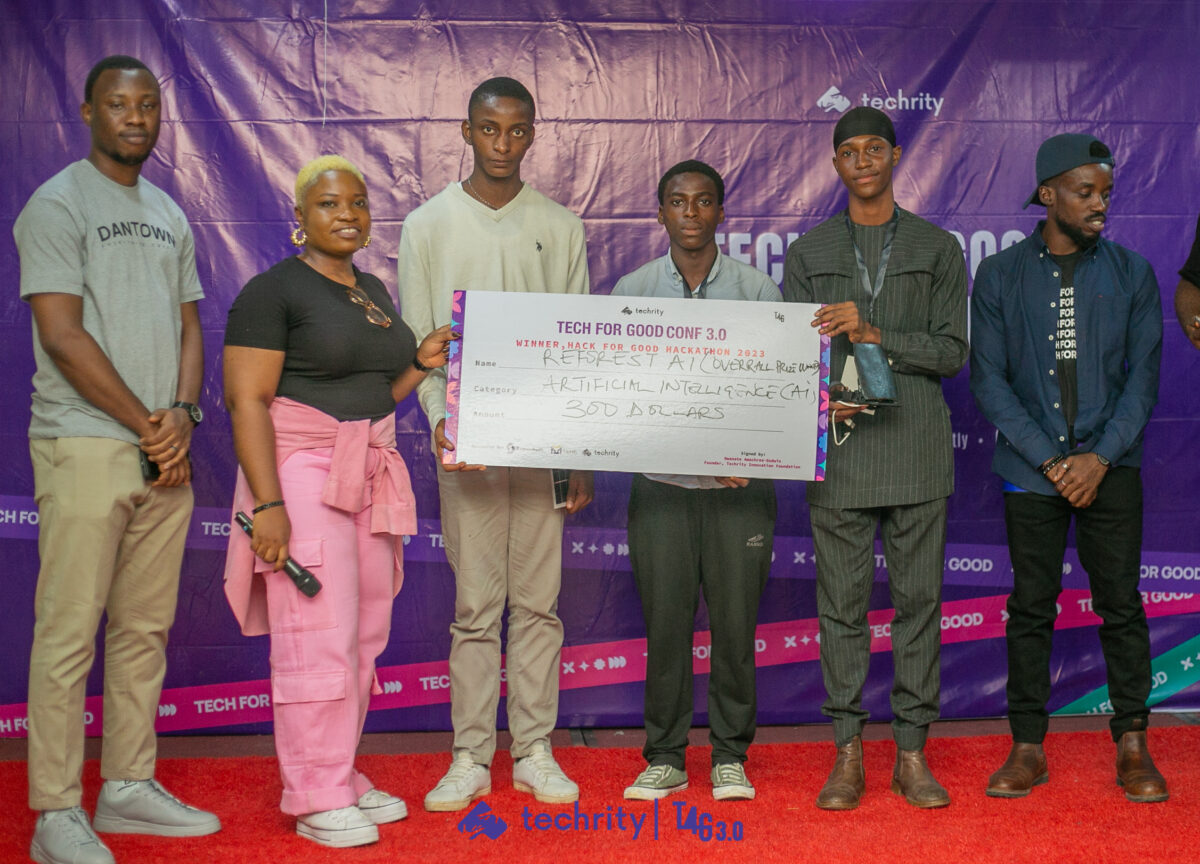
Team ReforestAI
The event also received 21 submissions in the Hack for Good Hackathon through DoraHacks and GitHub. The three winning teams were:
Crypto Mayhem – This game enlightens the player on the importance of water pollution (3rd Place). Watch the demo on Youtube.
They were rewarded with a total of $650 in cash and $700 in XuperAuth credits, generously sponsored by Techrity, XuperAuth, and Mently.
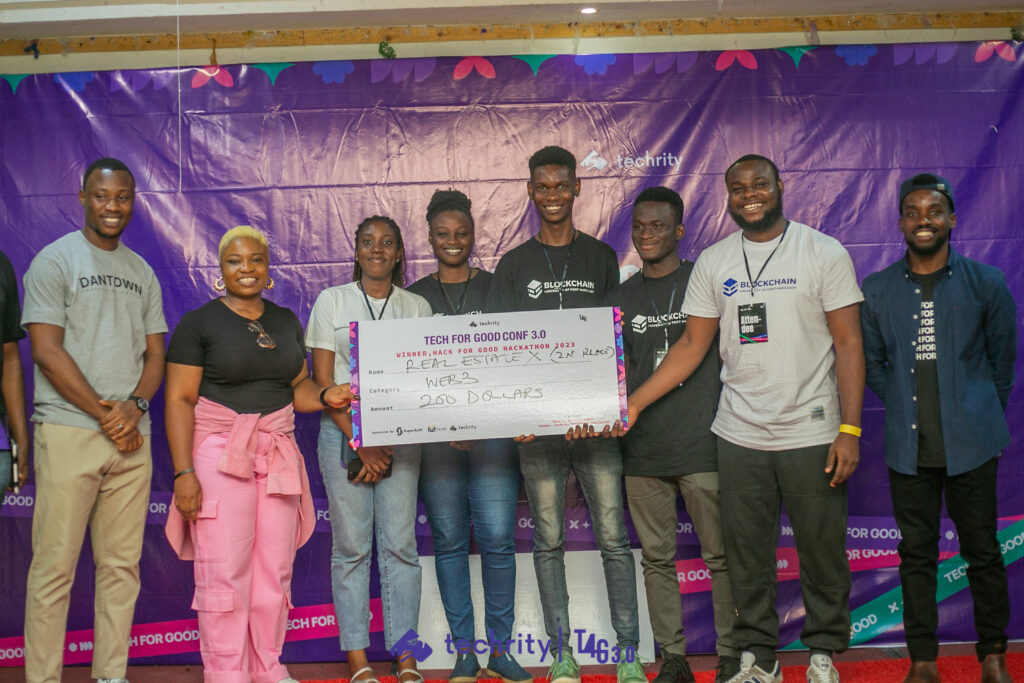
Team Real Estate X
This year’s edition stood out with the introduction of paid ticketing, elevating the event management experience to a whole new level. The ticketing revenue exceeded #500,000, including sales from the regular, VIP, and Company Access categories, all made possible through the Nftikets Event Ticketing Platform.
This achievement was thanks to the incredible support from community members like Chibuzo Madumere, Akuma Isaac, Paula Daopuye, Stephen Okonkwo, Chekwube Peters, Felix Ogbuji, Karla Obakpolor, Sagir Garba, Daniel Emmanuel, and Segun Francis, who enthusiastically participated in the #PayItForwardChallenge, enabling over 100 sponsored tickets.
Ticket registration stand
This year’s conference started with an opening speech from the founder, Mrs. Owanate Amachree-Godwin,
It also showcased experienced speakers, including Uche Aniche, the Convener of Startup South, discussing how African startups can utilize technology.
Mr. Uche Aniche Preaching the Gospel of Startups
Jephtah Abu, founder of Talentpoel, talked about the impact of exporting tech talents in Africa
Jephthah Abu
while Susan Odurinde, founder of Cactus Tech, focused on innovative thinking for social impact.
Kelvin Ogba Dafiaghor, Regional Manager in Africa for Global STEM Initiative, highlighted how AI is transforming Africa positively.
Mr Kelvin Dafiaghor highlights the benefits of AI transformation in Africa
Wisdom Nwokocha shared insights on finding and securing freelance technical writing clients
Wisdom Nwokocha
Ayoleyi Lurogho discussed evolving UX thinking beyond drag and drop,
Ayoleyi Lurogho
and Kelechi Oliver addressed cloud adoption for early-stage startups.
Kelechi Oliver
Ibe Andyson focused on choosing a tech career based on understanding personality traits and more.
Ibe Andrew Andyson
Social Impact Organizations
Social impact organizations and companies dedicated to realizing the vision of Tech for Good were actively involved. These entities were invited to share their impactful stories, to highlight their contributions to the tech sector. Participating organizations included:
SpitalLabs
Spital Labs is a community and tech hub with a vision to provide high-quality technical training through cohort programmes and diverse channels, to scale digital education to millions.
Code Ambassadors
Code Ambassadors Academy is a STEM.org Accredited academy that inspires and equips kids/teens between the ages of 5 and 17 with coding, problem-solving, and critical-thinking skills to turn their ideas into solutions. We achieve this by providing training, mentorship, and exhibition events.
Technoville
Technoville was founded in 2018, by passionate young people who believe that technology can transform individuals and nations. We are equipping the next generation of innovators with in-demand digital skills. Nurturing tech talent, bridging the talent gap with well-curated programs, fostering digital excellence, and driving the future of tech innovation.
Dantown
Dantown is a crypto exchange that offers buy and sell services for crypto, fast payments, and 24/7 customer service. Other benefits include airtime purchases, cable TV subscriptions, utility bill payments, and virtual USD cards.
XuperAuth
XuperAuth is a walletless, passwordless authentication system that leverages blockchain technology to provide secure and convenient access to Web3 products. It eliminates the need for users to manage complex private keys or remember passwords, making it easier for them to engage with blockchain applications.
Our suite of APIs and SDKs is designed to empower DApps with walletless, and passwordless authentication, revolutionizing user experiences, and increasing adoption rates in the Web3 ecosystem.
Mently
The Mently Mentorship platform enables you to scale your mentorship programs with ease, automate, host and manage the entire lifecycle of your mentorship program. The platform provides automated matching of mentors to mentees, creates curriculums and manages your training in one place.
NFTikets
NFTikets is an online ticketing for any type of live and virtual event.
Highlights
Another interesting moment observed at Tech for Good 3.0 was the showcase of two children from Code Ambassadors. These children showcased and talked about the work they have been building at Code Ambassadors. The first one is GBS Alert. You can watch the demo video and the pitch video. The second one is the Hazel App. You can watch the demo video and pitch video.
Tech for Good Awards
The Tech for Good Social Impact Awards honors individuals, startups, non-profits, and volunteers who use their platforms to better their community and the global community at large.
At the third edition of Tech for Good 3.0, we are celebrated mentors who have dedicated their time and resources to sharing knowledge and mentoring newbies into Tech careers.
At the heart of Techrity’s mission lies its annual mentorship program, which nurtures and guides aspiring tech talents, empowering them to become agents of change in their communities. This program provides mentorship, workshops, and networking opportunities, fostering a supportive environment where young innovators can thrive.
Through its mentorship program, Techrity has played a crucial role in shaping the tech landscape of the Niger Delta. Mentors, drawn from a pool of experienced professionals and industry experts, provide invaluable guidance and support to mentees, helping them develop their technical skills, entrepreneurial mindset, and problem-solving abilities. This nurturing environment has nurtured a new generation of tech leaders equipped with the skills and knowledge to tackle their communities’ challenges.
The impact of Techrity’s mentorship program extends far beyond individual mentees, shaping the trajectory of innovation and social impact in the region. By empowering young talents to harness the power of technology, Techrity is fostering a culture of innovation that is addressing real-world challenges and creating a more sustainable future for the Niger Delta.
Techrity’s efforts are not limited to mentorship; the foundation also provides Data support and laptops to beginners looking to kickstart their careers. This comprehensive approach to nurturing innovation has resulted in the development of homegrown solutions that address critical issues in education, healthcare, agriculture, and environmental sustainability.
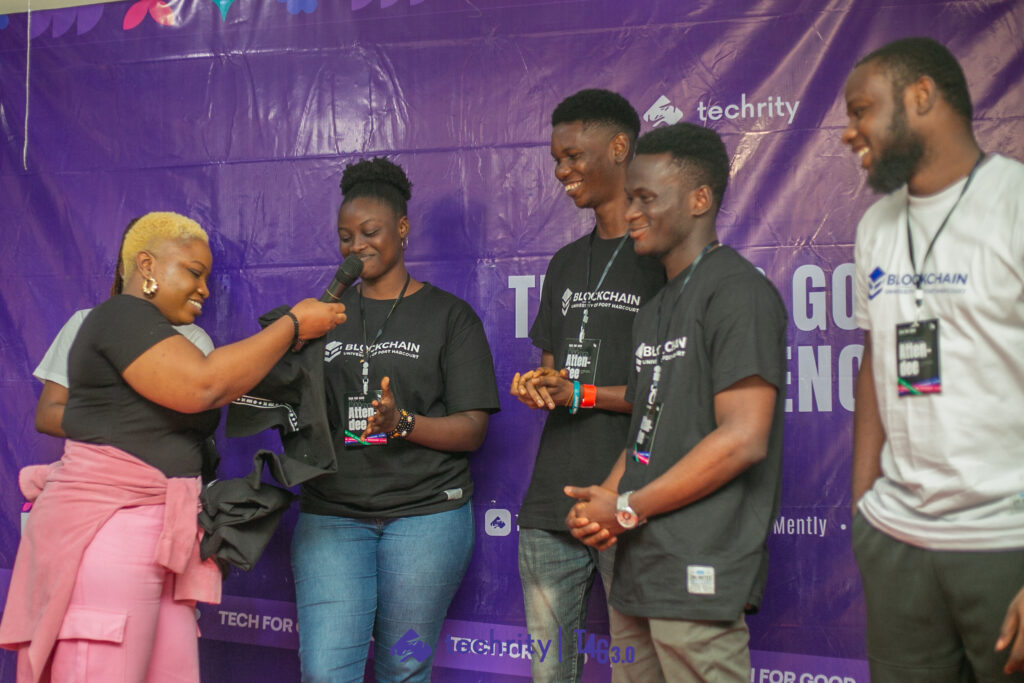
Our handsome Host – Felix OgbujiBeautiful co-host – Joy NwaiwuSmiley face ???? and serious face ???? Community Manager and VolunteersFounder of Blockchain Uniport – Proudly talking about how his community was a winner in the hackathon ????Founder and Team Lead – Owanate Amachree-Godwin giving the keynote address
We would like to thank our sponsors, partners, organization, attendees who helped make the Tech for Good Conference a success. Special thanks to those who participated in the #PayItForward Challenge which helped to provide 100+ sponsored tickets to attendees of the event.
Chibuzo Madumere, Godwin Jimmy, Akuma Isaac, Sagir Garba, Daniel Emmanuel, Segun Francis, Felix Ogbuji, Paula Daopuye, Chekwube Peters, Stephen Okonkwo, Karla Obakpolor, who enthusiastically participated in the #PayItForwardChallenge, enabling over 102 sponsored (free) tickets.
As the convener of the Tech for Good Annual Conference, Techrity Innovation Foundation has established itself as a driving force behind the region’s tech ecosystem. The foundation’s unwavering commitment to empowering young innovators, fostering collaboration, and promoting the responsible use of technology for social good is making a tangible impact on the lives of communities across the Niger Delta and Nigeria at large.
The success of T4G 3.0 is a testament to the transformative power of technology and the unwavering dedication of individuals and organizations working to harness its potential for positive change. The conference has set a new standard for innovation and social impact in Africa, inspiring a new generation of tech leaders to embrace technology as a tool for creating a brighter future for Africa.
My name is Lesley John-Jumbo. I am 18 years old and an embedded systems developer. I like to explore the realms of Artificial Intelligence and Robotics.
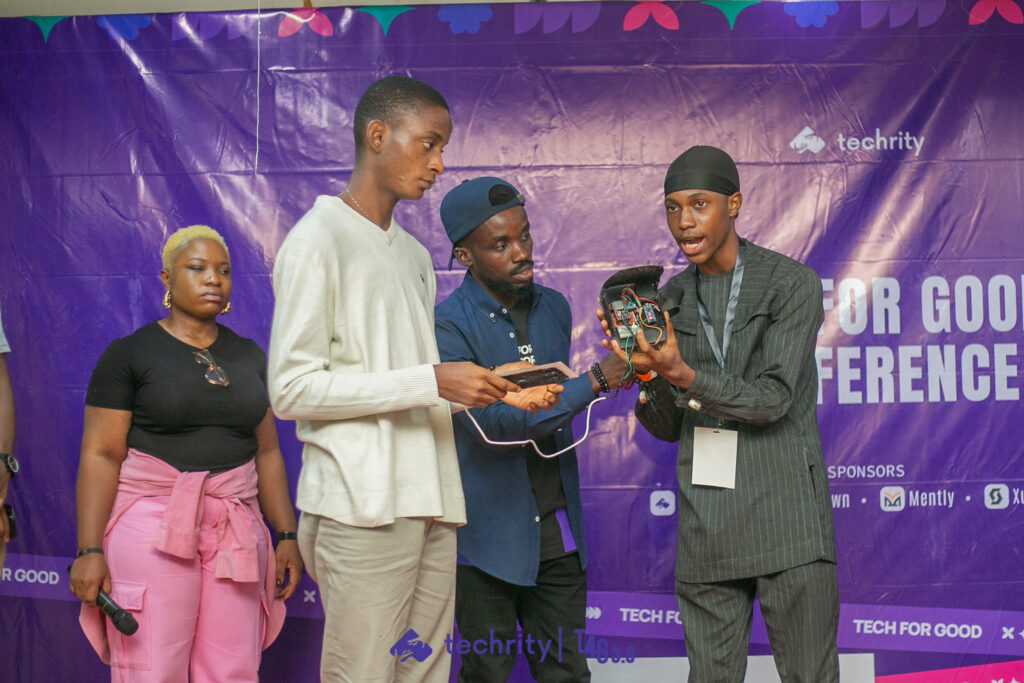
My team members: Blessed Pepple (19, Hardware designer), Bright Sunday (17, Embedded systems engineering specialist) and I recently developed a project called, “ReForestAI” for the HackforGood hackathon challenge 2023 organized by Techrity.
Problem Statement
Illegal logging has deteriorated the forest ecosystem, leading to the deforestation and extinction of some animals. The problem of deforestation poses harmful threats to biodiversity, carbon sequestration, and cultural heritage, emphasizing the urgent need for effective forest conversation and protective measures. And here comes ReForestAI.
Solution Overview
ReForestAI is a project that harnesses artificial intelligence, robotics and environmental science to tackle one of Africa’s most pressing environmental issues—deforestation. With ReForestAI, the global governments and environmental biologists can combat illegal logging and revive the forest ecosystem again.
Challenges Faced
For this project, we stepped out on a completely new terrain. We experienced difficulties with advanced batteries and was bamboozled by the unfamiliar electrical connections we tried. I would say these setbacks occurred because we tried new construction methods for the project.
But thanks to our thorough research skills, we found a way to correct the wiring without overloading the components with a high voltage capacity. In turn, not only did this aggressive research pay off in saving our project, we learnt a lot as a team.
Aside from the hiccups we faced in our construction method, we also battled with unstable power supply in Port-Harcourt. To solve this, we used a friend’s robotics workstation, which operated on solar power. At night, after our friend’s operating hours, we continued building, demonstrating our commitment to overcoming challenges and advancing our project despite external limitations.
Technologies Used
AI and Machine Learning: We used tailor-made AI models for detecting deforestation and performing predictive analytics.
Robotics: With AI embedded robots, we monitored the forest.
Cloud computing: We used expandable cloud infrastructure for processing and storing data.
IoT Sensors: IoT was used as an environmental sensors for collecting data.
A special highlight for me during this hackathon challenge was the improvement of my circuit design skills. I learned the importance of running and testing codes in increments and meticulously defining algorithms based on specific circumstances. With this new knowledge I learnt, debugging my codes became a lot easier.
ReforestAI Presentation at Tech for Good 2023
For my team also, our journey was punctuated with memorable moments that highlighted our individual growth. Despite our strong belief in the success of our project, we stayed grounded, acknowledging that the experience gained was a victory in itself no matter the outcome of the result. This perspective propelled us forward, creating an environment where learning and growth were just as important as the outcome.
Future Developments
Our vision goes beyond what we see; we aspire to scale this project globally by partnering with international entities, and building a network that will amplify our project’s reach.
Conclusion
We are sincerely thankful for the opportunity given to us by Techrity to participate in this hackathon challenge. The hackathon not only enabled us to showcase our skills but also offered an environment that fostered growth and creativity.
My team, the Blockchain Uniport built a platform called, “Real Estate X”, a project that allows real estate industries use NFTs (Non-Fungible Tokens) as a secure proof-of-payment. I’m Daniel Onyebuchi, and on behalf of my team, I will be sharing our Hack for Good hackathon challenge organized by Techrity experience with you in this blog post.
Problem Statement
From our research, we observed that in the real estate market, it is not easy to buy and sell properties as it takes longer time to meet potential buyers. We also noticed that owning a real estate property has become way too expensive for individuals and big investors to participate in this lucrative type of investment, indirectly limiting the flow of capital in the real estate market.
How Limited Fluidity Affects Real Estate Investment
Due to the limited liquidity in the real estate market, many individuals and investors interested in the real estate market are currently battling with:
A lack of access to real estate investments owing to the high down payment required from buyers before investing in a real estate property.
Difficulty in buying and selling properties to investors and individuals as a result of the fluctuating market prices.
Conventional method of real estate investing, which hampers innovation and slows down the modernization of the industry.
Solution Overview
Our project, Real Estate X, tackles these problems by capitalizing on the power of blockchain technology and NFTs. We developed a user-friendly website that would allow investors to collectively pool their funds to invest in a portion of real estate asset. To this effect, instead of a single investor buying an entire property, which may be too expensive, co-investors interested in the same property can each co-own a fraction of the real asset property collectively purchased with smaller capital commitment. Additionally, it will allow these investors to benefit from the real estate property as it surges in price year after year.
Key Features and Functionalities
Shared ownership: Real Estate X uses NFTs (non-fungible tokens) to show partial ownership of real estate. These NFTs give users a safe and provable right to a fraction of the property.
Efficient Investment Steps: Real Estate X makes real estate investing easy. Users can check out available properties, get detailed information, and buy shared ownership NFTs using cryptocurrency.
Clear and Safe Transactions: Real Estate X uses blockchain technology’s built-in security and transparency to guarantee safe and transparent transactions. Every transaction is noted on the blockchain, giving an unchangeable and verifiable record of ownership.
Automatic Profit Sharing: Real Estate X automates sharing rental income and capital gains with NFT holders. This guarantees that investors get their rightful portion of the property’s earnings.
Distributed Marketplace: Real Estate X works as a marketplace without middlemen, cutting down on transaction costs. This distributed approach boosts market efficiency and accessibility.
How Real Estate X Works
Real Estate X carefully selects and evaluates properties for sharing. Once a property is chosen, it’s tokenized, and a unique NFT is created that represents partial ownership.
The tokenized NFTs go on the Real Estate X platform where users can check available properties, get details, and buy NFTs using cryptocurrency.
The NFT ownership is securely stored on the blockchain, creating an unchangeable ownership record. With this, investors can easily handle their NFTs and monitor investment performance through the platform.
Next, Real Estate X automates sharing rental income and capital gains with NFT holders and investors get their fair portion of the property’s returns directly to their cryptocurrency wallets.
Then, the NFT holders can trade their ownership NFTs on the secondary market, offering flexibility and liquidity for their investments.
Challenges Faced
Navigating the Regulatory Landscape:
The rules around real estate investment, especially in the context of blockchain technology, are still in early development. This made it tricky to comply with the regulations while keeping the innovative aspects of our platform intact. To tackle this, we conducted thorough research and sought advice from legal and regulatory experts to stay updated and identify potential compliance needs. We also actively took part in industry discussions to advocate for a regulatory environment that encourages innovation while safeguarding investors.
Balancing Security and Accessibility:
Our priority was to guarantee top-notch security for user funds and data, given the type of assets involved. On the flip side, we wanted the platform to be user-friendly for a wide audience, including less tech-savvy individuals. To strike this balance, we implemented strong security measures like multi-factor authentication, encryption, and access controls. We simplified the user interface and provided clear instructions to make the platform easy to navigate and use. We kept refining our security measures and user experience based on feedback from our community and industry experts.
Educating The Market:
We teamed up with industry leaders, educational institutions, and media outlets to spread awareness of shared real estate and its potential use by creating informative content, hosting workshops and seminars, and actively communicating with the community to clear up misunderstandings and encourage well-informed choices.
Blockchain Technology: Blockchain technology formed the basic building block for Real Estate X. Blockchain helped us provide a secure and transparent way to manage ownership records to prevent fraud and manipulation.
Non-Fungible Tokens (NFTs): NFTs represented the shared real estate property asset. As each NFT is unique, it specifically signified a portion of the real estate property assigned to the owner to ensure ownership integrity.
Smart Contracts: Smart contracts are self-executing contracts embedded in the blockchain. With this technology, we automated predefined terms and conditions for managing fractional ownership, distributing rental income, and handling capital gains sharing to reduce the need for intermediaries.
Cryptocurrency Payments: Cryptocurrency is the primary mode for purchasng any property on Real Estate X. This is because cryptocurrency is fast, more secure, and less expensive compared to the traditional mode of payment options.
Our Hackathon Experience In Details
My Team members were:
Pascal Abams – The crypto researcher
Onu Daniel – The full-stack blockchain developer
Jude Abara – The blockchain developer, and
Angel Ademakin – The UI/UX designer
Participating in Techrity’s Tech4Good hackathon was an enriching experience for us that reshaped our view of how blockchain technology can transform the real estate industry. From brainstorming ideas to the final presentation, we were absorbed in a whirlwind of creativity, collaboration, and learning. The hackathon provided a platform to bring our vision for Real Estate X to life and share it with a passionate community of techies and industry experts.
Despite facing technical challenges and time constraints, my team’s resolve was unbroken. We gained the superpower for adapting, prioritizing, and maximizing the adeptness of our diverse team members. Overcoming each challenge brought us closer to our goal of creating a groundbreaking platform that opens up real estate investment to everyone.
Our most memorable moments were the collaborative brainstorming sessions and supportive environment where we met with other tech gurus who shared our passion for technology and innovation. We learned from one another’s perspective, challenged our assumptions, and hacked more innovative solutions.
Future Development
Our journey at the Tech4Good hackathon has only just begun. We are committed to further developing Real Estate X, expanding its features, and making it a vital platform for shared real estate investment.
Here are some of our key plans for future development:
We aim to broaden the range of available properties in different locations, types, and price ranges, offer various asset classes and investment opportunities.
We aim to improve the user experience by simplifying the platform navigation, enhance visuals, and provide comprehensive support resources.
We aim to introduce advanced analytics and reporting for investors, offering insights into their investments and include real-time property performance tracking, detailed financial data, and market trends analysis.
We aim to extend smart contract capabilities to automate more aspects of the investment process, streamline property management, integrate with third-party services, and support complex investment strategies.
We will also engage actively with our growing investor community by providing educational resources, host events, and encourage knowledge sharing for a supportive and informed community.
We will explore integrating Real Estate X with other blockchain networks and allow the use of different cryptocurrencies for transactions and access to a wider range of properties.
Conclusion
Our journey at the Tech4Good hackathon has transformed our vision for a more inclusive real estate market. We’re grateful for the opportunity to showcase Real Estate X and contribute to blockchain solutions for real-world issues.
How I embrace-equity in my community by glory wejinya
My story on how I Embrace Equity in My Communities and Workplaces and Why Equal Opportunities Are No Longer Enough
Glory Wejinya in the EmbraceEquity Pose
Background
EmbraceEquity Article Contest Instructions
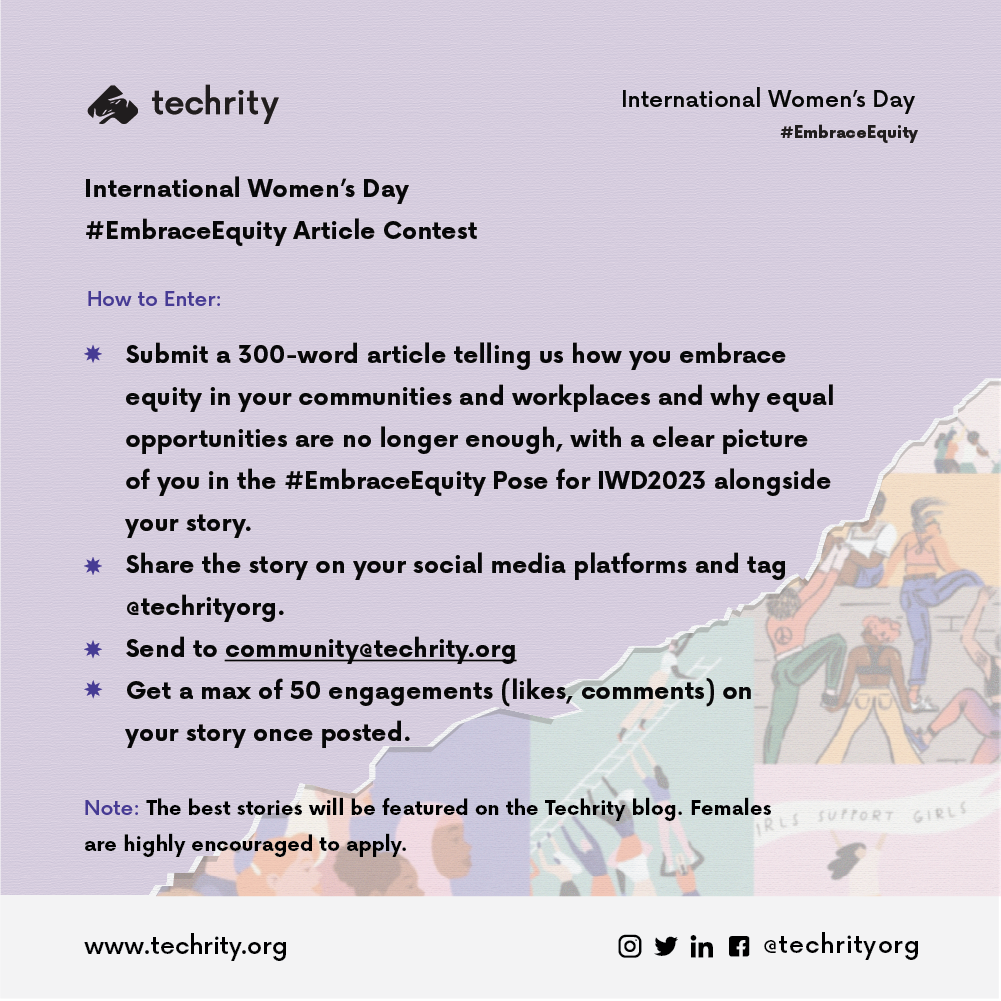
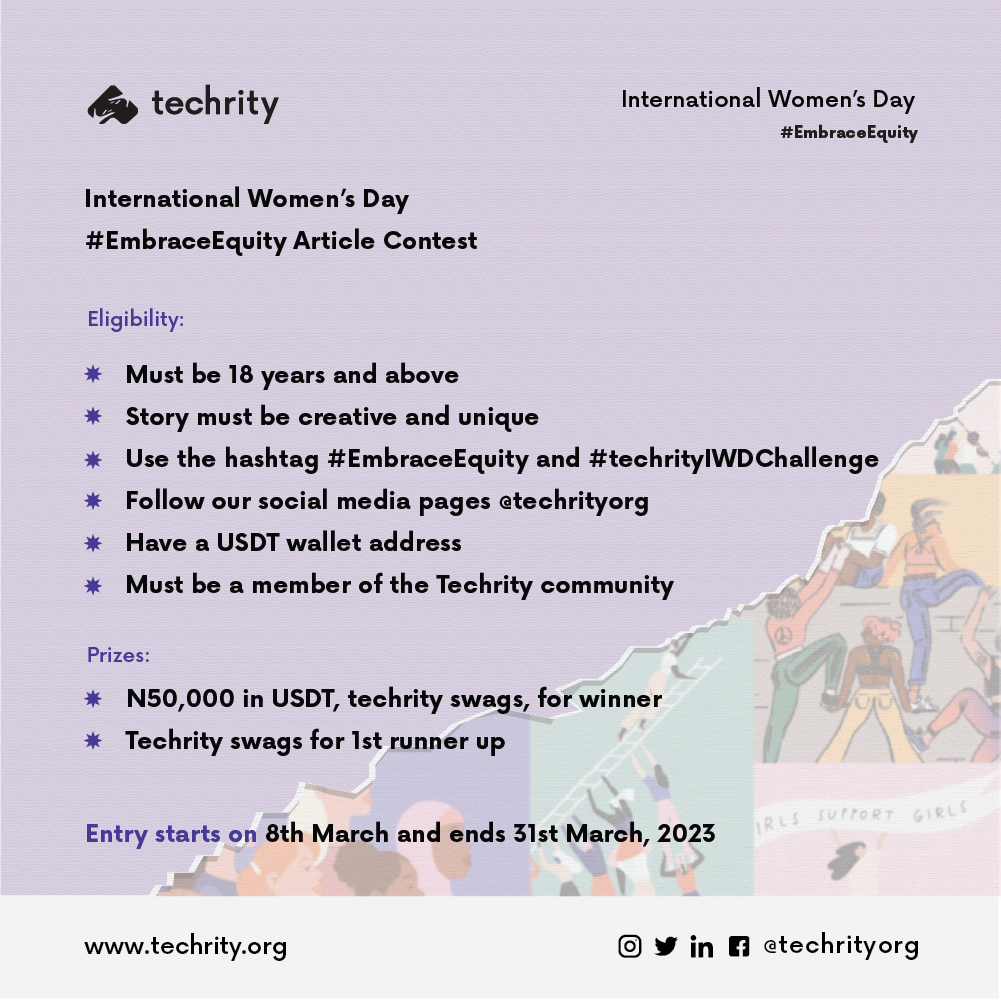
As part of the celebration of IWD2023, Techrity marked IWD by calling for an #EmbraceEquity Article Story Contest. The winner would go home with N50,000 in USDT and their story will be published on the Techrity Blog.
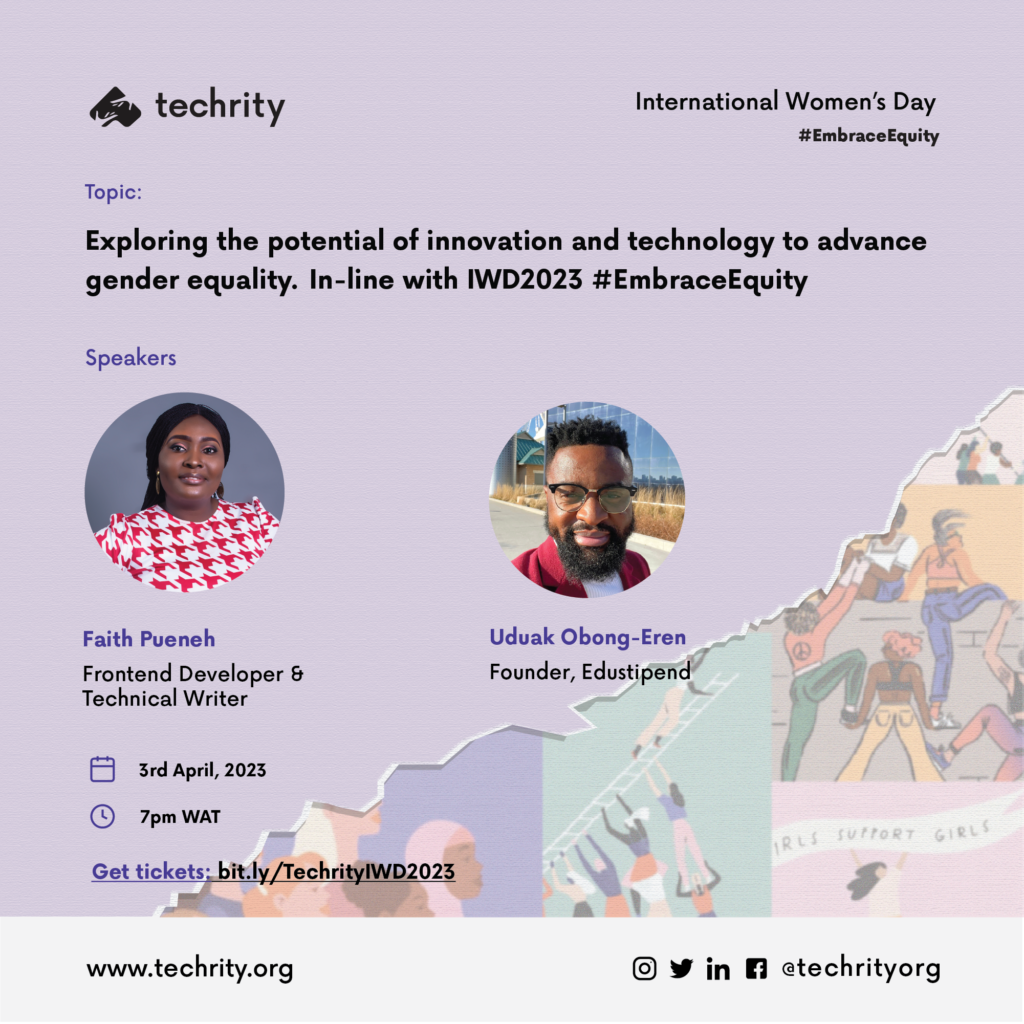
Speaker for Techrity IWD2023 Event on Twitter Space
Glory Wejinya, a content writer and student at the Rivers State University emerged winner amongst 3 entries for the contest.
Here’s her story below;
Glory Wejinya explains in detail how she’s embracing equity in her community and workplace and why equal opportunities are no longer enough.
“Growing up in a community where women were mostly and still referred to as a second option and the last choice, I became motivated to promote gender equity as a person. Although I have been unable to do as much as I intend to do, I have within my resources given my honest opinions on matters that affect women in rural communities and promote inclusivity.
To embrace equity means to embrace diversity, inclusion, and fairness. This involves creating a fair and just society where everyone has equal access to resources and opportunities.
Glory Wejinya
While equal opportunities are essential to achieving a fair and just society, having equal opportunities is not a direct solution to deeply rooted inequality and discrimination . This is mainly because not everyone can have equal access to these opportunities. Poverty and lack of access to quality education can greatly limit anyone’s ability to utilise the given opportunities.
Educating, training and equipping women to be ready to take up available roles is a great way to embrace equity in communities.
In 2022, I embraced equity via my contributions to the Domestic Violence Directory, 2022. Currently garnering over 100 downloads, this directory provides information for victims of domestic violence; identifying several domestic violence centres and responders in the 36 states of Nigeria.
Another way I am able to contribute my quota is by volunteering my time and expertise at Her Dream Initiative; a non-profit organisation that aims to empower girls and women all over the world; exposing females to numerous opportunities available to them, ranging from fellowships, and internships to scholarships. I do this through social media management as the publicity team lead of the organisation; lending my voice as a social media manager, creating content that fits the objectives and goals of the organisation, advocating women’s rights, and giving women their flowers”.
Want to reach out to Glory? Follow her on LinkedIn.
Showcasing Tech Innovations for Social Good in Africa
The Tech for Good (T4G) is an annual conference that aims to showcase the impact of using Technology for Social Good in Africa.
The second edition of the just concluded Tech for Good conference was held on the 29th of October 2022 at the Rivers State ICT, Techcreek.
Purpose of Tech for Good
There is a lot of negative information being spread out there concerning Tech and its use in Africa. We created Tech for Good to solve this problem.
To understand more about the purpose of the Tech for Good conference, check out the first edition – Tech for Good 2021.
Highlights from the event
Tech for Good 2.0 was so loaded and full of impact, reporting over 250 persons in attendance, 5 speakers, 6 Social impact orgs, and over 20 people including organizations and startups awarded during the Tech for Good Awards.
Speaker Lineup
This year’s conference featured some seasoned speakers, such as;
Mr. Bruce Lucas – Founder and CEO of Olotusquare spoke on “The Journey so Far: Social Impact, Challenges of Tech in Africa”.
Davio White, a brand and product designer spoke on Designing for Social Impact
Umasoye Igwe, a creative writer and advocate for indigenous languages spoke on “How Tech is revolutionizing indigenous languages for Africans”
Sokaribo Senibo, a Software Developer spoke on “Leveraging Tech for Good: Veritable Use cases”
Tosin Emmanuel, founder of Blockchain Uniport spoke on “Blockchain Technology as a medium for Social impact in Africa”
Social Impact Project Showcase
The social impact project showcase aims to showcase projects and products built for social good in Africa.
Social impact projects like InformHER, was present to showcase their projects and products
InformHer
InformHer helps to empower young girls with the information needed to make decisions about their bodies and sex-related issues while making sure that they embrace their femininity
You can follow @helixgade on Social media to learn more.
Social Impact Orgs
Organizations and companies working tirelessly to ensure the vision of building Tech for Good were not left out, these organizations were invited to tell their Social Impact Story. The aim is to showcase the works of these companies and organizations in Tech.
Some organizations present include:
Accelerate Hub
Accelerate Innovation Hub is a technology incubation hub that focuses on facilitating student development in the area of technology and tech entrepreneurship. We aim to create a community that prompts collaboration, ideation, innovation, and synergy for student tech enthusiasts.
You can follow @acceleratehubng on Social media or visit their website: http://acceleratehub.co/
Accelerate Hub – WInner of Social Impact Organization (Non profit) 2022 receiving its award
Code Ambassadors
Code Ambassadors Lab is an EdTech Start-up that inspires and equips children between the ages of 5-17 with tech(coding, robotics, Artificial intelligence, etc.), problem-solving, and critical thinking skills. We have trained over 3000 children and are partnered with over 10 organizations and schools within four years.
The vision is to raise young tech founders in Africa who will leverage technology to solve problems.
Technoville innovation Nigeria is a leading technology organization aimed at social impact and innovative technology solutions. With a vision to “Ignite Curiosity”, it is committed to providing an environment where technology and innovative skills are attainable and curiosity is applauded.
Technoville was founded in 2018, by passionate young people who believe that technology can transform individuals and nations.
Extend Africa is a community for the immersive tech ecosystem in Africa.
We believe that with this platform, we can strategically project the works of extended reality creators in Africa to the world. We are also certain that through this platform, more people will find use cases of extended reality in ways that will immensely improve their lives.
You can follow @extendafrica on Social media or visit their website: https://extend.africa/
Gospel Ononwi – founder of Extend Africa
Blockchain Uniport
Blockchain Uniport is committed to bridging the gap between the student community and their knowledge of Cryptocurrencies and Blockchain Technology in general.
We are determined to build a community force of well-informed students who are equipped for the future of technology.
You can follow @blockchainuniport on Social media.
Tosin Emmanuel – Founder of Blockchain Uniport
Panel Session
The panel session brought together techies doing social impact work to tell their Tech for Good story;
Panelist session – Joy Nwaiwu, Wisdom Nwokocha, Philip Atimor, Godwin Jimmy, Somkene Mamah, Sokaribo Senibo, Solomon Eseme, Smith Nwokocha
Tech for Good Awards
The Tech for Good Social Impact Awards honors individuals, startups, non-profits, and volunteers who use their platforms to better their community and the global community at large.
The following is the list of the awardees and nominees for the Tech for Good social impact awards.
Social Impact Icon 2022 (Green Category)
Louis Whyte Jonah – Accelerate Hub (nominated)
Wisdom Nwokocha – Mentorship (A)
Pepple Richard – Technoville (Award)
Godwin Jimmy Akpabio – Accelerate Hub, NFTikets (Award)
Philip Chukwunonso Obiorah – Co Lead, GDG Cloud, Port Harcourt (Award)
Faith Pueneh – Mentorship (nominated)
Social Impact Icon 2022 (Veteran Category)
Bruce Lucas – Olotu Square (Award winner)
Gino Osahon – GDG Cloud PH (Award winner)
Social Impact (Non-Profit)
Accelerate Hub (Award winner)
Code Ambassadors (nominated)
Harvoxx Tech Hub (nominated)
Startup for Good
Mently (Award winner)
NFTikets (Award winner)
Dantown (Award winner)
Bankable Wisdom(nominated)
Acend (nominated)
Volunteer of the year awards
Jennifer Etegbeke
Temitayo Alebiosu
Faith Agugoesi
Caleb Duff
Our Star Girl
Deborah Folorunsho, a student and member of Code Ambassadors showcased her project at this year’s Tech for Good conference.
Deborah is a 14-year-old girl who built an app to help addicts recover from their addictions.
She was also featured on Guardian news recently in an article where she talked about her project in detail.
You can read more about her solution on the Guardian News.
Important Links
Watch the Tech for Good 2022 Livestream on Youtube.
Read more about the mobile app helping addicts recover from addiction by Deborah Folorunsho.
The highest earning people in almost every profession, not excluding the tech industry, aren’t always those with lots of certifications and technical know-how. They are usually not the “geekiest” people in the team, yet you wonder why they are always team leaders, corporation managers, occupy very important positions in every organization, earn the highest figures in pay and lead happy lives. Whether you want to build a career in the tech industry for only a few years or the rest of your life, soft skills are a sure bet for achieving a tech career that offers you fulfillment. This article defines the concept of soft skills, outlines the five most important soft skills everyone needs to possess given the dynamic work conditions of this century, why soft skills are necessary and how to acquire them. Do not forget to subscribe to our newsletter to get updated on new trends in tech and all you need to be successful as a 21st century techie.
What are soft skills?
Soft skills are a set of social, interpersonal and emotional skills, a blend of which enables people efficiently carry out tasks in work and non-work environments made up of human beings. Soft skills are necessary in every field of human endeavor as long as it involves day to day interaction with people.
Best-five 21st century soft skills.
The following are a list of the five most important soft skills needed in the tech industry for a competitive advantage:
Critical Thinking
Team work
Time management
Leadership
Wondering what each of these skills are and how they blend to offer a mix of job success and customer satisfaction? Also wondering why they are ranked as the best-five 21st century soft skills? Keep reading.
¶. CriticalThinking: This means an ability to intelligently analyze and proffer solutions to problems. It requires mastery in tackling problems as bits of an entire whole- abstraction. This skill demands creativity, curiosity and flexibility.
¶. Teamwork: You most certainly know by now that “TEAM” is an acronym for “Together Everyone Achieves More”. Guess what? Your organization also knows about this acronym and wants to achieve high efficiency through the various teams and departments in the organization, they expect this from you too. Teamwork is the ability to contribute ideas and manpower towards the achievement of a common goal. This means sacrificing all of your time and energy to ensure that the common goal gets achieved. Teamwork demands communication, tolerance, patience and a willingness to bear the burden of a lagging teammate. This is a difficult skill given the various difference in likes and dislikes specific to different humans, yet teamwork ranks the highest in its ability to achieve organizational goal in the shortest possible time. To learn more about teamwork, click https://smallbusiness.chron.com/importance-teamwork-work-11196.html
Time Management: Time management is a skill that involves giving priority to important tasks and getting them done before focusing on leisure activities. Given the peculiarity of jobs in the tech industry and how dynamic certain tasks tend to be, clients are always hoping to have their projects delivered in the shortest possible time, hence the need for time management. Time management cuts across intentional planning of work schedules, to-do lists and progress level markers. ¶. Leadership: No leader is born. Yea! Read that again. Leaders aren’t born but made. As a soft skill, leadership involves directing the affairs of others to get tasks done in record time. It demands understanding various viewpoints of different people, strategic decision making, and firmness to follow through with previously laid out plans, not ignoring the intelligent suggestions from team members. Leadership involves a lifelong learning process to manage new sets of people given new working conditions.
¶. Networking: Networking is the art of creating relationships for organizational benefit. Networking creates room for growth and strengthens business connections.
If you gained value from reading this article, stay glued for the next episode where we’ll talk about the 10 easy steps to acquire and master soft skills.
If you need help starting your tech career, techrity has got you covered. Click on https://techrity.org/ to learn More.
Have you subscribed to the techrity newsletter yet?
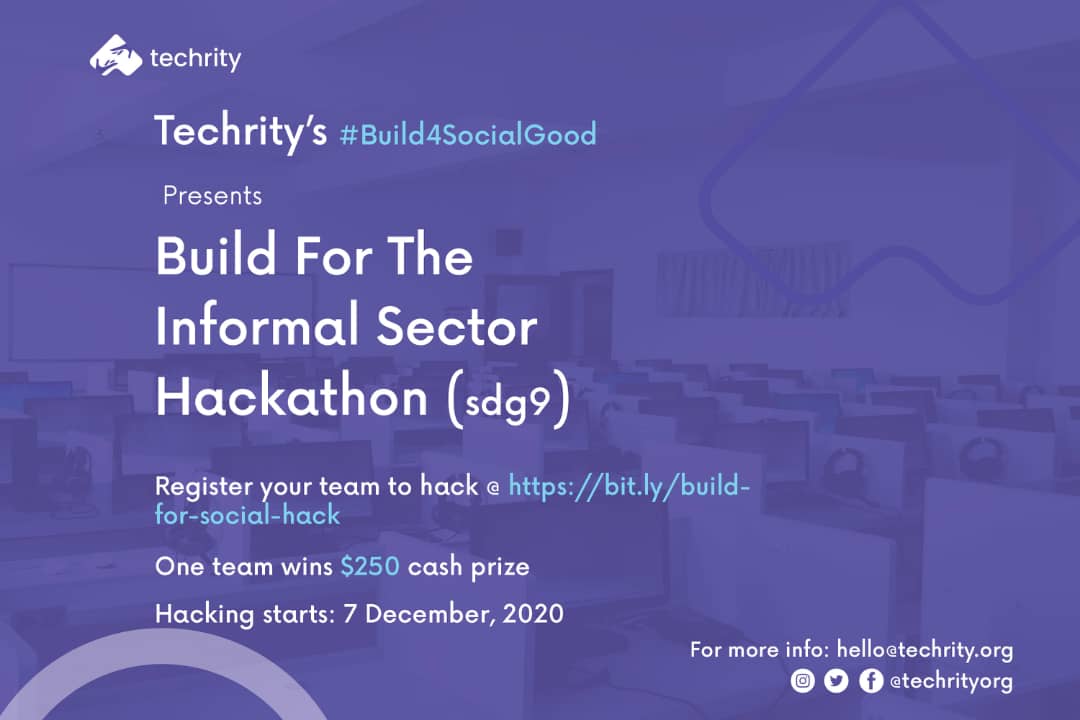
On 1st December, 2020, The Techrity #Build4SocialGood Hackathon Programme team announced the #Buil4InformalSector Virtual Hackathon.
We welcomed Software Developers, Designers and subject matter experts to ideate and build solutions for solving the United Nations Sustainable Development Goal for the African Continent.
Participants ideated and built solutions addressing UN’s Sustainable Development Goals 9, that is, promoting the industry, innovation, and infrastructure (SDG9), in the following areas.
1. Identity Management 2. On-lending facility and access to credit through non-traditional financial channels 3. Credit Score and Reputation-based rating
We received a total of three project submissions for the On-lending facility and access to credit through non-traditional financial channels category.
The following teams submitted their solutions;
Team FundMyFarm
FundMyFarm is aimed at making smallholder farmers have access to informal credit facilities without any hassle whatsoever. We also make it possible for anyone who loves farming but does not have time to do it, to grow together with the smallholder farmers as they put smiles in the face of downtrodden while at the same time, their resources are working for them.
A total of 30 participants, 9 teams, and 3 projects were recorded for the #Build4InformalSector Hackathon 2020.
These projects were compiled and submitted to our panel of judges, and we are excited to announce that a winning team emerged.
Participating teams also got a chance to demo their projects in an online event on the 8 January 2021 in front of a live audience and received feedback from our highly esteemed judges.
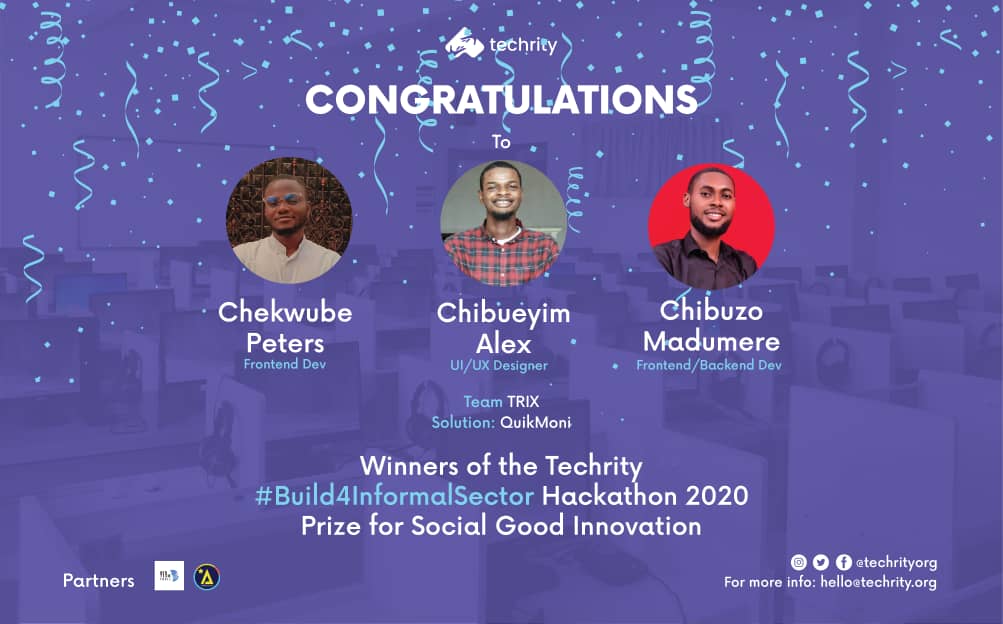
Team Trix: QuikMoni emerged as the overall Winners of the Maiden #Build4InformalSector Hackathon 2020 Prize for Social Good Innovation.
The winning team has access to;
A hub support
$250 cash prize.
The Techrity #Build4SocialGood Incubation program.
Congratulations to Team Trix: QuikMoni for emerging winners of the #Build4InformalSector Hackathon 2020 and all of the participating teams who helped turn innovative ideas into practical solutions for Africa.
We sincerely appreciate all participating teams, judges, mentors, speakers and partners who have been with us throughout the beginning of this hackathon. The time and effort invested towards building for social good and addressing the UN #sdgs challenges in Africa cannot go unnoticed.
We look forward to hosting our next #Build4SocialGood Hackathon coming up in the following months in 2021.
Project Submission Deadline: 21-23rd December 2020
Judging starts: 28th December – 2nd January 2021
Demo Day/Award Ceremony: 16th January 2021
Why #Build4Informal Sector?
Nigeria’s informal economy has grown considerably over the last decade.
These are the individuals and micro-enterprises whose economic well-being is birthed and buoyed on the fringes of the formal economy; business activities that remain unregulated, and oftentimes, completely unknown.
Initially, much of the rhetoric centred on the need to ‘manage’ this ever-expanding behemoth that the informal sector was becoming. This narrative has since evolved into one that seeks to formalise these businesses, by catering to their needs and providing them with much-needed support.
Like other parts of the economy, the informal sector has taken a hit from the COVID-19 crisis. Governments have mandated workers to take costly protective measures, such as the regular purchase of masks, the reduction in the number of passengers for motorcycle taxis, or the observance of curfews. Farmers have seen falling demand for their produce as restaurants have reduced their purchases in the face of dwindling traffic.
Key Areas Of Focus
We leave it to you to design the new conditions for the informal economy, and offer the following provocations as a place to get started for your MVPs, prototypes, etc;
On-lending facility and access to credit through non-traditional financial channels
For example, how might we build custom financial solutions for entrepreneurs to access credit outside the regular financial system, other methods of crowdfunding exist such as cooperative funding with little to no default on loan acquisition.
Identity management
Beyond the use of identity cards, bank verification numbers, etc., how can we design an economy where individuals can build a solid identity with other means of identification they can provide such as their telephone number, Social security numbers, school certificates, etc.
Credit-score/reputation based rating
Using purchasing behavior, community validation, etc. How can we design an economy that takes into cognizance an individual behavior as a form of credit score acquisition, for e.g, the ability to use an individual’s reputation overtime on social media as a means to build their credit and reputation score for use in accessing credit and lending facilities outside non-traditional financial systems.
Techrity, is a non-profit social enterprise, a community of people contributing to advance humanity through their time, money and skills. We believe in the power of using technology for sustainable human capital advancement. We’re all about inspiring the youth to take up careers in tech, through our Mentorship and Kickstart programs, we are also committed to solving social good problems using tech through our Build4SocialGood program.
Our Vision
Engineering a community of givers for technology across Africa and beyond.
Mission
Helping New Talents. Building Tech Solutions.
Values:
Teamwork and Community
Technical Growth
Diversity and Inclusion
Pay it Forward
Slogan/Motto
Paying it forward for technology
Watch this short explainer video;
Techrity explainer video
Our Programs:
Tech Mentorship
This program aims at gathering a community of mentors helping beginners based on their fields in tech. They have access to a hero badge and would be published on the Techrity org as mentors.
Register to be a mentor or mentee and gain access to our community of Mentors, specialised in different tech fields – our Mentors help to make the Mentees learning; a solid and enjoyable experience.
This is a hackathon aimed at encouraging developers to build products aimed at solving a local problem in their areas, winners of this hackathon would be published on the Techrity org website and their project would be published under the build4SocialGood page.
Social good is an action that defines some sort of benefit to the general public. Are you passionate about applying your skills for social good, but no funds to kickstart it? Participate in our #Build4SocialGood Hackathon and get a chance to fund your ideas/startup. Hackathon winners will have access to hub support to assist them in their unique innovations.
#Build4SocialGood Hackathon identify specific challenges for teams to build and provide solutions for social good problems.
Hackathon participants also get access to mentors to support and direct them during the hackathon phase.
Come join us, learn new skills, and build functioning prototypes to solve those challenges.
Our Kickstart focuses on the orientation, growth, and development of her beginners intent upon kickstarting their tech journey. With our Kickstart program, you get access to a mentor who guides you through your Tech journey, that is, you get automatic access to our free mentorship program. You also get an opportunity to be featured as a Techrity Top Learner on our blog and get a chance to impact the skills learned to others by joining our mentorship program.
Your donation plants seeds of kindness in others, and this promotes a world of revolving kind-hearted people. Help learners get laptops and data to kickstart and make their journey in tech a success.
Show your support with a one-time or recurring donation, visit the donation page to get started.
For more enquiries, send us an email: hello@techrity.org or visit the contact page and fill the contact form and we’ll get back to you in no time.
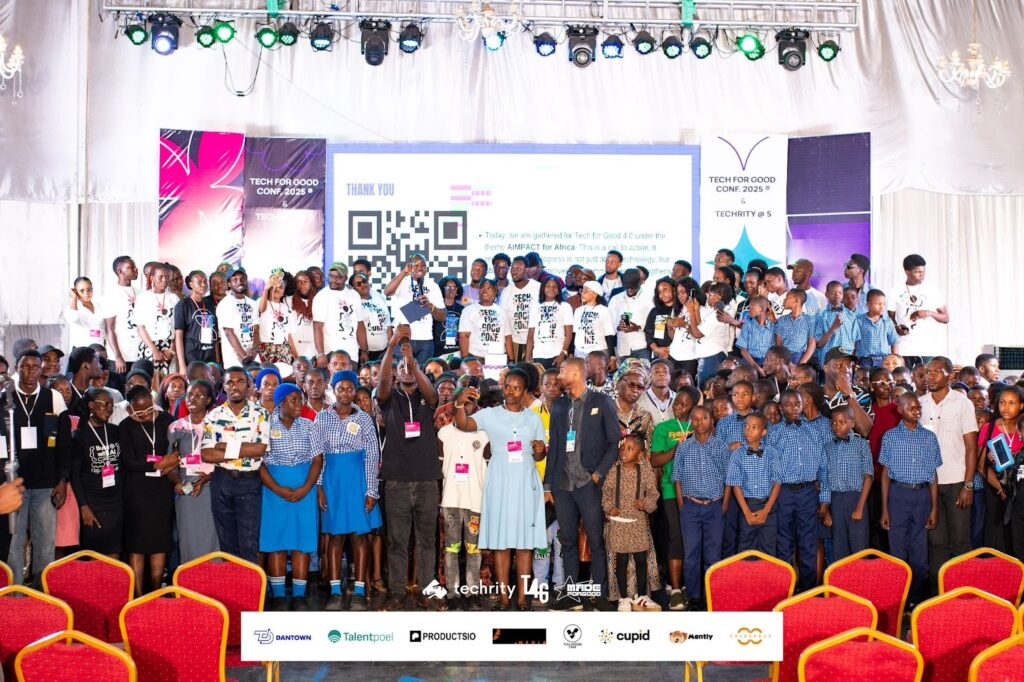
For half a decade, the Techrity Innovation Foundation has been on a steadfast mission to transform Africa’s digital landscape. What began in December 2020 has evolved into a continental movement dedicated to bridging the digital divide. On October 25, 2025, Techrity marked its 5th Anniversary by celebrating this journey of empowerment at the fourth edition of its flagship conference, themed AIMPACT Africa, held in Port Harcourt.
The milestone event brought together over 500 innovators, entrepreneurs, and educators to explore how Artificial Intelligence (AI) and emerging technologies can drive inclusion, digital literacy, and sustainable development across the continent.
Grassroots Impact: The Road to Tech for Good
Techrity’s commitment to “Empowering a Continent” begins in the classroom. Leading up to the anniversary conference, the team embarked on the “Road to Tech for Good” outreach, visiting Rumuokuta Girls Secondary School and Community Secondary School. The mission was to inspire young students to view technology not just as a subject, but as a critical tool for shaping their futures and solving real-world problems.
To solidify this commitment to early access, Techrity sponsored 120 students from public and private secondary schools across Rivers State to attend the conference. A powerful highlight of their participation was the emergence of Emmanuel Amaechi, an SS1 student from Christ Army Educational School, as the winner of the interschool Q&A session. He received a ₦50,000 cash prize and a full Tech Scholarship from Mr. Chinoso Chijoke, Founder of Cupid Technologies.
Key Takeaways: The Moments and Highlights That Shaped the Conference
Opening the conference, Islamiat Arinola Oseni, Senior Project Officer at Techrity, described Tech for Good as “more than an event, it is a movement to leverage technology for empowerment, community growth, and social impact.” She highlighted Techrity’s commitment to bridging the digital divide through mentorship, capacity building, and inclusion-focused initiatives.
Delivering the 5th anniversary speech and Impact story, Techrity’s Founder and Team Lead, Mrs Owanate Amachree, reflected on the foundation’s growth since its establishment in 2020. She said Techrity has evolved into “a pan-African force for social innovation and digital empowerment,” citing initiatives such as Hack for Good, the Techrity Mentorship Program, the Kickstart Initiative, and the Laptop Support Scholarship. “Technology has the power to redefine Africa’s growth narrative. At Techrity, we are building an ecosystem that enables learning, innovation, and impact,” she said.
The Keynote Sessions offered thought-provoking insights into the transformative power of technology in shaping Africa’s digital future. Mr Kenneth Nwokoro opened with “Building an Inclusive Digital Economy: Empowering Communities and Closing the Digital Divide,” emphasising the need for equitable access to technology and digital opportunities across all communities. Chimene Chinah followed with “AI for Inclusive Growth: Harnessing Artificial Intelligence to Drive Africa’s Transformation,” exploring how artificial intelligence can catalyse sustainable development and inclusive progress across the continent.
The Guest Speakers further enriched the discussions with practical perspectives on innovation and empowerment. Mrs Amarachi Stanley-Duru delivered a compelling session on “Shaping Africa’s Workforce for the Future: Embracing Digital Transformation and Skills Development,” highlighting the importance of upskilling and adaptability in a rapidly evolving world. Mrs Karla Obakpolor rounded off the segment with “Building for Social Good: Scaling Innovation and Creating Impact,” emphasising the role of purpose-driven innovation in driving meaningful change across Africa.
The Speaker Session featured Harmony Elendu, who delivered an insightful presentation titled “People Behind Models: How AI is Elevating Careers and Skills Expansion.” Her talk shed light on the human side of artificial intelligence, exploring how AI is transforming industries and empowering individuals to build new skills, enhance their careers, and thrive in the digital age.
The conference also featured engaging panel sessions, lightning talks and a fireside chat that explored innovation, inclusion, and Africa’s digital future. The first Panel Session focused on the topic, From Learner to Leader: Forging a Resilient Tech Talent Pipeline through Ecosystem Collaboration hosted by Bliss Isioma Ajie (HR/Operations Manager, Mently) and the Panelists were Richard Pepple (Founder, Technoville) and Shammah Nei (Director, Engineering Philanthrolab), The second Panel session focused on Navigating The New Financial Frontier: Regulation, Innovation and The Future of Crypto in Nigeria hosted Mr Godwin Jimmy (CTO, Dantown HQ) and the panelists were Godfrey Kelechukwu (Founder, Boardroom), Favourite Henry (Product Marketing Manager), Chininso Chijioke (Founder, Cupid Technologies), The Third Panel session focused on the topic, The Global Talent Playbook: Unlocking Remote Opportunities and Building a Competitive African Workforce, was moderated by Fano Oyin Jessica, Techrity’s Chief Administrative Officer. Panellists included Lloyd Otu, Co-Founder of TalentPoel, and Newton Adiari Newton, Product Manager at Cre8Space Africa, shared insights on remote work, digital tools, and how African youths can compete in a borderless economy.
The fireside chat with Julian Duru (ex Moniepoint engineer and now an independent researcher) hosted by Daniel Obiyo (Founder, Quint Impact Initiative), offered an inspiring story of resilience and leadership, as he discussed personal experiences and lessons from Africa’s evolving innovation space.
The Lightning Talk Breakout Sessions featured a series of simultaneous, high-energy presentations where speakers shared unique insights on technology, creativity, and artificial intelligence. Chibuzo Madumere explored “From Curiosity to Code: How AI and Creativity Empower Tech Beginners,” emphasising how innovation often begins with curiosity. Opuine Kayode Fowora presented “AI for Differentiated Instruction & Inclusivity: A Teacher’s Perspective on Empowering Every Learner with AI,” shedding light on AI’s role in inclusive education. Yves Kwameh V. delivered “Beginner Skills You’ll Need Before the Boots Take Your Briefs,” a dynamic talk on essential skills for those starting their tech journey. Numbere Tehila Tamunobakam discussed “Agentic AI and Liability: Who Bears the Burden When Mishaps Occur?” examining accountability in the age of intelligent systems. Meanwhile, Precious Sunday inspired attendees with “Unlocking the Future: Navigating Tech’s Uncharted Territory,” encouraging bold exploration of technology’s evolving landscape.
A key highlight of the event was the official launch of Made for Good, presented by Peculiar Akinloye, Techrity’s Operations Manager. Made for Good is a purpose-driven brand that embodies the spirit of paying it forward using proceeds from its merchandise and initiatives to support causes such as providing laptops, internet data, and digital tools for young Africans. The initiative also connects startups, organisations, and innovators working on technology-driven impact projects across the continent. According to Akinloye, the platform aims to “promote partnerships, shared learning, and scalable innovation for development.
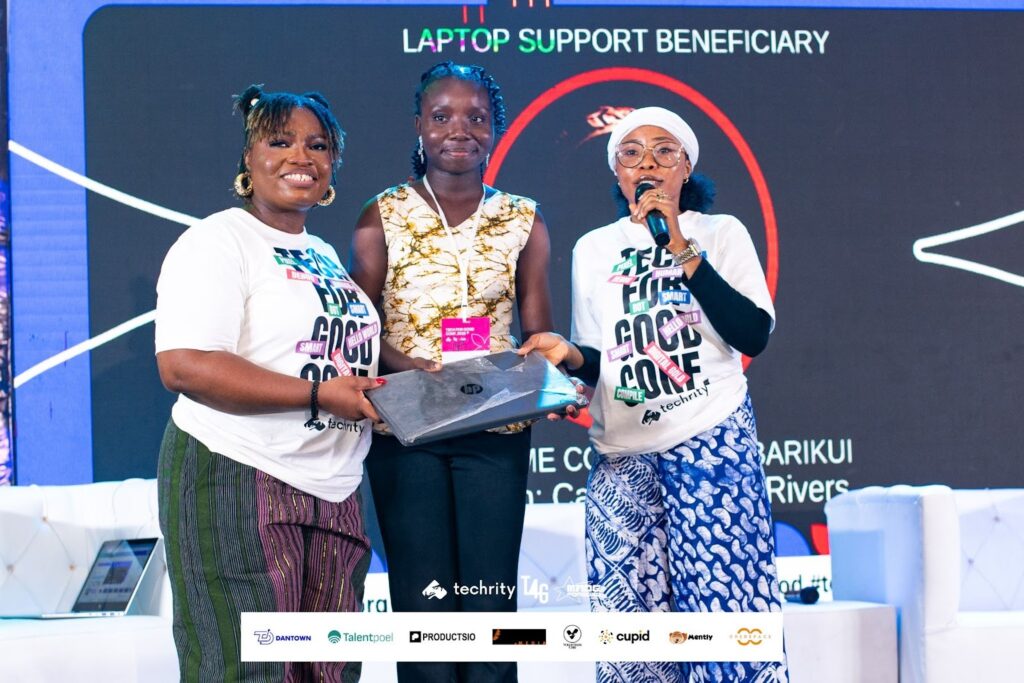
In addition, there was the Techrity Laptop Support Scholarship presentation. This initiative equips young Nigerians with laptops, internet access, and mentorship to enhance their digital skills and create career growth opportunities. Following a transparent selection process guided by passion, need, and commitment to social good, 11 (eleven) young Nigerians were awarded laptops, data support, and mentorship to boost their digital careers at the conference. Among these beneficiaries were Ikordeme Confidence Barikui, Onaeko Emmanuel Oladipupo, Ozuru Irenma Pearl, Ozuru Olanma Jewel, Philomena Nkereuwem Nyah, Iyke Victor Chidera, Winner Osinachi Offor, Elekwachi Zion Chibuchi, Emeka Victor Chigozie, Okonkwo Ckaima Peniel, and Ebubechukwu Osy-Uzoekwe. “We believe in using technology to transform lives, one person and one community at a time,” Oseni said.
Another major highlight of the day was the Techrity Social Impact Awards, which honours individuals and organisations using technology to drive mentorship, digital inclusion and social good. The award recipients included Renaissance Innovation Labs (Tech Community Partner of the Year), Kenneth Nwokoro ( Social Impact Award (Mentorship), Stakeholders Democracy Network (Social Impact Award – Tech for Gender Equality), Bright Chinenyeze (Social Impact Award (Digital Inclusion Advocate), Richard Sodienye Pepple (Social Impact Award – Mentorship), and Richard Tamunotonye (Social Impact Award – Mentorship).
A Five-Year Legacy and a Call to the Future
In just five years, Techrity has grown into a global community of 886 innovators with over 12,000 digital followers across Nigeria, Kenya, India, Botswana, Ghana, Rwanda, and Uganda. Through initiatives like the Kickstart Initiative, which has provided 35 laptops and ₦5 million in data support, and a mentorship program engaging over 100 participants, Techrity is actively nurturing Africa’s next wave of tech talents.
The success of the 5th anniversary celebration was bolstered by several partners, including Dantown (Key donor and partner for the Laptop Support Scholarship), Productsio, TalentPoel, Cre8Space, Artful Media, Cupid Technologies, Volunteers Crib, Mently, and Made for Good.
In her closing remarks, Owanate Amachree thanked all partners, speakers, and volunteers for their contributions, noting that “the true impact of Techrity lies not only in its social impact programs but in the lives we transform.” She reaffirmed the foundation’s goal to continue empowering Africans through technology, mentorship, and innovation — inspiring, coaching, and building for social good.
As part of its five-year milestone, Techrity is extending an open call to corporate partners, development organisations, startups, and philanthropists to collaborate in building the future of young Africans through mentorship, digital education, and social impact programs designed to bridge gaps in unemployment, inclusion, and opportunity across Africa.
Let us drive this mission together by equipping young people with laptops, internet access, and digital skills, fostering innovation through SDG-focused hackathons and mentorship programs, and promoting inclusion and gender equality through technology-driven education.
Non-governmental organisations (NGOs) are pivotal in addressing society’s most pressing issues, often with limited resources and immense operational challenges. From tackling poverty and advancing education to responding to disasters and fighting misinformation, NGOs are tasked with bridging gaps where governments and private sectors may fall short. Artificial Intelligence (AI) agents are revolutionising the nonprofit sector by enabling more efficient operations, smarter decision-making, and better engagement with beneficiaries.
The adoption of AI agents in the NGO space signals the onset of an era where technology drives transformative social change. Whether deployed for predictive analytics, personalised communication, or crisis management, AI agents amplify NGOs’ ability to scale their missions, streamline processes, and solve complex problems. In this article, we will explore how AI is reshaping the nonprofit landscape, highlight successful case studies, and discuss the ethical and practical considerations critical to responsible AI implementation.
Understanding AI Agents
freepik.com
AI agents are software systems designed to process information, learn from data, and autonomously perform tasks to achieve predefined goals. These intelligent systems are capable of adapting their responses based on environmental inputs, making them highly versatile and impactful for NGOs.
Core Functions of AI Agents:
Data Analysis: Extracting actionable insights from large datasets to inform strategy.
Task Automation: Automating repetitive processes to reduce human workload.
Natural Language Processing (NLP): Understanding and generating human-like text for communication tasks.
Predictive Analytics: Forecasting trends, risks, and outcomes using statistical models.
Decision-Making Support: Providing data-backed recommendations to aid complex decisions.
For NGOs, these functions translate into enhanced resource management, better communication, and more effective program delivery, all essential to achieving social impact at scale.
Top Ways AI Agents Drive Social Impact for NGOs
1. Optimising Resource Allocation
AI agents are redefining how NGOs manage resources, ensuring aid is delivered efficiently and effectively. By analysing real-time data, such as demographic trends, climate patterns, and disaster forecasts, AI systems can help organisations prioritise interventions and allocate limited resources to where they are needed most.
Applications:
Disaster response planning using climate and satellite data.
Predicting food shortages in vulnerable regions.
Enhancing logistical planning for large-scale relief efforts.
Example in Action: The World Food Programme (WFP) utilises AI to analyse satellite imagery and weather conditions, enabling it to anticipate food scarcity in disaster-affected areas. This has resulted in faster and more targeted aid delivery.
2. Enhancing Fundraising and Donor Engagement
Fundraising is the lifeblood of most NGOs, but engaging donors effectively is challenging. AI agents simplify this process by analysing donor behaviour and crafting personalised outreach strategies. Automated communication tools ensure donors receive targeted messages, increasing the likelihood of sustained contributions.
Applications:
Dynamic email campaigns tailored to individual donor preferences.
AI-powered chatbots to answer donor queries instantly.
Behavioural analysis to predict which donors are most likely to contribute.
Case Study: The Kids Cancer Project in Australia leveraged AI-driven financial tools to optimise its donor communication strategy, leading to a nearly twofold increase in recurring donations. Automated outreach campaigns personalised each message based on donor profiles.
3. Combating Misinformation During Humanitarian Crises
In times of crisis, misinformation can exacerbate challenges by spreading panic and confusion. AI agents play a crucial role in monitoring social media platforms, flagging fake news, and disseminating verified information to the right audiences. This builds trust and ensures transparency.
Applications:
Sentiment analysis to track public perception during emergencies.
Detection of false information in online discussions.
Real-time crisis communication with affected communities.
Impactful Initiative: The Signpost Project, led by the International Rescue Committee (IRC), employs AI-driven chatbots to provide accurate crisis information to refugees and displaced populations. This initiative fosters clarity during times of uncertainty.
4. Bridging Gaps in Healthcare Access
In regions with scarce medical infrastructure, AI agents serve as virtual health assistants, enabling NGOs to provide healthcare services without relying exclusively on human personnel. These systems can diagnose common illnesses, recommend treatments, and even predict disease outbreaks.
Applications:
Remote diagnostics via AI-powered chatbots.
Early detection of public health threats through predictive models.
Digital tools to assist community health workers.
Example: In sub-Saharan Africa, NGOs deploy AI chatbots to assist community health workers, monitor patient symptoms, and recommend treatments. This has improved healthcare delivery in underserved areas.
5. Personalised Learning in Education
AI agents are transforming education by delivering customised learning experiences. NGOs working in conflict zones or disaster-hit regions can use AI to create tailored remote learning platforms, adapting content to students’ individual needs and proficiency levels.
Applications:
AI-powered platforms that adjust learning material based on students’ progress.
Remote teaching tools for areas lacking qualified educators.
Language translation and accessibility features for diverse populations.
Example: AprendAI has developed AI-driven educational platforms catering to children in disaster zones, making quality education accessible even in challenging circumstances.
6. Supporting Agricultural Development
Agriculture and food security remain critical priorities for many NGOs. AI agents empower farmers by offering precise climate forecasts, pest control advice, and soil analysis. These technologies improve crop yields and foster sustainable farming practices.
Applications:
Advising farmers on planting schedules and fertiliser usage.
Predicting crop diseases and pests.
Connecting farmers to market insights for better pricing strategies.
Project Highlight: Opportunity International created Ulangizi, an AI chatbot that supports small-scale farmers in Malawi by offering real-time agricultural advice. This project has expanded to help school administrators enhance their management practices.
Real-World Case Studies
Omdena: Omdena collaborates with NGOs worldwide to implement AI solutions for flood prediction, child protection, and poverty alleviation. Their community-focused approach ensures that grassroots organisations benefit from advanced AI tools.
World Wildlife Fund (WWF): WWF uses AI to combat illegal poaching and conserve biodiversity. Drones equipped with AI algorithms identify suspicious activities and alert rangers.
Save the Children: Save the Children leverages AI to evaluate educational interventions, providing data-backed insights to improve learning outcomes for children.
Challenges and Ethical Considerations
As NGOs adopt AI, they must navigate challenges to ensure ethical and sustainable deployment:
Key Challenges:
Data Privacy: Protecting sensitive information about beneficiaries.
Algorithmic Bias: Preventing inequitable outcomes caused by biased data models.
Infrastructure Gaps: Ensuring grassroots organisations have access to advanced AI tools.
Transparency: Making AI systems accountable and easy to understand.
Ethical Considerations:
NGOs must adopt ethical AI principles, emphasising inclusivity, fairness, and transparency. Regular audits and community feedback loops can help mitigate risks.
Getting Started: Practical Steps for NGOs
For NGOs considering AI implementation, here’s a roadmap to success:
Identify Use Cases: Focus on high-impact areas where AI can address challenges.
Start Small: Launch pilot projects with accessible AI tools.
Partner Strategically: Collaborate with organisations like Omdena and DataKind for support.
Build Capacity: Train staff on AI applications and ethics.
Curate Quality Data: Collect clean, relevant data for training AI systems.
Conclusion: Charting a Tech-Enabled Future
Artificial Intelligence represents a transformative force in the nonprofit sector. By automating processes, enhancing decision-making, and enabling personalised services, AI agents empower NGOs to scale their missions and amplify social impact. While challenges exist, responsible deployment ensures AI remains a powerful ally for the greater good.
The future of AI in NGOs lies in collaboration, innovation, and ethics. As these organisations embrace technology, they open doors to new possibilities for solving global challenges and building a brighter, more equitable world.
From scheduling meetings to brainstorming ideas, AI is reshaping the workplace. But will it replace you or empower you? The workplace is currently experiencing a massive transformation. Artificial intelligence (AI) is no longer a futuristic dream but an active force shaping how we work. From virtual assistants managing schedules to advanced AI models generating creative content, the integration of AI into our daily workflows is accelerating. The question remains: Will AI replace human workers or serve as a valuable colleague, enhancing productivity and efficiency? This article delves into AI’s role in the workplace, exploring its impact on job roles, automation, and how we collaborate with technology. We will examine the rise of robot assistants, the future of automation, and how professionals can adapt to an AI-driven work environment.
The Rise of AI in the Workplace
Artificial intelligence has become an essential part of modern business operations. Companies across industries leverage AI-powered tools to improve efficiency, reduce costs, and enhance decision-making. AI is no longer confined to tech giants; small businesses, healthcare providers, financial institutions, and retail chains are all integrating AI into their operations.
How AI is Changing Workplaces
AI is changing workplaces in the following ways: 1. Automating Repetitive Tasks: AI excels at handling repetitive and time-consuming tasks, such as data entry, appointment scheduling, and customer service inquiries. 2. Enhanced Decision-Making: AI-driven analytics provide businesses with deep insights, helping managers make informed decisions based on real-time data. 3. Personalised User Experience: AI-powered recommendations and predictive analytics personalise customer interactions, improving satisfaction and engagement. 4. Workforce Augmentation: AI does not necessarily replace employees but augments their abilities, enabling them to focus on strategic and creative work.
Examples of AI in Action
Chatbots and Virtual Assistants: AI chatbots like ChatGPT, Siri, Gemini, and Google Assistant streamline communication by answering queries and performing tasks. Businesses also use AI-driven chatbots like Ziva and Leo to handle customer inquiries, reducing wait times and improving service.
AI in Finance: Financial institutions rely on AI algorithms for fraud detection, credit scoring, and investment analysis.
AI in Healthcare: AI-powered diagnostic tools assist doctors in identifying diseases, enhancing accuracy and efficiency.
Robot Assistants: Colleagues, Not Competitors
Image credit: freepik.com
One of the most visible manifestations of AI in the workplace is the rise of robot assistants. These AI-powered tools and machines are designed to collaborate with humans, improving efficiency rather than replacing human workers.
How Robot Assistants Benefit the Workplace
Increased Productivity: Robots can work 24/7 without breaks, ensuring continuous operations.
Cost Savings: Automating tasks reduces labour costs and minimises errors.
Improved Safety: In high-risk industries like construction and manufacturing, robots handle dangerous tasks, protecting human workers.
Enhanced Creativity: By taking over tedious tasks, AI allows employees to focus on innovation and problem-solving.
The Future of Automation and Job Roles
While AI-driven automation is changing how we work, it also creates new jobs. The future workforce must adapt to an AI-integrated environment, focusing on skills that complement automation rather than compete with it.
Job Roles That will be immensely Affected by AI
Repetitive Task-Based Roles: Jobs that involve routine, predictable tasks—such as data entry, telemarketing, and certain administrative functions—are more susceptible to automation.
Customer Service and Support: AI chatbots handle basic inquiries, reducing the need for extensive customer support teams.
Manufacturing and Logistics: Robotic automation in warehouses and factories is reducing reliance on manual labour.
Financial Analysis: AI-driven predictive analytics assist in risk assessment, investment management, and fraud detection.
Emerging Job Roles
AI is not just eliminating jobs—it is also creating new ones. As automation takes over repetitive tasks, new roles are emerging in AI development, maintenance, and ethics.
AI Ethics Consultants: Ensure AI systems are transparent, fair, and unbiased.
Data Scientists: Analyse large datasets to derive actionable insights.
AI Trainers: Teach AI models to improve accuracy and reliability.
AI Maintenance and Support Specialists: Ensure AI-driven systems function efficiently.
Skills for the AI-driven workforce
To stay relevant in an AI-powered workplace, professionals need to develop the following skills:
Critical Thinking: AI excels at processing data, but humans are needed for interpretation and strategic decision-making.
Emotional Intelligence: AI lacks human empathy, making soft skills essential for leadership and teamwork.
Adaptability: The ability to learn new technologies and adapt to changing job requirements will be crucial.
AI Literacy: Understanding how AI works and leveraging it effectively will be key skills across industries.
Will AI Replace or Empower Workers?
Image credit: freepik.com
The debate over AI replacing jobs versus empowering workers continues. The truth lies somewhere in between. While AI will inevitably automate specific tasks, it will also enhance human capabilities, leading to greater efficiency and innovation.
Ethical Considerations and Challenges
Despite its advantages, AI poses ethical and social challenges:
Job Displacement: Certain roles may become obsolete, requiring reskilling initiatives.
Bias in AI Systems: AI algorithms can reflect biases in training data, leading to ethical concerns.
Privacy and Security Risks: AI systems collect and analyze vast amounts of data, raising concerns about data security and privacy.
Preparing for the AI-Integrated Future
Organizations and employees alike must prepare for an AI-driven future. Here’s how:
What Organizations Can Do
Invest in Employee Training: Providing upskilling opportunities ensures a smooth transition to an AI-powered workplace.
Adopt Ethical AI Practices: Implementing transparent AI governance prevents bias and ensures fairness.
Foster Human-AI Collaboration: Encouraging teamwork between AI tools and human employees maximizes productivity.
What Employees Can Do
Embrace Lifelong Learning: Staying updated with AI trends and acquiring relevant skills will enhance career prospects.
Develop a Growth Mindset: Being open to change and continuous learning will make employees more adaptable.
Leverage AI Tools: Understanding how to use AI effectively can enhance productivity and job performance.
Final Thoughts
AI in the workplace is here to stay. Rather than fearing automation, professionals should focus on automation to enhance their skills and productivity rather than fearing it. The future of work isn’t about humans vs. robots—it’s about working together for more incredible innovation and efficiency. As AI continues to evolve, the key to success will be collaboration, adaptability, and a commitment to lifelong learning. Whether AI becomes a valuable colleague or a disruptive force depends on how we choose to integrate and manage it within our workplaces.
Rapid technological advancements, climate change, and evolving societal needs are shaping the future of work globally. By 2030, the job market will look vastly different, with roles that seems exciting.
From designing and communicating through the virtual worlds to auditing AI systems and navigating the decentralized economy, future careers will require a unique mix of technical expertise, creativity, and adaptability.
In this article, we’ll explore some of the most intriguing and unexpected jobs that will emerge by 2030 due to advancements in artificial intelligence, machine learning, data analysis and other emerging technologies.
10 Job roles that will trend by 2030
1. AI and Machine Learning Specialists
Artificial intelligence is becoming increasingly sophisticated, intelligent systems that perform tasks on behalf of humans will play an important role in the workforce.
AI/machine learning specialists design and develop AI models to automate processes and solve complex problems. They use machine learning concepts to optimize data processing and create predictive models.
What they’ll do:
Designing and validating AI models.
Extracting insights using AI tools.
Fine-tune AI systems to improve accuracy and efficiency.
Working with teams to integrate AI solutions.
Develop and train AI systems to automate processes, analyze data and improve decision-making.
This will be a key role because their work will efficiently revolutionize industries by leveraging AI to enhance efficiency and decision-making across industries. automating repetitive tasks, and enabling humans to focus on higher-value work.
Opportunities will be open in several companies, such as OpenAI, Google (DeepMind), Microsoft, Facebook (Meta) and Apple.
2. Prompt Engineers
As AI language models like ChatGPT become more sophisticated, prompt engineers will specialize in crafting adequate inputs to optimize AI outputs.
What they’ll do:
Develop strategies for interacting with AI systems.
Train teams on how to use AI tools effectively.
Continuously refine prompts to improve accuracy and relevance.
Prompt engineering is a hotcake, most especially with the adoption of AI in almost every business case, from note-taking to research and marketing.
Having a skill that can unlock the full potential of AI and bridge the gap between human intent and machine understanding is crucial and will be heavily rewarded.
Companies interested in these skills include serial marketing companies, research institutes, and tech companies.
3. Metaverse Planners
The metaverse, a collective virtual shared space, is no longer a futuristic concept. It is here to stay and by 2030, Metaverse planners will be in high demand and big companies like Meta, Microsoft, and Roblox are investing heavily in building immersive digital worlds.
What they’ll do:
Design and manage virtual environments for work, education, and entertainment.
Collaborate with architects, game designers, and software developers.
Ensure user-friendly and inclusive experiences in the metaverse.
With multibillion-dollar tech companies investing in creating the metaverse and rapidly integrating it into everyday life, the need for Metaverse planners will shape how we interact with digital worlds.
4. Blockchain Technology Developers and Experts
The future of decentralization, spanning blockchain technology and the decentralized internet or Web3, depends heavily on the skills of developers, key opinion leaders or KOLs, content creators, marketers, and others to influence the rapid digital economy movement. Companies with high interest include Coinbase, Binance, Ripple, Consensys, IBM Blockchain, JP Morgan, and Accenture.
What they’ll do:
Build decentralized applications (dApps) and smart contracts.
Develop and manage blockchain-based financial systems.
Educate businesses and individuals on Web3 technologies.
User ownership of the internet, Defi, and other decentralized technology use cases are revolutionizing industries like finance, gaming, and supply chain management, creating a demand for skilled professionals to tap into by 2030.
5. Environmental Engineer
Climate change and social issues are on the rise daily. Climate change has led to increasing the frequency and intensity of natural disasters, including earthquakes, fire outbreaks in America, and floods in Africa and other parts of the world.
Environmental engineers will leverage technology to design systems to prevent, control, or remediate environmental hazards. They work on waste treatment, pollution control, and environmental compliance.
What they’ll do:
Design systems for pollution control.
Create and coordinate waste treatment and recycling.
Create digital systems to ensure environmental regulations are met.
Analyze geological data to identify patterns and risks.
Develop and implement technologies to reduce atmospheric carbon.
Other roles like earthquake forecasters, climate change reversers, and change advocates will help reverse the effects of climate change, save lives, reduce economic losses, and ensure a sustainable future.
These engineers will play a vital role in protecting public health and the environment by developing sustainable solutions.
Companies hiring include environmental consultancies, NGOs, government agencies such as UNICEF, WHO, Bill and Melinda Gates Foundation, Ford Foundation ad more.
6. Big Data Specialist
Big Data Specialists are crucial in today’s world, where every decision is influenced by numbers. Their role involves using statistical and analytical techniques to collect, analyze, identify trends, correlations, and anomalies in large datasets to provide actionable insights that inform business decisions.
What they’ll do:
Collect, gather and analyze data from various sources.
Applying statistical data analysis techniques to extract insights.
Creating visual representations of data for stakeholders.
Identifying recurring patterns for strategic planning.
Building predictive models for future trends.
Big Data Specialists bridge the gap between raw data and strategic business decisions, making them indispensable in a data-centric economy.
Medical professionals like doctors, nurses and other healthcare workers provide critical healthcare services, addressing aging populations and global health demands.
AI is revolutionizing the way healthcare is administered by healthcare professionals from using AI-driven solutions for diagnostics, treatment planning, and personalized medicine to building custom healthcare solutions.
What they’ll do:
Interpret medical data using AI tools.
Providing patient care in various settings.
Managing remote healthcare services.
Coordinating with healthcare teams.
Develop personalized treatment plans based on AI insights.
Collaborate with doctors and researchers to improve diagnostic methods.
Background knowledge of AI, healthcare informatics, and medical knowledge would be of great advantage to enable early detection and personalized care, transforming healthcare outcomes.
Mental health care will leap forward with VR therapy, exploring VR environments to treat conditions like PTSD, anxiety, and phobias.
You can work in hospitals, clinics, telehealth providers such as IBM Watson Healthcare, NVIDIA Clara, John’s Hopkins Hospital, Healthcare, Philips, Siemens Healthineers, and Tempus.
8. Cyber-security Specialists
Cybersecurity is a field that will always need skilled talents. Cybersecurity specialists protect digital and physical assets from threats by developing, improving, and monitoring security measures. They assess risks, manage encryption protocols, and respond to cybersecurity incidents.
With recent account hacks and cyber attacks on financial institutions and large corporations using AI, these specialists are vital for safeguarding sensitive data and infrastructure.
What they’ll do:
Actively search for and neutralizes cyber threats before they can cause harm.
Ensure that organizations comply with data protection regulations and safeguard user data.
Carryout risk assessment to identify security risks to data and systems.
Applying encryption protocols to manage encryption.
Responding to cybersecurity incidents, threats and attacks.
Certain skills make this job role exceptional for professionals such as knowledge of data privacy laws, risk management, and cyber ethics can get you started.
Companies such as Palo Alto Networks, CrowdStrike, IBM Security, Darktrace, FireEye, Cisco, Symantec, McAfee, and Fortinet.
9. FinTech Analyst
FinTech analysts analyze financial technologies to optimize digital banking, payments, and blockchain systems. They assess the impact of new technologies on finance and develop strategies for emerging FinTech solutions.
What they’ll do:
Forecasting financial trends using AI and data models.
Evaluating the impact of new technologies.
Creating strategies for emerging FinTech solutions.
FinTech Analysts play a crucial role in shaping the future of digital finance by integrating technology and financial expertise.
Companies that will hire actively include Banks (JPMorgan Chase), cryptocurrency platforms (Coinbase), payment processors (PayPal).
10. Robotics Engineer
You must have heard of Silas Adekunle, who is currently the highest paid robotics engineer in the world. Known for creating the first intelligent gaming robot, MekaMon and other innovative works like Reach Robotics and Awarri.
Robotics engineers design and implement robotic systems to enhance automation and efficiency. They develop algorithms for motion control and collaborate with cross-functional teams.
What they’ll do:
Creating robotic systems for business needs.
Programming motion control algorithms.
Working with teams to integrate robotic solutions.
Robotics Engineers drive innovation by developing cutting-edge automation technologies.
You can get started in Automotive companies like Tesla, GAC, Ford, Toyota, Ecommerce and manufacturing giants like ABB, Walmat, etc.
Conclusion
Technological innovation, environmental challenges, and societal evolution will shape the jobs of 2030. The future workforce is brimming with new and exciting roles however, a recent report from the World Economic Forum (WEF) suggests that about 50 – 59% of workers will need reskilling by 2030 to avoid losing their jobs.
This has been validated by a huge decline in roles such as administrative assistants, cashiers, and content writers due to the implementation of AI in those case studies.
The possibilities are endless for those willing to embrace change and develop new skills.
Are you ready to step into the careers of tomorrow? Take that step now.
2025 is a year to make more money, buy a dream gadget, and finally go on that one trip you’ve been planning since 2020. A high income skill and great talent can position you for some of the best opportunities in the world, no matter your location.
So how do you get that next job? Techrity’s latest rollout feature, the Opportunity Board is designed to connect talent to opportunities. Endless opportunities are waiting to be explored and converted to desired high income jobs. But first, how do you leverage this opportunity? This article has all you need to get started so keep reading.
What is the Techrity Opportunity Board?
For techies, the dynamic job market in 2025 is not without its struggles and challenges. The Techrity Opportunity Board (TOB) is an avenue for tech professionals and employers sourcing talents to meet, get job listings, mentorship programs, and resources.
Are you after the next best opportunity in your career or are a newbie looking for data support, productivity tools, and laptop support? The TOB is designed to empower you and thousands more young talented African remote and hybrid talents.
You will get access to these productivity tools, and the TOB will also offer consistent and helpful tips that will allow you to make informed career choices. Here is a breakdown of the resources the Techrity Opportunity Board offers:
Job Openings
The Opportunity Board displays job listings from companies of all sizes and industries looking to hire African talents and workers. The job listing displays the following information:
Name of role
Level of experience
Name of the company hiring
Remote, on-site, or hybrid
Full-time or part-time
Aside from opportunities for full-time roles, there are also listings for internship positions offering compensation and even senior management roles.
Internship and Graduate Trainee Opportunities
Newbies don’t always get access to opportunities because of the bias towards experienced candidates. Internships and trainee programmes are one way to secure much needed experience on the job and learn from some of the best minds. This tab features paid and unpaid calls for interns from companies seeking African tech talents that can go onto permanent roles.
Laptop and Data Support
Economic challenges can affect the connectivity and consistency of tech enthusiasts at any level of their career pursuit. Initiatives like our One Techie One Laptop campaign and data support are geared towards eliminating constraints that hinder consistent training and learning. In addition to that, the Opportunity Board displays information about applying for unlimited access to laptops, grants, and data support from several organizations specifically targeted at African professionals.
With the existence of skill gaps, certain programs are designed to offer solid mentorship programmes and training to eliminate such gaps. Through the Opportunity Board, Techrity partners with leading technical professionals, educational institutions, and tech companies. This partnership is built to offer guided mentorship training programs, workshops, and certifications that equip individuals with high-income skills that the market needs.
Who Can Use the Opportunity Board?
The primary goal of the Opportunity Board is to connect tech job seekers with openings in various levels of experience and industry. There is also the chance for beginners and newbies from disadvantaged backgrounds to get a laptop or data support.
The first criterion to access TOB is to be a tech-inclined company or professional. The opportunity seeker has to be of African descent or nationality. As a rule of thumb, here are a few individuals we are hoping can take advantage of the TOB:
African tech companies looking to hire the best tech talents in Africa
African tech talents looking to practice their skills in a reputable startup through an internship
African tech professionals looking for a digital work tool support to enable them to compete equally.
Techies looking to compete globally from Africa
Motivated and enthusiastic tech talents that do not have access to data to continue learning and mastering a tech skill
Benefits of the Opportunity Board
Career Guides
With the career guides section, the Opportunity Board provides free, reliable insight and knowledge about the different available tech roles. For example, a newbie might confuse the roles of product designer and product manager. But with the career guides, a clear distinction will be made, highlighting the must-have skills each role requires and the possible career paths.
Company Reviews
Gone are the days when recruitment was a one-sided affair. Nowadays, companies are subjected to as much scrutiny as job seekers and potential employees. Talents want to know how the company’s alignment with their values and its financial health.
More than ever, they need to know the opportunities for professional and personal growth, and the opportunity for work-life balance. This company review section will provide necessary insights into company culture and worker experiences.
Salary Benchmarks
Knowing what a job offer pays is great, but how does it match up to your expectations and your true market value? A lot of job seekers do not understand how to negotiate for a fair remuneration and get exploited in the recruitment process. But with the salary benchmarks, we can help talents understand their market value and negotiate fair compensation. There are also written resources on how to crack job interviews to get the best deal.
How to Get Desired Jobs & Support from Techrity’s Opportunity Board
If you find yourself on the Techrity Opportunity Board as a talent seeking work, know that there are several opportunities you can explore. But first things first, how do you get the desired jobs and support you require?
On the Opportunities Board, you can filter your search by role, mode, work type, or opportunity type. Next you can click the [apply filter] button to search for opportunities that offer one or more of these keywords.
You can also search for some of the most recently posted jobs to see if you are fit. This option displays the jobs and their location. When you click on individual opportunities, you get to see more job details about the listing like the salary range, responsibilities, requirements, application instructions, and application deadline.
Clicking on the [Apply for this position] button will take you to the Propel page where you can access the application form and further instructions from the hiring managers. If you don’t already have an account to log in, you will be prompted to sign up for Propel.
Conclusion
Techrity is focused on inclusion and charity in the tech space. The Techrity Opportunity Board is on its way to make sure it stays true to its vision. Thanks to this new addition, talents from all over Nigeria and Africa can get connected to unseen opportunities from all over the world.
And employers looking for these talents have the rare chance to pick from a pool of highly talented and motivated individuals ready to be changemakers!
The African tech space is leading in the global digital revolution, with the largest youth population brimming with potential. This agile, young, and creative population is poised with problem-solving skills, motivation, and the ability to compete on a global scale
What This Means for Africa and The Tech Space
According to Statista, over 28 million jobs in Nigeria and 17 million in Kenya will require digital skills by 2030. The number of jobs requiring digital skills in Africa is expected to grow exponentially annually, with a high demand for skilled, vibrant, and motivated tech talent.
Africa is rightly positioned to take advantage of the current shortfall in the global tech workforce. This is due to a report from the World Economic Forum (WEF) in 2017, which stated that Sub-Saharan Africa is the world’s youngest region. By 2030, the continent’s working-age population is set to increase by two-thirds, from 370 million adults in 2010 to over 600 million in 2030.
Yet a significant gap persists between the skills available, access to work tools, opportunities, and demands of the rapidly evolving digital economy.
The Growing Problem
Sub-Saharan Africa has the world’s second-largest youth population after Asia. With more than 60% of its population under the age of 25, Sub-Saharan Africa is already the world’s youngest region today – and, by 2030 more than one-quarter of the world’s total under-25 population.
However, skilled professionals in the tech industry struggle to connect their skills to available opportunities. Many struggle with unreliable job postings and limited access to opportunities, such as a lack of data and a laptop, to help them on their career journey.
This is a far cry for a continent that currently has 13% of the world’s working-age population, which is set to increase rapidly to more than 17% by 2030.
A New Dawn for African Tech Professionals
Techrity is stepping up to provide a bold and innovative solution; the Opportunity Board is a platform designed to connect aspiring African professionals with the resources and openings they need to amplify their hard work and talent.
The Opportunity Board will be more than just a job board; it is a home for techies like you and the next generation of professionals to gain access to everything they need to get a job, learn a new tech skill, get data support to enter the tech space, master a tech skill, and digital tools to aid their work.
Connecting Talents with Opportunities
At its core, the Opportunity Board is a vital link between African talent and the global marketplace. It curates a diverse range of opportunities, including:
Job Openings
The board features listings from companies across various tech sectors actively seeking African talent, from entry-level positions to senior management roles.
Internships
Recognizing the importance of practical experience, the platform highlights internship programs that allow students and recent graduates to gain valuable on-the-job training.
Mentorship and Training Programs
To address skills gaps, Techrity partners with leading technical professionals, educational institutions and tech companies to offer guided mentorship training programs, workshops, and certifications that equip individuals with in-demand skills.
Laptop and Data Support
Financial and connectivity constraints can often hinder further learning and training for tech enthusiasts in Africa. The Opportunities Board provides information on how to apply for unlimited access to laptops, grants, and data support from several organizations specifically targeted at African professionals.
Volunteer Opportunities
Get real-world experiences to master your skills with many listings and volunteer opportunities from credible tech companies. These opportunities allow individuals to give back to their communities and make a meaningful impact in the tech space.
Who is This Platform For?
Techies looking to compete globally from Africa
Motivated and enthusiastic tech talents that do not have access to data to continue learning and mastering a tech skill
African tech companies looking to hire the best tech talents in Africa
African tech talents looking to practice their skills in a reputable startup through an internship
African tech professionals looking for digital work tool support to enable them compete equally.
Empowering You for The Future You Deserve
Beyond simply listing opportunities, Techrity aims to empower individuals with all they need to make informed career decisions. The opportunity board also offers resources such as:
Career Guides
Providing insights into different tech roles, required skills, and career paths.
Salary Benchmarks
Helping individuals understand their market value and negotiate fair compensation.
Company Reviews
Offering insights into company culture and employee experiences
Conclusion
Techrity’s Opportunity Board is transforming tech hiring in Africa by addressing the core challenges faced by job seekers, tech enthusiasts and employers. The platform creates a more efficient and inclusive job market by connecting talents to unseen opportunities and facilitating global job access.
Whether you’re a tech professional seeking your next opportunity, need data support, workplace tools for productivity, or an employer looking for top-tier talent, Techrity’s Opportunity Board is the ideal solution.
It’s a platform to watch and that holds immense promise for unlocking the continent’s vast potential.
Software developers, programmers, designers, writers or testing professionals often face what we call mental blocks. These high levels of stress lead to decreased productivity and burnout as a result of constant switching between solving complex problems, tight deadlines, and juggling multiple tasks.
Mindfulness meditation can significantly improve mental well-being and productivity.
Mindfulness means paying attention to the present moment while acknowledging and accepting one’s thoughts and feelings without judgment. For developers, this practice can enhance focus during coding sessions, reduce stress during debugging, and improve overall problem-solving capabilities.
It helps you focus on your breath, bodily sensations, or surroundings while calmly acknowledging distractions and bringing attention back to the present. Mindfulness meditation is a powerful tool for software developers and tech professionals to maintain mental clarity and emotional balance.
What is Mindfulness?
Mindfulness means paying attention to the present moment while acknowledging and accepting one’s thoughts and feelings without judgment. For developers, this practice can enhance focus during coding sessions, reduce stress during debugging, and improve overall problem-solving capabilities. It helps you focus on your breath, bodily sensations, or surroundings while calmly acknowledging distractions and bringing attention back to the present.
Mindfulness meditation is a powerful tool for software developers and tech professionals to maintain mental clarity and emotional balance.
Why You Need to Meditate
According to several research reports, ample evidence validates the high impact of regular meditation practice on an individual. Meditation can increase gray matter in areas responsible for memory and learning, reduce mind-wandering activity, enhance error detection and bug-finding capabilities, and ultimately Improve focus during long coding or meeting sessions.
Proven Benefits of Meditation
Better Focus and Concentration
Meditation helps train the brain to maintain attention, reducing distractions and improving deep work sessions.
A calm and clear mind allows for better logic and decision-making in coding and troubleshooting.
Increased Creativity
Decluttering the mind, meditation fosters creative thinking and innovation.
Better Work-Life Balance
Mindfulness helps maintain a healthy separation between work and personal life.
Improved Collaboration
Being mindful enhances empathy and communication, making teamwork more effective.
These benefits directly translate to reduced stress, better code quality, increased productivity, and improved mental well-being.
Practical Mindfulness Exercises to Practice
To effectively integrate mindfulness into coding routines, developers can adopt several practical exercises:
Mindful Coding Sprints
Set a timer for 25 minutes to utilize the Pomodoro Technique. Before starting, take three deep breaths and set an intention for the session. After coding intensely for 25 minutes, take a 5-minute break to stretch or practice a quick mindfulness exercise.
Mindful Code Reviews
Approach code reviews with curiosity rather than judgment. Center yourself before starting the review process and focus on one line or block of code at a time.Breath Awareness: Before beginning work each day, spend a few minutes focusing solely on your breath. This simple practice helps clear mental clutter and prepares you for.
Code Block Meditation (5-10 minutes)
This practice helps maintain focus during intensive coding sessions:
What to do:
Sit comfortably at your desk
Take three deep breaths
Open your code editor
Focus on a single block of code
Read each line slowly, observing without making changes
Notice thoughts about “improving” or “fixing” the code
Let these thoughts pass without acting on them
Return focus to simply observing the code
This practice helps develop the ability to observe code objectively before making changes, leading to better architectural decisions.
Debug Breath (1-2 minutes)
Use this technique when feeling frustrated during debugging:
What to do:
Stop typing
Place your hands on your desk
Take five slow breaths, on each inhale, acknowledge the bug’s complexity, on each exhale, release the urge to solve it immediately
Return to debugging with renewed patience
Recommended Resources to Help You Practice Meditation
Books
Here are 11 go-to books to help you practice meditation and mindfulness:
A practical guide to mindfulness, this book teaches you how to be fully present in your daily life. Through simple meditation practices, it helps you slow down, reduce stress, and find peace in the moment.
This book explores the impact of digital overload and offers strategies to reclaim focus and happiness. Newport encourages intentional tech use, helping you disconnect from distractions and live more meaningfully.
A timeless classic on mindfulness, this book introduces meditation as a way to bring peace into everyday tasks. Whether washing dishes or walking, Hanh teaches how to be present in everything you do.
This quick read offers simple, 10-minute mindfulness exercises to reduce stress and boost well-being. It’s perfect for anyone looking to start a mindfulness practice without feeling overwhelmed.
Designed for families and educators, this book teaches mindfulness to children through fun activities. It helps kids (and adults) develop kindness, focus, and emotional resilience.
Osho offers a practical approach to meditation for modern, hectic lives. It offers easy techniques that fit into daily routines, helping you find calm without needing hours of stillness.
A deep dive into Transcendental Meditation, this book explains how meditation can unlock human potential, reduce stress, and create a happier, more fulfilling life.
This book blends mindfulness with modern science. It shows how to live in the present moment despite life’s distractions and offers practical tools to reduce stress and boost well-being.
A beautifully written guide on slowing down and appreciating life. Through short reflections, Sunim shares wisdom on love, work, and mindfulness in a fast-paced world.
A science-backed guide to using mindfulness for mental health and well-being. It provides practical exercises to manage stress, anxiety, and daily challenges.
This book uncovers the Japanese secret to a long and happy life: finding your purpose (Ikigai). It blends philosophy, science, and real-life examples to help you live passionately and meaningfully.
Mindfulness serves as an invaluable tool to regain control of your mind and calmness; the way we work and live is being challenged every day as the need to maintain work life balance continues to grow at a rapid pace; your ability to embrace these practices will not only support your performance as a developer or tech professional but also contributes to healthier ways of life, relationships with people, and positive moods to tap into productivity.
In today’s competitive job market, having a strong personal brand is essential for standing out, gaining credibility, and attracting new opportunities. This is especially true for tech professionals, where innovation, skill-sets, and the ability to solve real-world problems can be game-changers. Establishing a compelling personal brand can catapult your career to new heights, whether you’re a software developer, data analyst, product manager, or cybersecurity expert.
In this article, we will be looking at the details of building an attractive personal brand online. We will provide detailed strategies, case studies, and actionable steps to help you position yourself as a go-to expert in your field.
1. Understanding Personal Branding in 2025
What is Personal Branding?
Personal branding encompasses how you present your professional identity, both in the offline and online world. For tech professionals, this means highlighting your technical skills, problem-solving abilities, and personal values. It also involves showcasing your personality, work ethic, and vision. A well-established personal brand helps you connect with your target audience, employers, clients, or peers.
Why is Personal Branding Important?
i. Career Growth
In 2025, recruiters and hiring managers often review your online presence before considering your resume. A strong personal brand increases your chances of being found and recognized for opportunities that match your skill set. For instance, tech professionals who have made a name for themselves by consistently sharing knowledge and showing off their skills on platforms like LinkedIn or GitHub have potentials of attracting job opportunities.
ii. Networking
In tech, networking isn’t just about attending events and building relationships online. A powerful personal brand allows you to network effortlessly with like-minded people in your field.
Networking and meeting other professionals in your field exposes you to various opportunities.
iii. Influence and Authority
Tech professionals who consistently share valuable insights and content are perceived as thought leaders. Your expertise in a niche area can be recognized, allowing you to become an authority in your field. This is a significant advantage when it comes to personal branding.
iv. Opportunities
Having a personal brand can open doors to high-profile speaking engagements, collaborations with industry leaders, and opportunities for brand partnerships. Furthermore, a solid brand helps with business development, attracting potential clients or employers looking for your expertise.
Monetization
A personal brand also provides an avenue for monetizing your knowledge. Whether through content creation on YouTube, selling an online course, or consulting, your brand is the foundation for these income-generating opportunities.
2. Defining Your Unique Value Proposition (UVP)
What is a UVP?
Your Unique Value Proposition (UVP) is essentially the thing that makes you stand out from the crowd. Having a clear UVP helps you communicate your strengths effectively in a world filled with tech professionals. It’s what will help you attract the right audience—whether employers, clients, or peers.
How to Define Your UVP
i. Identify What Sets You Apart
Think about the skills, experiences, and values that distinguish you from others. Are you a developer who specializes in AI-driven applications? Are you a cybersecurity expert passionate about ethical hacking? Your UVP needs to highlight this uniqueness. Write down the things that make you different from others in your field. This could be technical skills, personal passions, or a unique problem-solving perspective.
ii. Focus on Solving Problems
A powerful UVP solves a problem. Ask yourself: “What problems do I help others solve with my skills?” Maybe you help startups optimize their data infrastructure or offer affordable, high-quality web development services for small businesses.
Example: A data analyst focusing on turning raw data into actionable insights for small businesses could define their UVP as “Helping small businesses make data-driven decisions with affordable, user-friendly solutions.”
iii. Your Mission
Your mission also drives your UVP. What is your greater purpose in the tech space? Are you focused on accessibility in tech? On solving a particular societal issue through technology? Your mission becomes your UVP’s foundation and should resonate with your target audience.
Actionable Tip: Write a mission statement that reflects your purpose in tech and tie it to your UVP. This mission statement can evolve but helps you maintain focus as your brand grows.
3. Optimizing Your Online Presence
Image Credit: Freepik.com
A. Crafting a Professional LinkedIn Profile
LinkedIn remains the one of the most powerful tool for professional networking in the tech world. To build a compelling personal brand, your LinkedIn profile must reflect your UVP and engage visitors immediately.
i. Profile Photo
Your profile photo is the first thing people see, so make it count. A high-quality, professional head-shot creates an impression of competence and seriousness. Avoid using casual pictures or selfies.
ii. Headline
Your LinkedIn headline is critical. Rather than just stating your job title, make it compelling by explaining what you do and how you create value.
Example: “Data Scientist | Empowering businesses with AI-driven solutions” or “Cybersecurity Specialist | Protecting organizations from evolving cyber threats.”
iii. Summary
The summary section is your opportunity to tell your story. Explain who you are, what you do, and why you do it. Use storytelling to make it engaging; this section is often the first one potential employers or clients read.
Example: “I’m a passionate data scientist who thrives on solving complex problems with innovative AI solutions. With over 5 years of experience working with Fortune 500 companies, I help businesses turn data into actionable insights that drive growth.”
iv. Experience and Skills
Your experience and skills should directly reflect your UVP. Showcase your most relevant work experience, achievements, and the projects that best demonstrate your capabilities.
Tip: Don’t just list your roles—talk about specific accomplishments. For example, if your SEO strategy increased website traffic by 30%, make sure that’s mentioned!
v. Engagement
Engage with others’ posts by commenting on trends, sharing your thoughts, or providing value through your posts. This boosts visibility and reinforces your expertise.
B. Creating a Personal Website or Portfolio
Image Credit:Freepik.com
A personal website or portfolio is essential for showcasing your work. It’s more than just a digital resume; it’s a space to display your achievements, thought leadership, and unique perspective.
i. About Page
The About page should introduce you to your visitors. Who are you, what do you do, and why are you passionate about it? This is where your personal story matters—let it shine!
ii. Blog Section
A blog section is a powerful way to share your thoughts and experiences. You can write about current trends, new technologies, or personal lessons you’ve learned in your career. Regularly posting to your blog boosts SEO, keeps your audience engaged, and positions you as an authority in your field.
iii. Portfolio Page
Your portfolio should showcase your best work, including case studies, code samples, or product designs. It’s essential to demonstrate your abilities rather than just talking about them.
iv. Contact Page
Make it easy for people to contact you for opportunities, collaborations, or advice. A contact form, email address, or even links to your social media profiles are essential.
C. Optimizing Your Twitter/X and Other Social Media
While LinkedIn is professional, Twitter (now X) allows you to engage with a broader tech community. Many tech thought leaders and industry experts have built their brands mainly on Twitter.
D. Share Valuable Content
Share your thoughts, experiences, and insights into the tech industry on Twitter. It is an excellent platform to discuss emerging trends, tools, and topics that excite you.
E. Engage with Industry Leaders
By commenting on and retweeting the content of industry leaders, you can catch the attention of others in your space. Engaging with key influencers can open doors to collaborative opportunities.
F.Use Relevant Hashtags
Hashtags like #AI, #DataScience, #DevOps, and #TechTips allow your content to reach a broader audience interested in your niche.
4. Content Creation: The Key to Thought Leadership
Image Credit: Freepik.com
Creating and sharing valuable content positions you as a thought leader and establishes your authority, allowing you to connect deeply with your audience.
A. Blogging
Writing blog posts on platforms like Medium and Dev.to, or your website can help showcase your knowledge and establish authority in your field. Topics can range from tutorials to industry insights.
B. Video Content
YouTube is an excellent platform for tutorials, sharing how you were able to solve various problems with your code, and product demos. You can also create shorter videos for platforms like TikTok or Instagram.
C. Open Source Contributions and GitHub Projects
Contributing to open-source projects on GitHub shows practical proof of your skills. It also helps you build connections with other developers and demonstrates your commitment to the community.
D. Podcasts and Webinars
Starting a podcast or hosting a webinar allows you to share knowledge, interact with other thought leaders, and engage with a broader audience.
E. Writing an E-book or Online Course
Creating an e-book or online course can significantly amplify your brand. Platforms like Udemy and Teachable provide the tools to monetize your knowledge while further establishing your authority in your field.
6. Networking and Community Engagement
Networking is a crucial component of building your brand. It’s not just about meeting new people; it’s about cultivating meaningful relationships with individuals with similar professional interests. Networking helps you to stay informed, receive support, and create collaborative opportunities.
Image Credit: Freepik.com
7. Personal Branding Strategies for Tech Professionals
A. Continuous Learning and Skill Development
A strong personal brand requires constant improvement. Technology evolves quickly, and staying up-to-date with the latest trends and acquiring new skills is essential.
i. Upskilling and Certifications
As technology rapidly evolves, staying relevant means learning new skills. Platforms like Coursera, Udemy, and edX offer certifications in various tech fields, including AI, machine learning, cloud computing, and cybersecurity. Obtaining certifications helps improve your knowledge and adds to your credibility.
ii. Attending Events
In addition to formal courses, attending events like Tech for Good and Hack for Good, is another great way to stay ahead of the curve. These events often provide insights into the latest technologies, tools, and frameworks shaping the tech industry.
B. Creating a Strong Online Presence with Consistency
Having an online presence is crucial, but consistency is key. Regularly posting valuable content on platforms like LinkedIn, Twitter, or personal blogs is essential for reinforcing your brand.
i. Consistency in Content Creation
Whether you post about industry news, share tutorials, or write blogs, your content should align with your expertise. Consistent posting increases your visibility and demonstrates your commitment to your niche.
ii. Branding Your Online Presence
All your online profiles—whether on LinkedIn, Twitter, or personal websites—should be cohesive and reflect your UVP. This includes your professional profile photos, bios, and content themes.
C. Leveraging Analytics and Feedback
Understanding how your audience engages with your content allows you to refine your personal branding strategy.
i. Monitor Engagement Metrics
Using analytics tools like Google Analytics for your website, or LinkedIn and Twitter insights for social platforms, helps you track how your content is performing. Are people engaging with your posts? Are they commenting or sharing?
ii. Gathering Feedback
Don’t be afraid to ask your network for feedback. This could be through surveys, informal conversations, or feedback on your blog posts. Feedback helps you understand how your brand is perceived and where you can improve.
8. Measuring and Adjusting Your Personal Brand
A. Setting Personal Branding Goals
Like any professional endeavor, personal branding requires goals. Without clear goals, it’s easy to become lost in the noise.
Short-Term Goals
Short-term goals could include tasks like optimizing your LinkedIn profile, writing a blog post, or getting more involved in online communities. Set clear deadlines for these tasks to ensure steady progress.
Long-Term Goals
Long-term goals might involve becoming a recognized thought leader in a specific area of tech, publishing a book, or landing speaking engagements at top tech conferences.
Tip: Write down your goals and revisit them regularly to track your progress. It will help keep you motivated and focused.
Conclusion: The Power of Personal Branding
Personal branding is no longer optional; it’s a necessity, especially in the ever-evolving world of technology. By understanding your unique value proposition, optimizing your online presence, creating valuable content, networking, and constantly improving your skills, you can build a powerful personal brand that will open doors to new opportunities, collaborations, and career growth.
The key is consistency, authenticity, and dedication. Personal branding is a continuous process, and as long as you remain engaged with your community, stay committed to learning, and build meaningful relationships, your brand will continue to grow and thrive.


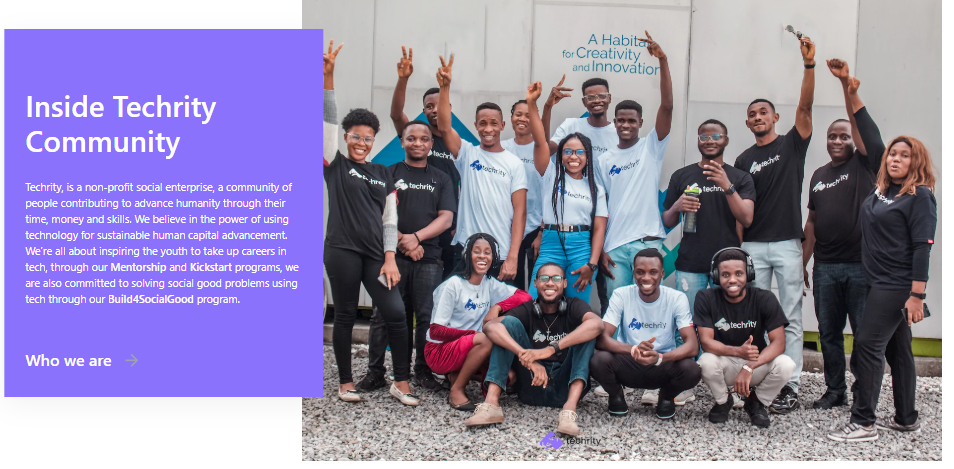
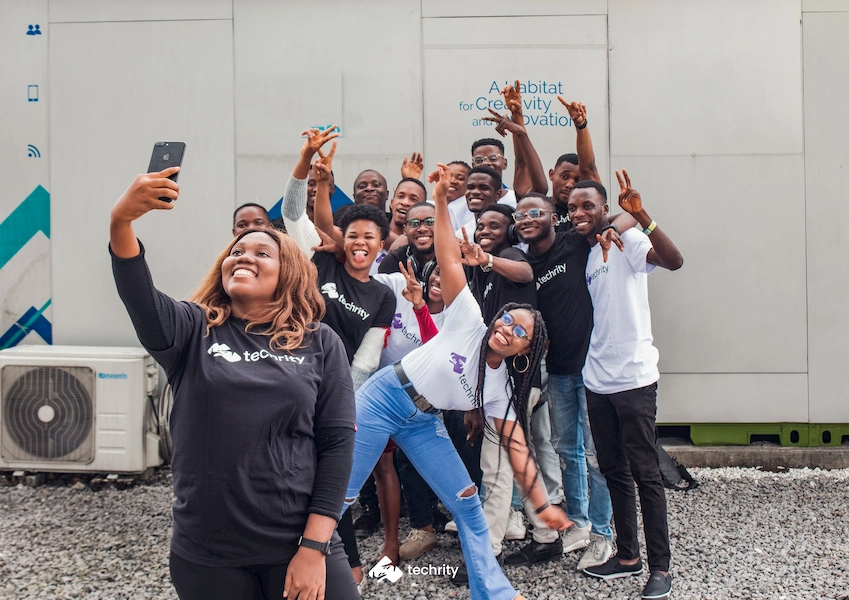






















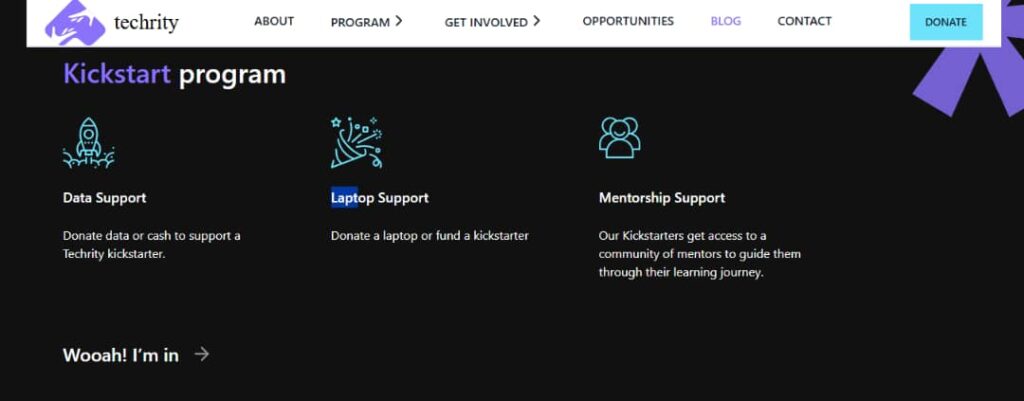
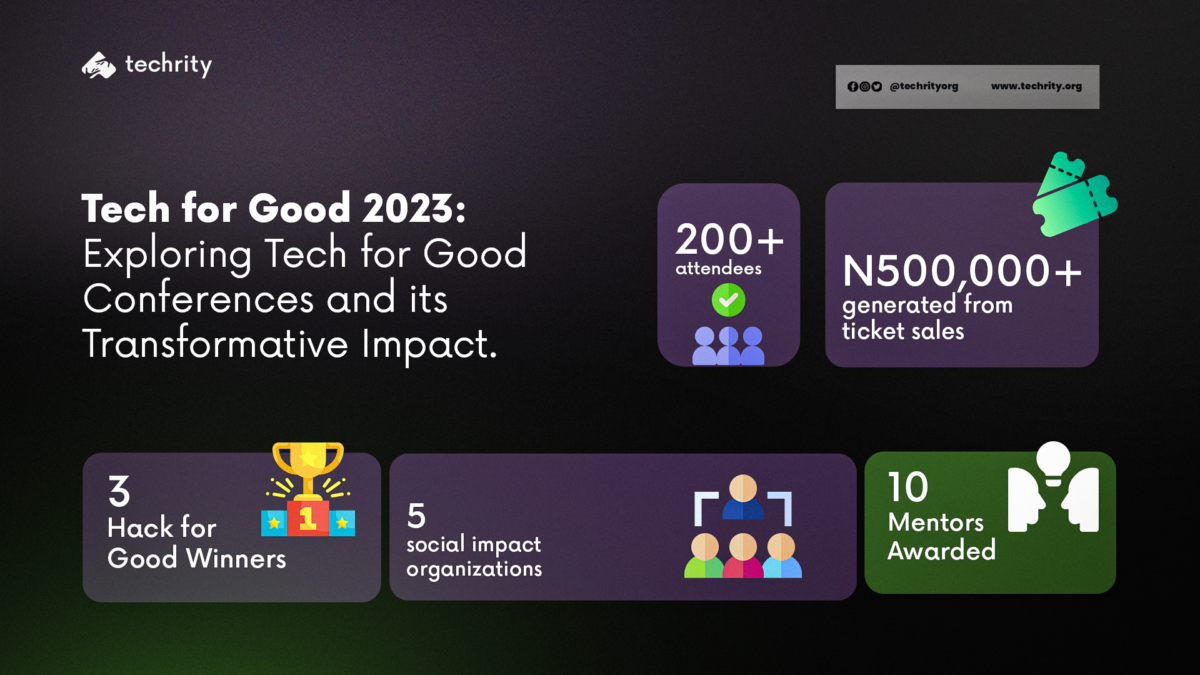
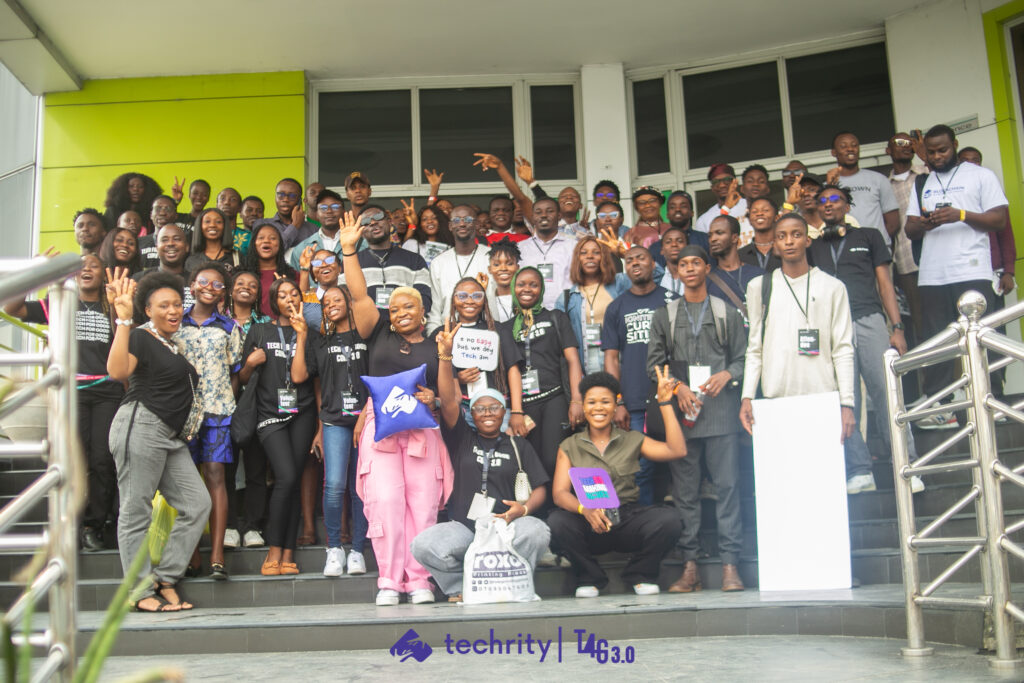


 Chibuzo Madumere, Godwin Jimmy, Akuma Isaac, Sagir Garba, Daniel Emmanuel, Segun Francis, Felix Ogbuji, Paula Daopuye, Chekwube Peters, Stephen Okonkwo, Karla Obakpolor, who enthusiastically participated in the #PayItForwardChallenge, enabling over 102 sponsored (free) tickets.