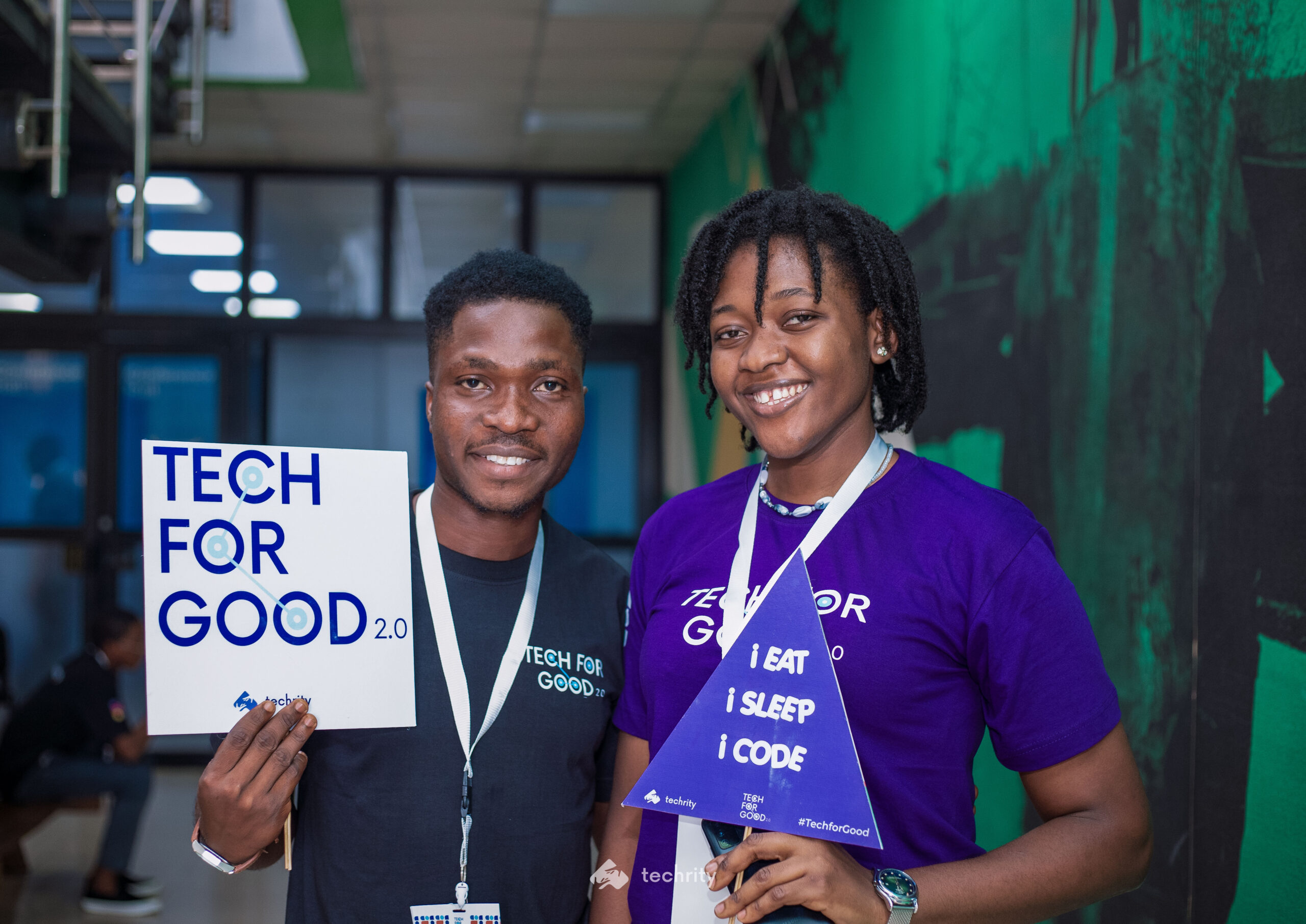
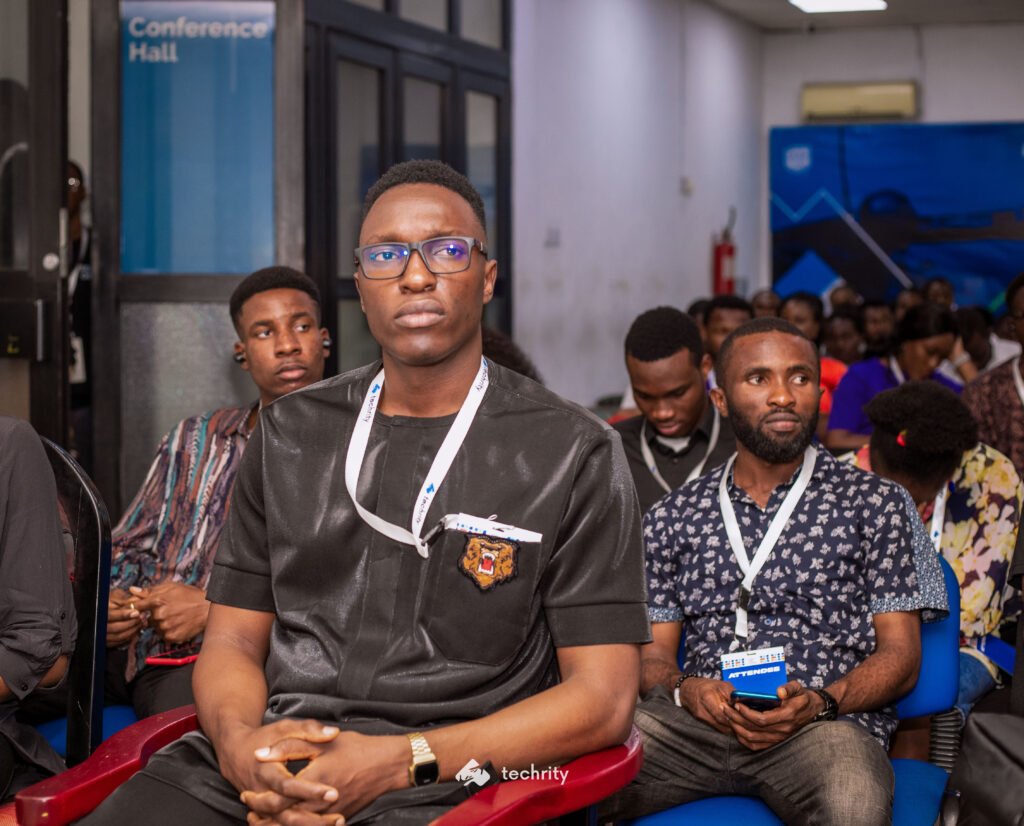
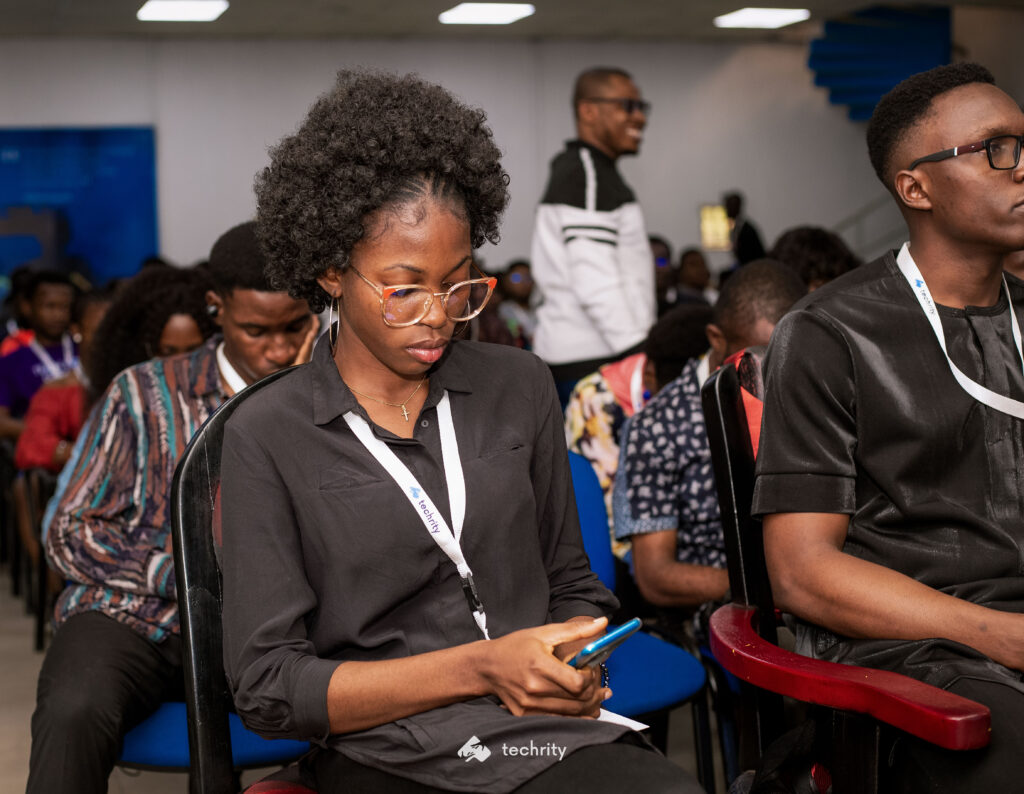
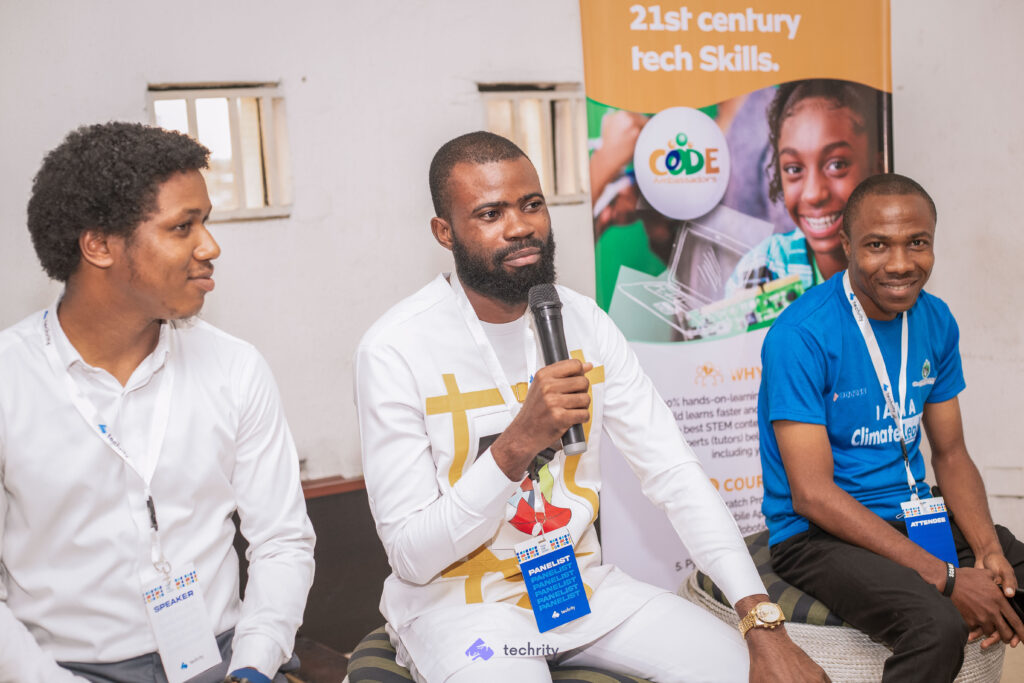
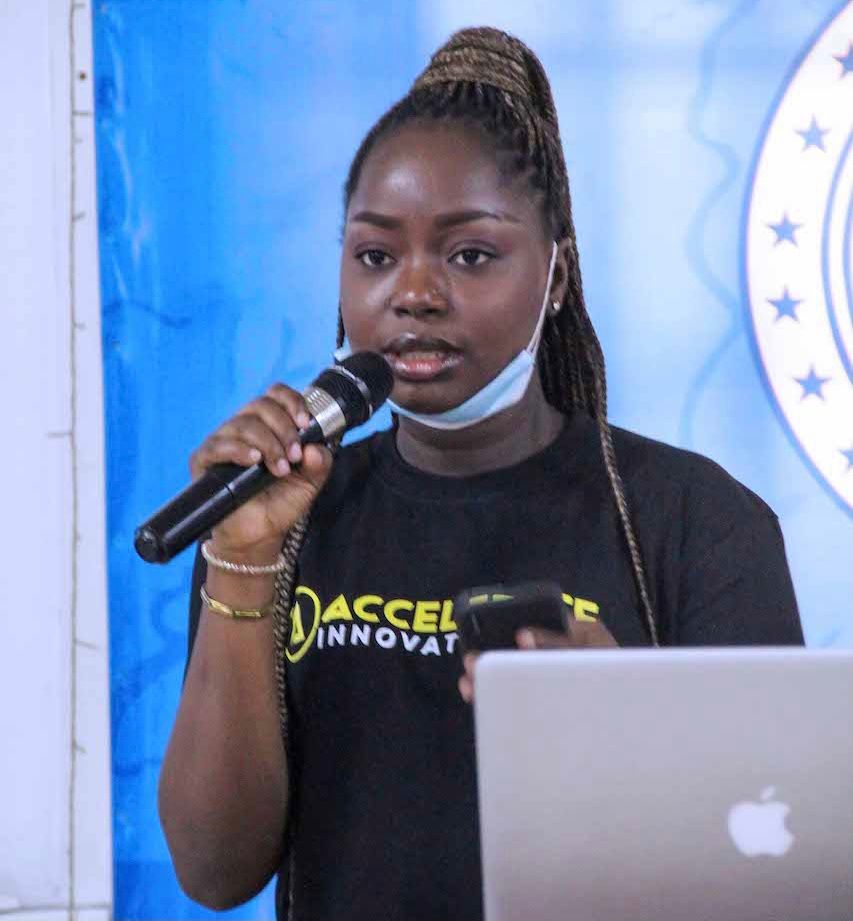
Did you know that over 2.1 billion tons of waste are produced globally each year, yet only 16% is effectively recycled? This shocking statistic underscores a critical need for innovative solutions in global waste management.
My name is Gold Nse Nseuwem, and together with my incredible team—Nathan-Trust Ekanem (Frontend Developer), Uwakmfon Ekong (Project Manager), and Mercy Vincent (Backend Developer)—we developed GreenBounty during the Techrity Hackathon Challenge 2024. Our mission? To redefine recycling by making it rewarding, accessible, and impactful.
The Problem
In many communities, waste mismanagement remains a persistent challenge. Limited awareness, lack of motivation, and inefficient recycling systems result in:
Overflowing landfills
Pollution
Wasted resources
Without practical and rewarding solutions, people often feel unmotivated to take meaningful steps toward sustainability. This inspired us to create a system that transforms the recycling process into a rewarding habit.
The Solution: GreenBounty
GreenBounty bridges the gap between awareness and action, empowering individuals to turn waste into worth. Our platform makes recycling simple and incentivized.
How It Works:
Collect Waste: Users gather and sort recyclable materials.
Submit Waste: Convenient pickup and drop-off options are provided.
Earn Rewards: Users receive Eco-Coins—a digital currency—for every item recycled.
Redeem Benefits: Eco-Coins can be exchanged for rewards, making recycling both impactful and rewarding.
By encouraging participation, GreenBounty inspires communities to adopt sustainable habits while creating a cleaner, greener planet.
Hackathon Experience
The Techrity Hackathon Challenge 2024 was an exciting, fast-paced journey. As a team, we collaborated, brainstormed, and overcame challenges to bring GreenBounty to life.
Meet the Team:
Gold Nse Nseuwem: UI/UX Designer
Nathan-Trust Ekanem: Frontend Developer
Uwakmfon Ekong: Project Manager
Mercy Vincent: Backend Developer
This experience not only strengthened our technical and problem-solving skills but also reinforced the power of teamwork in creating impactful solutions.
Future Development
While GreenBounty has already demonstrated its potential, we envision even greater possibilities:
Enhanced Features: Incorporating analytics to measure individual and community recycling impact.
Global Expansion: Scaling the platform to serve more regions and communities.
Collaborations: Partnering with recycling agencies, businesses, and local governments to enhance accessibility and adoption.
Our ultimate goal is to make recycling engaging, accessible, and impactful for all, creating a global ripple effect of positive change.
Conclusion
GreenBounty is more than a platform—it’s a movement to redefine waste management. By incentivizing recycling, we aim to inspire a culture of responsibility, reward, and sustainability.
Our participation in the Techrity Hackathon Challenge 2024 was a turning point. It allowed us to merge diverse skills and ideas into a unified vision that addresses a pressing problem while encouraging people to take action for a better future.
Let’s turn waste into worth, one step at a time. Together, we can make sustainability rewarding and redefine how the world manages its waste.
Join us in recycling, rewarding, and redefining the future with GreenBounty.
Introduction Hello! I’m Aaditya Srivastava, a Computer Science student specializing in Artificial Intelligence. This year, I had the incredible opportunity to participate in Hack for Good 2024, an esteemed challenge hosted by Techrity. During the event, I introduced AssessMe.AI—a platform aimed at revolutionizing the recruitment and assessment process using AI-driven automation.
The Problem The hiring process today is fraught with challenges. Companies struggle to attract suitable candidates, ensure fairness, and make data-driven decisions efficiently. These gaps can lead to prolonged hiring cycles, missed opportunities, and even harm to an organization’s reputation.
The Solution: Introducing AssessMe.AI AssessMe.AI is a comprehensive solution designed to tackle these recruitment challenges. It integrates AI-driven tools to automate, enhance, and simplify hiring workflows for both recruiters and candidates.
Key Features:
Personalized Assessments
For Candidates:
Curate interview questions tailored to their preparation needs.
Conduct AI-powered virtual interviews.
Receive detailed feedback and analytics across six key interview parameters.
For Recruiters:
Host personalized interview assessments.
Use virtual AI interviews for unbiased evaluations.
Rank candidates based on actionable insights and performance data.
AI Feedback and Analytics Candidates gain valuable insights into their strengths and areas for improvement, while recruiters receive a ranked list of candidates to streamline decision-making.
Intuitive User Interface The platform ensures a seamless user experience for both recruiters and job seekers through its modern, responsive design.
How It Works
Candidate Preparation: Candidates can curate self-interview questions, customize their sessions, and receive feedback based on detailed analytics.
Recruiter Assessment: Recruiters can host tailored AI-driven assessments, with results and rankings automatically generated for efficient evaluation.
Technologies Powering AssessMe.AI To create a robust, user-friendly platform, AssessMe.AI leverages:
Next.js & React.js: For fast server-side rendering and responsive UI.
TailwindCSS & Shadcn UI: Delivering a sleek, modern design with rapid development capabilities.
OpenAI Whisper API: Enabling advanced speech-to-text for accurate transcriptions and analysis.
React Flow: For visualizing recruitment workflows with clarity and precision.
Hackathon Experience Participating in Hack for Good 2024 was both challenging and rewarding. It pushed me to explore new dimensions of problem-solving, including:
Enhancing AI prompts to generate precise, JSON-formatted answers.
Reducing latency in audio outputs for smoother user interactions.
Testing and debugging incrementally proved critical for optimizing algorithms.
Through this experience, I learned that refining code step-by-step significantly improves efficiency. Each hurdle helped me grow as a developer, sharpening my technical and analytical skills.
AssessMe.ai Demo presentation at Hack for Good 2024
Impact and Future Prospects AssessMe.AI has the potential to transform the recruitment landscape by:
Reducing time-to-hire by up to 50%.
Ensuring fairness and improving hiring quality through data-backed decision-making.
Looking ahead, I aim to scale AssessMe.AI globally, tailoring it to meet the unique needs of diverse industries and businesses worldwide.
Conclusion I am immensely thankful to Techrity for organizing Hack for Good 2024. This platform not only gave me the chance to showcase AssessMe.AI but also offered a space for growth, innovation, and collaboration.
The journey doesn’t end here. I remain committed to enhancing AssessMe.AI—a platform that bridges the gap between candidates and recruiters, making hiring faster, fairer, and more effective.
Thank you for following my story, and I look forward to what the future holds!
We are excited to share that Medivault, our innovative solution for healthcare data management, emerged as a winner at the Techrity HackforGood Challenge 2024! This achievement reflects the hard work, creativity, and teamwork of our talented group—Praise Okere (17), Oreoluwa Olugbogi (17), Whakee (18), and Emmanuel Elumeze (19). Together, we set out to solve pressing challenges in healthcare data storage and accessibility.
The Problem
Traditional healthcare systems are often inefficient, plagued by issues such as misplaced medical records, data silos, and cumbersome administrative processes. These inefficiencies frustrate both patients and healthcare providers, slowing down care delivery and affecting outcomes.
Our mission was clear: to build a solution that simplifies, secures, and streamlines healthcare data management.
The Solution: Medivault
Medivault is a centralized healthcare platform that redefines how medical data is managed, stored, and accessed.
Key Features:
Secure Medical Record Storage: Data is encrypted to ensure confidentiality and privacy.
Seamless Accessibility: Patients and healthcare providers can access records effortlessly across multiple hospitals.
Streamlined Check-Ins: Using NFC cards linked to unique patient IDs, Medivault reduces wait times and enhances data retrieval.
Challenges We Overcame
Building Medivault wasn’t without its hurdles, but our team faced them head-on:
Data Security: Implementing advanced encryption methods to safeguard sensitive patient information.
NFC Integration: Effectively using NFC cards for quick and secure check-ins.
Scalability: Designing a platform that can grow to accommodate increasing users without performance loss.
Skill Growth: Pushing beyond our comfort zones to learn new technologies, tools, and methodologies.
Our persistence, teamwork, and research allowed us to overcome these challenges and sharpen our technical skills in the process.
Technologies Behind Medivault
We used cutting-edge tools and technologies to bring Medivault to life:
NFC Cards & Self-Made Readers: For efficient patient identification and check-ins.
React & Tailwind CSS: To deliver a responsive and user-friendly interface.
Advanced Data Encryption: Ensuring secure and confidential handling of healthcare data.
Hackathon Highlights
The Techrity HackforGood Challenge was more than just a competition; it was a transformative experience. It taught us to:
Test and refine our code incrementally.
Collaborate effectively as a team under pressure.
Innovate creatively to solve real-world problems.
We also had the opportunity to connect with other brilliant minds, learn from challenges, and grow personally and professionally.
What’s Next for Medivault?
We believe Medivault has the potential to revolutionize healthcare systems globally. Our future aspirations include:
Wider Integration: Partnering with hospitals to adopt Medivault as a standard solution for healthcare data management.
Global Expansion: Scaling the platform to serve patients and providers worldwide.
Enhanced Features: Incorporating AI-driven insights to offer predictive analytics for better patient care and decision-making.
Gratitude
We extend our heartfelt thanks to Techrity for hosting the HackforGood Challenge 2024. This platform gave us the opportunity to showcase our skills, overcome challenges, and contribute to solving meaningful problems. The support, mentorship, and encouragement we received motivated us to push our boundaries.
Conclusion
Winning the Techrity HackforGood Challenge 2024 is just the beginning for Medivault. Our vision is to make healthcare data management smarter, faster, and more accessible for everyone. This milestone marks a step forward in our journey to create lasting, impactful solutions.
Thank you for supporting us, and stay tuned as we continue to innovate!
We are excited to share that Medivault, our innovative solution for healthcare data management, emerged as a winner at the Techrity HackforGood Challenge 2024! This achievement reflects the hard work, creativity, and teamwork of our talented group—Praise Okere (17), Oreoluwa Olugbogi (17), Whakee (18), and Emmanuel Elumeze (19). Together, we set out to solve pressing challenges in healthcare data storage and accessibility.
The Problem
Traditional healthcare systems are often inefficient, plagued by issues such as misplaced medical records, data silos, and cumbersome administrative processes. These inefficiencies frustrate both patients and healthcare providers, slowing down care delivery and affecting outcomes.
Our mission was clear: to build a solution that simplifies, secures, and streamlines healthcare data management.
The Solution: Medivault
Medivault is a centralized healthcare platform that redefines how medical data is managed, stored, and accessed.
Key Features:
Secure Medical Record Storage: Data is encrypted to ensure confidentiality and privacy.
Seamless Accessibility: Patients and healthcare providers can access records effortlessly across multiple hospitals.
Streamlined Check-Ins: Using NFC cards linked to unique patient IDs, Medivault reduces wait times and enhances data retrieval.
Challenges We Overcame
Building Medivault wasn’t without its hurdles, but our team faced them head-on:
Data Security: Implementing advanced encryption methods to safeguard sensitive patient information.
NFC Integration: Effectively using NFC cards for quick and secure check-ins.
Scalability: Designing a platform that can grow to accommodate increasing users without performance loss.
Skill Growth: Pushing beyond our comfort zones to learn new technologies, tools, and methodologies.
Our persistence, teamwork, and research allowed us to overcome these challenges and sharpen our technical skills in the process.
Technologies Behind Medivault
We used cutting-edge tools and technologies to bring Medivault to life:
NFC Cards & Self-Made Readers: For efficient patient identification and check-ins.
React & Tailwind CSS: To deliver a responsive and user-friendly interface.
Advanced Data Encryption: Ensuring secure and confidential handling of healthcare data.
Hackathon Highlights
The Techrity HackforGood Challenge was more than just a competition; it was a transformative experience. It taught us to:
Test and refine our code incrementally.
Collaborate effectively as a team under pressure.
Innovate creatively to solve real-world problems.
We also had the opportunity to connect with other brilliant minds, learn from challenges, and grow personally and professionally.
What’s Next for Medivault?
We believe Medivault has the potential to revolutionize healthcare systems globally. Our future aspirations include:
Wider Integration: Partnering with hospitals to adopt Medivault as a standard solution for healthcare data management.
Global Expansion: Scaling the platform to serve patients and providers worldwide.
Enhanced Features: Incorporating AI-driven insights to offer predictive analytics for better patient care and decision-making.
Gratitude
We extend our heartfelt thanks to Techrity for hosting the HackforGood Challenge 2024. This platform gave us the opportunity to showcase our skills, overcome challenges, and contribute to solving meaningful problems. The support, mentorship, and encouragement we received motivated us to push our boundaries.
Conclusion
Winning the Techrity HackforGood Challenge 2024 is just the beginning for Medivault. Our vision is to make healthcare data management smarter, faster, and more accessible for everyone. This milestone marks a step forward in our journey to create lasting, impactful solutions.
Thank you for supporting us, and stay tuned as we continue to innovate!
The trends in technology are vast. We have since grown from the invention of ICs, Transistors, and Microprocessors to the Internet in the 1990s. Most especially the late 1950s and early 1960s marked a pivotal era as Integrated Circuits, commonly known as ICs invented by Jack Kilby and Robert Noyce were used to power the digital revolution.
Some Notable Trends In Technology
Health-tech
The Healthcare Industry has experienced a massive improvement in patient healthcare services due to recent trends in technology.
Technologies like brain-computer interfaces (BCIs) are being developed to help individuals with disabilities control prosthetics or communicate through thought alone. Companies like Neuralink are at the forefront of this innovation, aiming to treat neurological conditions and potentially enhance cognitive capabilities.
Biotechnology leverages biological systems to develop products and solutions for healthcare, agriculture, and more. CRISPR gene editing, for instance, allows for precise modifications to DNA, offering potential cures for genetic disorders. Editas Medicine and CRISPR Therapeutics are pioneering this field, promising revolutionary treatments.
Quantum Computing Technologies
Quantum computers use the principles of quantum mechanics to perform calculations at unprecedented speeds. These computers can solve complex problems in cryptography, material science, and pharmaceuticals. Companies like IBM and Google are making significant strides, with IBM’s Quantum Experience and Google’s Sycamore processor leading the charge.
Artificial Intelligence (AI)
Artificial Intelligence (AI) is transforming industries by automating tasks, providing insights through data analysis, and enabling new levels of personalization. OpenAI’s GPT-4 and Google’s DeepMind are examples of AI systems pushing the boundaries of what machines can do.
AI-powered virtual assistants like Amazon’s Alexa, Apple’s Siri, and Google Assistant are becoming increasingly sophisticated. They help users with tasks ranging from setting reminders to controlling smart home devices, providing a more intuitive and interactive user experience.
Knowledge graphs organize information in a way that machines can understand, enabling better data analysis and AI applications. Companies like Google use them to improve search results and enterprises to enhance data management.
Smart Spaces
Digital twins are virtual replicas of physical objects or systems that support real-time monitoring and simulation. They are used in various industries, including manufacturing, healthcare, and urban planning, to optimize performance and predict maintenance needs. Siemens and General Electric are leaders in developing digital twin technologies.
Smart spaces integrate digital and physical environments to create interconnected, intelligent systems. These include smart homes, cities, and workplaces that enhance convenience, safety, and efficiency. Companies like Cisco and Microsoft are developing solutions to integrate IoT devices and AI to create smart spaces.
Autonomous Vehicles
Self-driving cars, flying cars, and drones represent significant advancements in transportation and logistics. They promise to reduce accidents, improve traffic management, and increase delivery efficiency. Tesla’s Autopilot and Waymo’s self-driving cars are leading examples of autonomous vehicle technology.
Computer Vision
Recent developments in computer vision enable machines to interpret and make decisions based on visual data. Applications include facial recognition, autonomous navigation, and quality inspection in manufacturing. Companies like NVIDIA and Intel are advancing computer vision capabilities and integrating them into various products and services.
Blockchain and Decentralized Identity
Blockchain technology provides a secure, decentralized ledger for recording transactions. It is the foundation of cryptocurrencies like Bitcoin and Ethereum, and it also has applications in supply chain management, finance, and digital identity. Companies like IBM and ConsenSys are exploring diverse use cases for blockchain technology.
The Decentralized Identity approach allows individuals to control their personal information without relying on central authorities. Blockchain technology underpins decentralized identity solutions, providing enhanced privacy and security. Projects like Microsoft’s Decentralized Identity and Sovrin Network are pioneering this field.
Renewable Tech and Sustainable Tech
Technologies focused on harnessing renewable energy sources like solar, wind, and hydropower are crucial for a sustainable future. Companies like Tesla (with its solar products) and Vestas (wind turbines) are at the forefront of renewable tech.
Sustainable Tech involves developing technologies that minimize environmental impact and promote sustainability. Innovations in this area include biodegradable materials, energy-efficient systems, and circular economy solutions. Companies like Patagonia and Beyond Meat are examples of businesses integrating sustainable tech.
Green Technology focuses on reducing environmental impact through innovation. This includes everything from electric vehicles to green building materials. Tesla’s electric cars and LEED-certified buildings are prominent examples of green technology.
No Code Development
No-code platforms enable users to create applications without needing to write code. This democratizes software development, allowing more people to build solutions. Platforms like Bubble and Webflow are making no-code development accessible and powerful.
Internet of Behaviour (IoB)
Internet of Behaviour (IoB) combines data from various sources to influence behavior. It uses data analytics and behavioral science to understand and guide user actions. Applications include personalized marketing, healthcare interventions, and workplace productivity tools.
Benefits of Emerging Technologies to the Tech World
Innovation and Efficiency
Emerging technologies drive innovation, leading to the creation of new products and services. They enhance efficiency in various processes, reducing costs and time.
Problem-Solving
They offer solutions to complex problems, from healthcare to climate change, improving the quality of life and sustainability.
Economic Growth
By fostering new industries and job creation, emerging technologies contribute to economic growth and competitiveness.
Accessibility and Connectivity
Technologies like 5G and blockchain improve connectivity and accessibility, enabling more people to participate in the digital economy.
Challenges Posed by Emerging Technologies to the Tech World
Security and Privacy
As technology advances, so do the risks of cyberattacks and data breaches. Protecting sensitive information becomes increasingly complex.
Ethical Concerns
Issues such as AI bias, surveillance, and the impact on employment raise significant ethical questions.
Regulation and Compliance
Keeping up with rapid technological advancements poses challenges for regulatory bodies to ensure safety and compliance without stifling innovation.
Environmental Impact
The production, use, and disposal of new technologies can endanger the environment if not managed sustainably.
Remember, as these technologies evolve, staying informed and adaptable will be crucial for leveraging their full potential and addressing the critical challenges they pose.
Have you ever anticipated an event only to find that when it unfolds, it surpasses all your expectations?
That was the feeling I got from the Tech for Good 3.0 event ????
What is Tech for Good?
Tech for Good (T4G) is an annual conference that aims to highlight technological advancements benefiting African communities for social progress. Tech for Good was established to counteract the negative information circulating about technology and its utilization in Africa. For further insight into the conference’s mission, delve into the details of the inaugural edition.
Past editions have been truly amazing, as evidenced by the positive feedback received. Now, let me take you through all the exciting details of the recently concluded third edition (3.0) of Tech for Good, which took place on October 21, 2023, at The Autograph, Port Harcourt, Nigeria. Don’t miss out on this exciting update!
Tech for Good 3.0: Unveiling Impactful Moments and Innovations
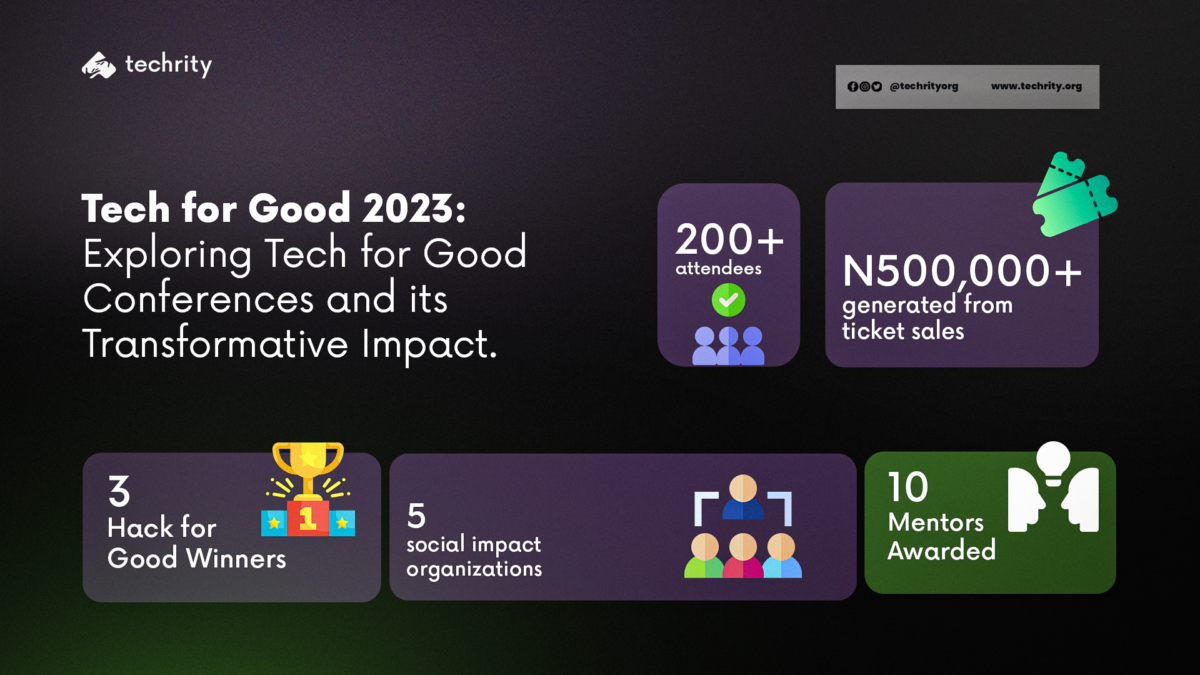
Tech for Good 3.0 was incredibly impactful, drawing a crowd of 200+ attendees, featuring 8 speakers and 8 social impact organizations, and awarded 10 mentors in the Tech for Good Social Impact Awards.
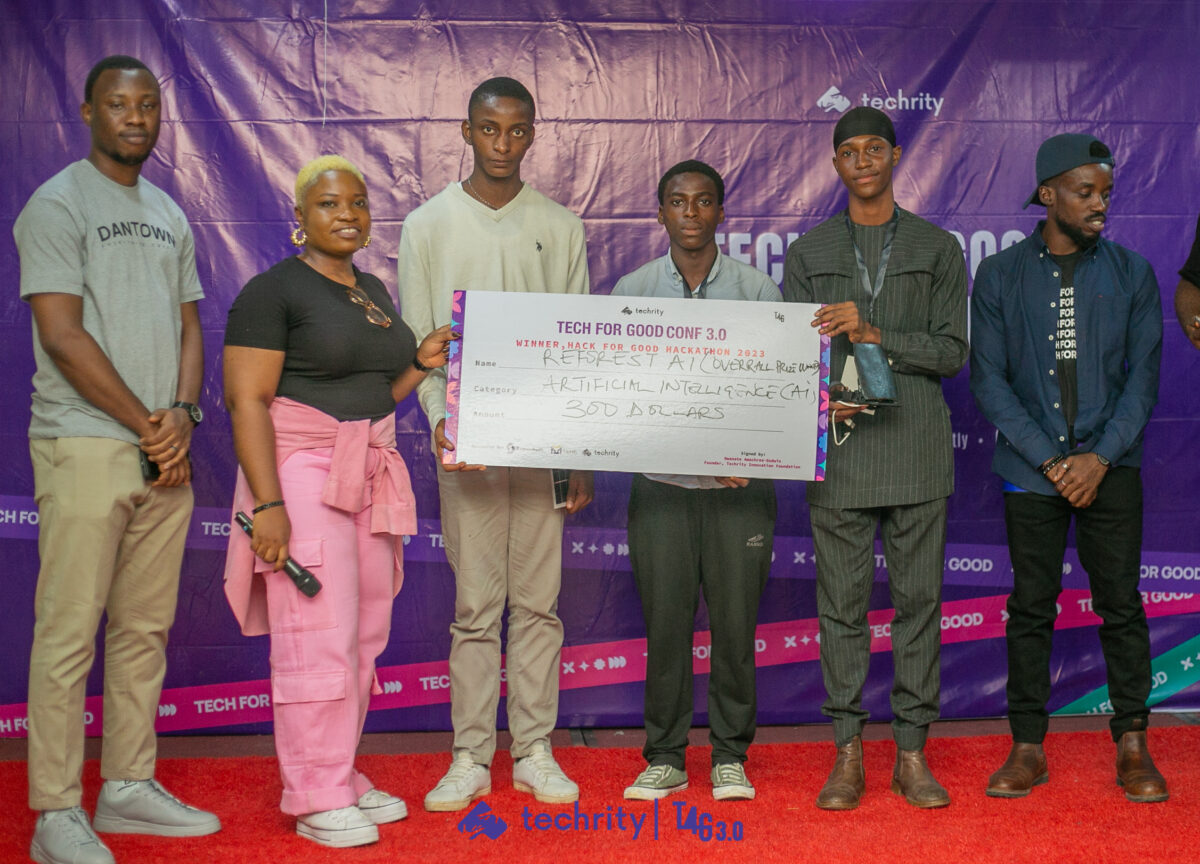
Team ReforestAI
The event also received 21 submissions in the Hack for Good Hackathon through DoraHacks and GitHub. The three winning teams were:
Crypto Mayhem – This game enlightens the player on the importance of water pollution (3rd Place). Watch the demo on Youtube.
They were rewarded with a total of $650 in cash and $700 in XuperAuth credits, generously sponsored by Techrity, XuperAuth, and Mently.
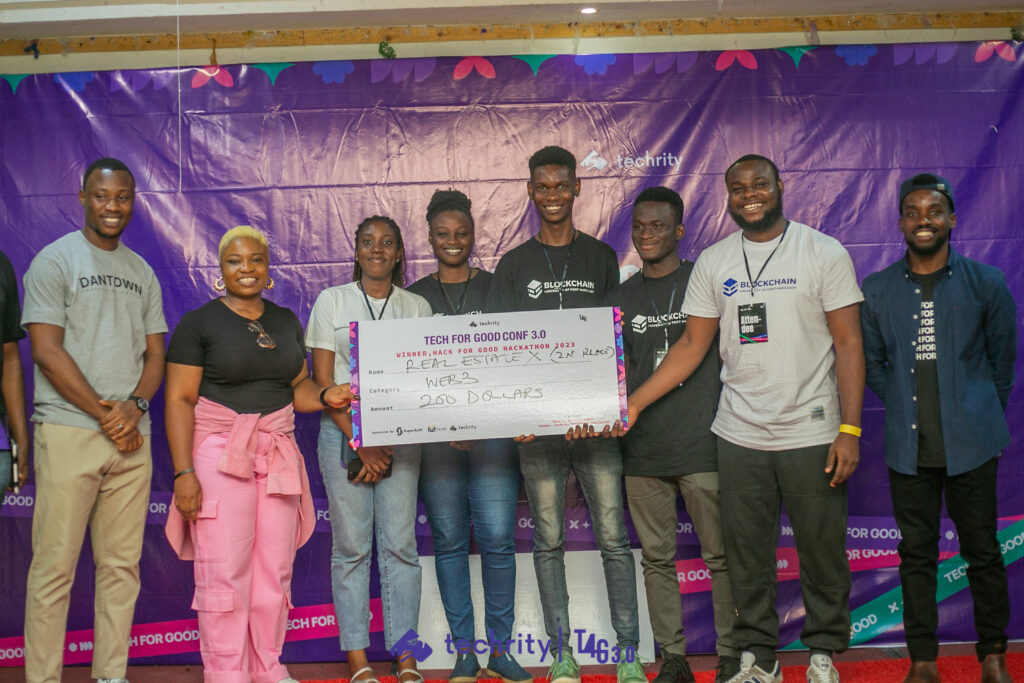
Team Real Estate X
This year’s edition stood out with the introduction of paid ticketing, elevating the event management experience to a whole new level. The ticketing revenue exceeded #500,000, including sales from the regular, VIP, and Company Access categories, all made possible through the Nftikets Event Ticketing Platform.
This achievement was thanks to the incredible support from community members like Chibuzo Madumere, Akuma Isaac, Paula Daopuye, Stephen Okonkwo, Chekwube Peters, Felix Ogbuji, Karla Obakpolor, Sagir Garba, Daniel Emmanuel, and Segun Francis, who enthusiastically participated in the #PayItForwardChallenge, enabling over 100 sponsored tickets.
Ticket registration stand
This year’s conference started with an opening speech from the founder, Mrs. Owanate Amachree-Godwin,
It also showcased experienced speakers, including Uche Aniche, the Convener of Startup South, discussing how African startups can utilize technology.
Mr. Uche Aniche Preaching the Gospel of Startups
Jephtah Abu, founder of Talentpoel, talked about the impact of exporting tech talents in Africa
Jephthah Abu
while Susan Odurinde, founder of Cactus Tech, focused on innovative thinking for social impact.
Kelvin Ogba Dafiaghor, Regional Manager in Africa for Global STEM Initiative, highlighted how AI is transforming Africa positively.
Mr Kelvin Dafiaghor highlights the benefits of AI transformation in Africa
Wisdom Nwokocha shared insights on finding and securing freelance technical writing clients
Wisdom Nwokocha
Ayoleyi Lurogho discussed evolving UX thinking beyond drag and drop,
Ayoleyi Lurogho
and Kelechi Oliver addressed cloud adoption for early-stage startups.
Kelechi Oliver
Ibe Andyson focused on choosing a tech career based on understanding personality traits and more.
Ibe Andrew Andyson
Social Impact Organizations
Social impact organizations and companies dedicated to realizing the vision of Tech for Good were actively involved. These entities were invited to share their impactful stories, to highlight their contributions to the tech sector. Participating organizations included:
SpitalLabs
Spital Labs is a community and tech hub with a vision to provide high-quality technical training through cohort programmes and diverse channels, to scale digital education to millions.
Code Ambassadors
Code Ambassadors Academy is a STEM.org Accredited academy that inspires and equips kids/teens between the ages of 5 and 17 with coding, problem-solving, and critical-thinking skills to turn their ideas into solutions. We achieve this by providing training, mentorship, and exhibition events.
Technoville
Technoville was founded in 2018, by passionate young people who believe that technology can transform individuals and nations. We are equipping the next generation of innovators with in-demand digital skills. Nurturing tech talent, bridging the talent gap with well-curated programs, fostering digital excellence, and driving the future of tech innovation.
Dantown
Dantown is a crypto exchange that offers buy and sell services for crypto, fast payments, and 24/7 customer service. Other benefits include airtime purchases, cable TV subscriptions, utility bill payments, and virtual USD cards.
XuperAuth
XuperAuth is a walletless, passwordless authentication system that leverages blockchain technology to provide secure and convenient access to Web3 products. It eliminates the need for users to manage complex private keys or remember passwords, making it easier for them to engage with blockchain applications.
Our suite of APIs and SDKs is designed to empower DApps with walletless, and passwordless authentication, revolutionizing user experiences, and increasing adoption rates in the Web3 ecosystem.
Mently
The Mently Mentorship platform enables you to scale your mentorship programs with ease, automate, host and manage the entire lifecycle of your mentorship program. The platform provides automated matching of mentors to mentees, creates curriculums and manages your training in one place.
NFTikets
NFTikets is an online ticketing for any type of live and virtual event.
Highlights
Another interesting moment observed at Tech for Good 3.0 was the showcase of two children from Code Ambassadors. These children showcased and talked about the work they have been building at Code Ambassadors. The first one is GBS Alert. You can watch the demo video and the pitch video. The second one is the Hazel App. You can watch the demo video and pitch video.
Tech for Good Awards
The Tech for Good Social Impact Awards honors individuals, startups, non-profits, and volunteers who use their platforms to better their community and the global community at large.
At the third edition of Tech for Good 3.0, we are celebrated mentors who have dedicated their time and resources to sharing knowledge and mentoring newbies into Tech careers.
At the heart of Techrity’s mission lies its annual mentorship program, which nurtures and guides aspiring tech talents, empowering them to become agents of change in their communities. This program provides mentorship, workshops, and networking opportunities, fostering a supportive environment where young innovators can thrive.
Through its mentorship program, Techrity has played a crucial role in shaping the tech landscape of the Niger Delta. Mentors, drawn from a pool of experienced professionals and industry experts, provide invaluable guidance and support to mentees, helping them develop their technical skills, entrepreneurial mindset, and problem-solving abilities. This nurturing environment has nurtured a new generation of tech leaders equipped with the skills and knowledge to tackle their communities’ challenges.
The impact of Techrity’s mentorship program extends far beyond individual mentees, shaping the trajectory of innovation and social impact in the region. By empowering young talents to harness the power of technology, Techrity is fostering a culture of innovation that is addressing real-world challenges and creating a more sustainable future for the Niger Delta.
Techrity’s efforts are not limited to mentorship; the foundation also provides Data support and laptops to beginners looking to kickstart their careers. This comprehensive approach to nurturing innovation has resulted in the development of homegrown solutions that address critical issues in education, healthcare, agriculture, and environmental sustainability.
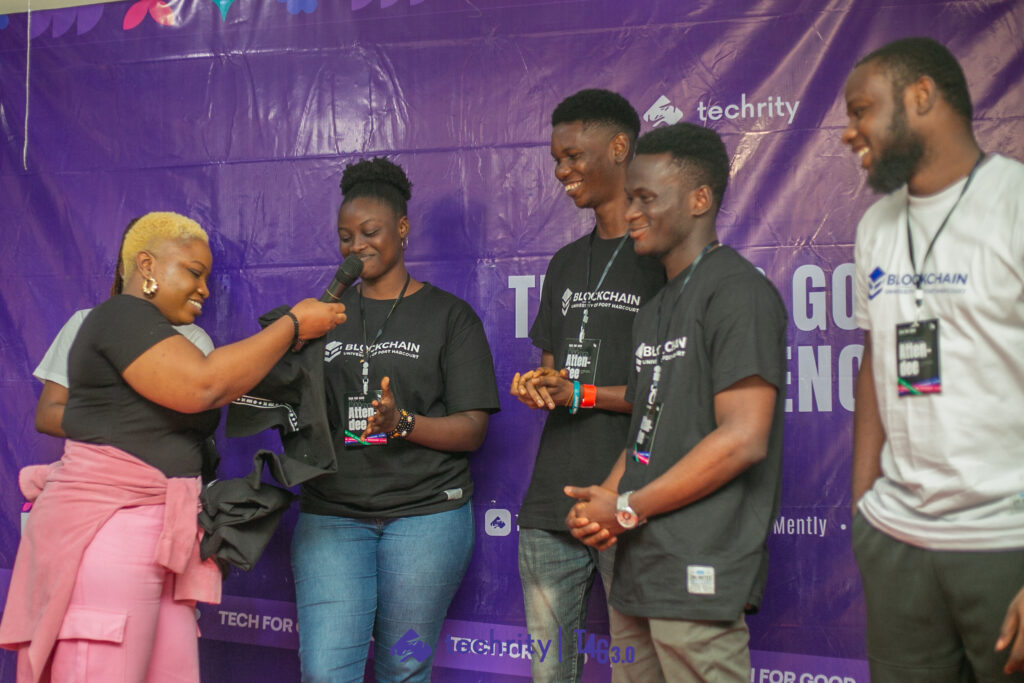
Our handsome Host – Felix OgbujiBeautiful co-host – Joy NwaiwuSmiley face ???? and serious face ???? Community Manager and VolunteersFounder of Blockchain Uniport – Proudly talking about how his community was a winner in the hackathon ????Founder and Team Lead – Owanate Amachree-Godwin giving the keynote address
We would like to thank our sponsors, partners, organization, attendees who helped make the Tech for Good Conference a success. Special thanks to those who participated in the #PayItForward Challenge which helped to provide 100+ sponsored tickets to attendees of the event.
Chibuzo Madumere, Godwin Jimmy, Akuma Isaac, Sagir Garba, Daniel Emmanuel, Segun Francis, Felix Ogbuji, Paula Daopuye, Chekwube Peters, Stephen Okonkwo, Karla Obakpolor, who enthusiastically participated in the #PayItForwardChallenge, enabling over 102 sponsored (free) tickets.
As the convener of the Tech for Good Annual Conference, Techrity Innovation Foundation has established itself as a driving force behind the region’s tech ecosystem. The foundation’s unwavering commitment to empowering young innovators, fostering collaboration, and promoting the responsible use of technology for social good is making a tangible impact on the lives of communities across the Niger Delta and Nigeria at large.
The success of T4G 3.0 is a testament to the transformative power of technology and the unwavering dedication of individuals and organizations working to harness its potential for positive change. The conference has set a new standard for innovation and social impact in Africa, inspiring a new generation of tech leaders to embrace technology as a tool for creating a brighter future for Africa.
My name is Lesley John-Jumbo. I am 18 years old and an embedded systems developer. I like to explore the realms of Artificial Intelligence and Robotics.
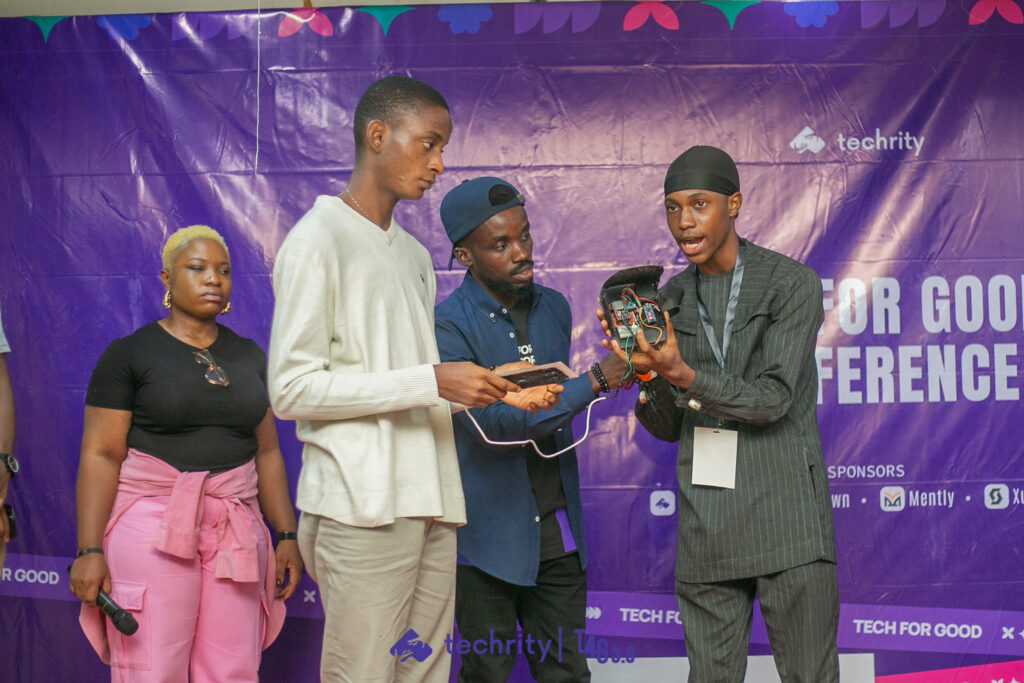
My team members: Blessed Pepple (19, Hardware designer), Bright Sunday (17, Embedded systems engineering specialist) and I recently developed a project called, “ReForestAI” for the HackforGood hackathon challenge 2023 organized by Techrity.
Problem Statement
Illegal logging has deteriorated the forest ecosystem, leading to the deforestation and extinction of some animals. The problem of deforestation poses harmful threats to biodiversity, carbon sequestration, and cultural heritage, emphasizing the urgent need for effective forest conversation and protective measures. And here comes ReForestAI.
Solution Overview
ReForestAI is a project that harnesses artificial intelligence, robotics and environmental science to tackle one of Africa’s most pressing environmental issues—deforestation. With ReForestAI, the global governments and environmental biologists can combat illegal logging and revive the forest ecosystem again.
Challenges Faced
For this project, we stepped out on a completely new terrain. We experienced difficulties with advanced batteries and was bamboozled by the unfamiliar electrical connections we tried. I would say these setbacks occurred because we tried new construction methods for the project.
But thanks to our thorough research skills, we found a way to correct the wiring without overloading the components with a high voltage capacity. In turn, not only did this aggressive research pay off in saving our project, we learnt a lot as a team.
Aside from the hiccups we faced in our construction method, we also battled with unstable power supply in Port-Harcourt. To solve this, we used a friend’s robotics workstation, which operated on solar power. At night, after our friend’s operating hours, we continued building, demonstrating our commitment to overcoming challenges and advancing our project despite external limitations.
Technologies Used
AI and Machine Learning: We used tailor-made AI models for detecting deforestation and performing predictive analytics.
Robotics: With AI embedded robots, we monitored the forest.
Cloud computing: We used expandable cloud infrastructure for processing and storing data.
IoT Sensors: IoT was used as an environmental sensors for collecting data.
A special highlight for me during this hackathon challenge was the improvement of my circuit design skills. I learned the importance of running and testing codes in increments and meticulously defining algorithms based on specific circumstances. With this new knowledge I learnt, debugging my codes became a lot easier.
ReforestAI Presentation at Tech for Good 2023
For my team also, our journey was punctuated with memorable moments that highlighted our individual growth. Despite our strong belief in the success of our project, we stayed grounded, acknowledging that the experience gained was a victory in itself no matter the outcome of the result. This perspective propelled us forward, creating an environment where learning and growth were just as important as the outcome.
Future Developments
Our vision goes beyond what we see; we aspire to scale this project globally by partnering with international entities, and building a network that will amplify our project’s reach.
Conclusion
We are sincerely thankful for the opportunity given to us by Techrity to participate in this hackathon challenge. The hackathon not only enabled us to showcase our skills but also offered an environment that fostered growth and creativity.
My team, the Blockchain Uniport built a platform called, “Real Estate X”, a project that allows real estate industries use NFTs (Non-Fungible Tokens) as a secure proof-of-payment. I’m Daniel Onyebuchi, and on behalf of my team, I will be sharing our Hack for Good hackathon challenge organized by Techrity experience with you in this blog post.
Problem Statement
From our research, we observed that in the real estate market, it is not easy to buy and sell properties as it takes longer time to meet potential buyers. We also noticed that owning a real estate property has become way too expensive for individuals and big investors to participate in this lucrative type of investment, indirectly limiting the flow of capital in the real estate market.
How Limited Fluidity Affects Real Estate Investment
Due to the limited liquidity in the real estate market, many individuals and investors interested in the real estate market are currently battling with:
A lack of access to real estate investments owing to the high down payment required from buyers before investing in a real estate property.
Difficulty in buying and selling properties to investors and individuals as a result of the fluctuating market prices.
Conventional method of real estate investing, which hampers innovation and slows down the modernization of the industry.
Solution Overview
Our project, Real Estate X, tackles these problems by capitalizing on the power of blockchain technology and NFTs. We developed a user-friendly website that would allow investors to collectively pool their funds to invest in a portion of real estate asset. To this effect, instead of a single investor buying an entire property, which may be too expensive, co-investors interested in the same property can each co-own a fraction of the real asset property collectively purchased with smaller capital commitment. Additionally, it will allow these investors to benefit from the real estate property as it surges in price year after year.
Key Features and Functionalities
Shared ownership: Real Estate X uses NFTs (non-fungible tokens) to show partial ownership of real estate. These NFTs give users a safe and provable right to a fraction of the property.
Efficient Investment Steps: Real Estate X makes real estate investing easy. Users can check out available properties, get detailed information, and buy shared ownership NFTs using cryptocurrency.
Clear and Safe Transactions: Real Estate X uses blockchain technology’s built-in security and transparency to guarantee safe and transparent transactions. Every transaction is noted on the blockchain, giving an unchangeable and verifiable record of ownership.
Automatic Profit Sharing: Real Estate X automates sharing rental income and capital gains with NFT holders. This guarantees that investors get their rightful portion of the property’s earnings.
Distributed Marketplace: Real Estate X works as a marketplace without middlemen, cutting down on transaction costs. This distributed approach boosts market efficiency and accessibility.
How Real Estate X Works
Real Estate X carefully selects and evaluates properties for sharing. Once a property is chosen, it’s tokenized, and a unique NFT is created that represents partial ownership.
The tokenized NFTs go on the Real Estate X platform where users can check available properties, get details, and buy NFTs using cryptocurrency.
The NFT ownership is securely stored on the blockchain, creating an unchangeable ownership record. With this, investors can easily handle their NFTs and monitor investment performance through the platform.
Next, Real Estate X automates sharing rental income and capital gains with NFT holders and investors get their fair portion of the property’s returns directly to their cryptocurrency wallets.
Then, the NFT holders can trade their ownership NFTs on the secondary market, offering flexibility and liquidity for their investments.
Challenges Faced
Navigating the Regulatory Landscape:
The rules around real estate investment, especially in the context of blockchain technology, are still in early development. This made it tricky to comply with the regulations while keeping the innovative aspects of our platform intact. To tackle this, we conducted thorough research and sought advice from legal and regulatory experts to stay updated and identify potential compliance needs. We also actively took part in industry discussions to advocate for a regulatory environment that encourages innovation while safeguarding investors.
Balancing Security and Accessibility:
Our priority was to guarantee top-notch security for user funds and data, given the type of assets involved. On the flip side, we wanted the platform to be user-friendly for a wide audience, including less tech-savvy individuals. To strike this balance, we implemented strong security measures like multi-factor authentication, encryption, and access controls. We simplified the user interface and provided clear instructions to make the platform easy to navigate and use. We kept refining our security measures and user experience based on feedback from our community and industry experts.
Educating The Market:
We teamed up with industry leaders, educational institutions, and media outlets to spread awareness of shared real estate and its potential use by creating informative content, hosting workshops and seminars, and actively communicating with the community to clear up misunderstandings and encourage well-informed choices.
Blockchain Technology: Blockchain technology formed the basic building block for Real Estate X. Blockchain helped us provide a secure and transparent way to manage ownership records to prevent fraud and manipulation.
Non-Fungible Tokens (NFTs): NFTs represented the shared real estate property asset. As each NFT is unique, it specifically signified a portion of the real estate property assigned to the owner to ensure ownership integrity.
Smart Contracts: Smart contracts are self-executing contracts embedded in the blockchain. With this technology, we automated predefined terms and conditions for managing fractional ownership, distributing rental income, and handling capital gains sharing to reduce the need for intermediaries.
Cryptocurrency Payments: Cryptocurrency is the primary mode for purchasng any property on Real Estate X. This is because cryptocurrency is fast, more secure, and less expensive compared to the traditional mode of payment options.
Our Hackathon Experience In Details
My Team members were:
Pascal Abams – The crypto researcher
Onu Daniel – The full-stack blockchain developer
Jude Abara – The blockchain developer, and
Angel Ademakin – The UI/UX designer
Participating in Techrity’s Tech4Good hackathon was an enriching experience for us that reshaped our view of how blockchain technology can transform the real estate industry. From brainstorming ideas to the final presentation, we were absorbed in a whirlwind of creativity, collaboration, and learning. The hackathon provided a platform to bring our vision for Real Estate X to life and share it with a passionate community of techies and industry experts.
Despite facing technical challenges and time constraints, my team’s resolve was unbroken. We gained the superpower for adapting, prioritizing, and maximizing the adeptness of our diverse team members. Overcoming each challenge brought us closer to our goal of creating a groundbreaking platform that opens up real estate investment to everyone.
Our most memorable moments were the collaborative brainstorming sessions and supportive environment where we met with other tech gurus who shared our passion for technology and innovation. We learned from one another’s perspective, challenged our assumptions, and hacked more innovative solutions.
Future Development
Our journey at the Tech4Good hackathon has only just begun. We are committed to further developing Real Estate X, expanding its features, and making it a vital platform for shared real estate investment.
Here are some of our key plans for future development:
We aim to broaden the range of available properties in different locations, types, and price ranges, offer various asset classes and investment opportunities.
We aim to improve the user experience by simplifying the platform navigation, enhance visuals, and provide comprehensive support resources.
We aim to introduce advanced analytics and reporting for investors, offering insights into their investments and include real-time property performance tracking, detailed financial data, and market trends analysis.
We aim to extend smart contract capabilities to automate more aspects of the investment process, streamline property management, integrate with third-party services, and support complex investment strategies.
We will also engage actively with our growing investor community by providing educational resources, host events, and encourage knowledge sharing for a supportive and informed community.
We will explore integrating Real Estate X with other blockchain networks and allow the use of different cryptocurrencies for transactions and access to a wider range of properties.
Conclusion
Our journey at the Tech4Good hackathon has transformed our vision for a more inclusive real estate market. We’re grateful for the opportunity to showcase Real Estate X and contribute to blockchain solutions for real-world issues.
Showcasing Tech Innovations for Social Good in Africa
The Tech for Good (T4G) is an annual conference that aims to showcase the impact of using Technology for Social Good in Africa.
The second edition of the just concluded Tech for Good conference was held on the 29th of October 2022 at the Rivers State ICT, Techcreek.
Purpose of Tech for Good
There is a lot of negative information being spread out there concerning Tech and its use in Africa. We created Tech for Good to solve this problem.
To understand more about the purpose of the Tech for Good conference, check out the first edition – Tech for Good 2021.
Highlights from the event
Tech for Good 2.0 was so loaded and full of impact, reporting over 250 persons in attendance, 5 speakers, 6 Social impact orgs, and over 20 people including organizations and startups awarded during the Tech for Good Awards.
Speaker Lineup
This year’s conference featured some seasoned speakers, such as;
Mr. Bruce Lucas – Founder and CEO of Olotusquare spoke on “The Journey so Far: Social Impact, Challenges of Tech in Africa”.
Davio White, a brand and product designer spoke on Designing for Social Impact
Umasoye Igwe, a creative writer and advocate for indigenous languages spoke on “How Tech is revolutionizing indigenous languages for Africans”
Sokaribo Senibo, a Software Developer spoke on “Leveraging Tech for Good: Veritable Use cases”
Tosin Emmanuel, founder of Blockchain Uniport spoke on “Blockchain Technology as a medium for Social impact in Africa”
Social Impact Project Showcase
The social impact project showcase aims to showcase projects and products built for social good in Africa.
Social impact projects like InformHER, was present to showcase their projects and products
InformHer
InformHer helps to empower young girls with the information needed to make decisions about their bodies and sex-related issues while making sure that they embrace their femininity
You can follow @helixgade on Social media to learn more.
Social Impact Orgs
Organizations and companies working tirelessly to ensure the vision of building Tech for Good were not left out, these organizations were invited to tell their Social Impact Story. The aim is to showcase the works of these companies and organizations in Tech.
Some organizations present include:
Accelerate Hub
Accelerate Innovation Hub is a technology incubation hub that focuses on facilitating student development in the area of technology and tech entrepreneurship. We aim to create a community that prompts collaboration, ideation, innovation, and synergy for student tech enthusiasts.
You can follow @acceleratehubng on Social media or visit their website: http://acceleratehub.co/
Accelerate Hub – WInner of Social Impact Organization (Non profit) 2022 receiving its award
Code Ambassadors
Code Ambassadors Lab is an EdTech Start-up that inspires and equips children between the ages of 5-17 with tech(coding, robotics, Artificial intelligence, etc.), problem-solving, and critical thinking skills. We have trained over 3000 children and are partnered with over 10 organizations and schools within four years.
The vision is to raise young tech founders in Africa who will leverage technology to solve problems.
Technoville innovation Nigeria is a leading technology organization aimed at social impact and innovative technology solutions. With a vision to “Ignite Curiosity”, it is committed to providing an environment where technology and innovative skills are attainable and curiosity is applauded.
Technoville was founded in 2018, by passionate young people who believe that technology can transform individuals and nations.
Extend Africa is a community for the immersive tech ecosystem in Africa.
We believe that with this platform, we can strategically project the works of extended reality creators in Africa to the world. We are also certain that through this platform, more people will find use cases of extended reality in ways that will immensely improve their lives.
You can follow @extendafrica on Social media or visit their website: https://extend.africa/
Gospel Ononwi – founder of Extend Africa
Blockchain Uniport
Blockchain Uniport is committed to bridging the gap between the student community and their knowledge of Cryptocurrencies and Blockchain Technology in general.
We are determined to build a community force of well-informed students who are equipped for the future of technology.
You can follow @blockchainuniport on Social media.
Tosin Emmanuel – Founder of Blockchain Uniport
Panel Session
The panel session brought together techies doing social impact work to tell their Tech for Good story;
Panelist session – Joy Nwaiwu, Wisdom Nwokocha, Philip Atimor, Godwin Jimmy, Somkene Mamah, Sokaribo Senibo, Solomon Eseme, Smith Nwokocha
Tech for Good Awards
The Tech for Good Social Impact Awards honors individuals, startups, non-profits, and volunteers who use their platforms to better their community and the global community at large.
The following is the list of the awardees and nominees for the Tech for Good social impact awards.
Social Impact Icon 2022 (Green Category)
Louis Whyte Jonah – Accelerate Hub (nominated)
Wisdom Nwokocha – Mentorship (A)
Pepple Richard – Technoville (Award)
Godwin Jimmy Akpabio – Accelerate Hub, NFTikets (Award)
Philip Chukwunonso Obiorah – Co Lead, GDG Cloud, Port Harcourt (Award)
Faith Pueneh – Mentorship (nominated)
Social Impact Icon 2022 (Veteran Category)
Bruce Lucas – Olotu Square (Award winner)
Gino Osahon – GDG Cloud PH (Award winner)
Social Impact (Non-Profit)
Accelerate Hub (Award winner)
Code Ambassadors (nominated)
Harvoxx Tech Hub (nominated)
Startup for Good
Mently (Award winner)
NFTikets (Award winner)
Dantown (Award winner)
Bankable Wisdom(nominated)
Acend (nominated)
Volunteer of the year awards
Jennifer Etegbeke
Temitayo Alebiosu
Faith Agugoesi
Caleb Duff
Our Star Girl
Deborah Folorunsho, a student and member of Code Ambassadors showcased her project at this year’s Tech for Good conference.
Deborah is a 14-year-old girl who built an app to help addicts recover from their addictions.
She was also featured on Guardian news recently in an article where she talked about her project in detail.
You can read more about her solution on the Guardian News.
Important Links
Watch the Tech for Good 2022 Livestream on Youtube.
Read more about the mobile app helping addicts recover from addiction by Deborah Folorunsho.
Spread across history are the many contributions of women and the woman folk to development and civilization. In today’s world, women have become major players in almost every important sector of the world, leadership, and technology inclusive. The role of women as key players in leadership and technological advancement becomes even more pronounced as the world advances towards complete dependence on technology. This article seeks to beam the spotlight on the many women who are working tirelessly to contribute effectively to technological advancement in Africa. It further highlights the importance of women in Leadership roles.
Women In Leadership Roles
Leadership has never been gender-dependent. It’s the qualities inherent or cultivated by an individual that determines their success as leaders. Let’s take a look at some of the women who have chosen to challenge the status quo wherever they find themselves, who fight for a more equal future, and who have helped shape history!
Ngozi Okonji Iweala – Development Economist
Ngozi Okonjo-Iweala is a Nigerian- American economist and international development expert who has served since March 1, 2021, as Director-General of the World Trade Organization. She is the first woman and the first African to hold the office. She sits on the boards of Standard Chartered Bank, Twitter, Global Alliance for Vaccines and Immunization, and the African Risk Capacity(ARC). Previously, Okonjo-Iweala spent a 25-year career at the World Bank as a development economist, scaling the ranks to the number two position of managing director, operations (2007-2011). She also served two terms as finance minister of Nigeria (2003-2006, 2011- 2015) under President Olusegun Obasanjo and President Goodluck Jonathan, respectively. She was the first woman to serve as the country’s finance minister, the first woman to serve in that office twice, and the only finance minister to have served under two different presidents. Okonjo-Iweala is the founder of Nigeria’s first indigenous opinion-research organization, NOI-Polls. She also founded the Centre for the Study of the Economies of Africa (C-SEA), a development research think tank based in Abuja, and is a Distinguished Visiting Fellow at the Center for Global Development and the Brookings Institution. Since 2019, Okonjo-Iweala has been part of UNESCO’s International Commission on the Futures of Education. Since 2019, she has also been serving on the High-Level Council on Leadership and Management for Development of the Aspen Management Partnership for Health (AMP Health). Okonjo-Iweala Okonjo has received numerous recognitions and awards. She has been listed as one of the 50 Greatest World leaders (Fortune, 2015), the Top 100 Most Influential People in the World (TIME, 2014), the Top 3 Most Powerful Women in Africa (Forbes, 2012). She was listed among 73 “brilliant” business influencers in the world by Conde Nast International. Okonjo-Iweala has received honorary degrees from 14 universities worldwide, including some from the most prestigious colleges: -University of Pennsylvania (2013) -Yale University (2015) -Amherst College (2009) -Trinity College, Dublin (2007) -Colby College (2007)
Graca Machel – Politician and Humanitarian
Graca Machel is a prominent Mozambican woman who, for decades, has worked for women’s rights, education, and peace. Despite a long career as a feminist leader, she is best known for her two marriages, initially to Mozambique’s first president Samora Machel, and later to Nelson Mandela, when he was president of South Africa. Graca Machel is an international advocate for women’s and children’s rights and was made an honorary British Dame by Queen Elizabeth Il in 1997 for her humanitarian work. She is the only woman in modern history to have served as First Lady of two countries, South Africa and Mozambique. Graca Machel is a member of the Africa Progress Panel (APP), a group of ten distinguished individuals who advocate at the highest levels for equitable and sustainable development in Africa. As a panel member, she facilitates coalition building to leverage and broker knowledge and convenes decision-makers to influence policy for lasting change in Africa. She was chancellor of the University of Cape Town between 1999 and 2019. Graca Machel received the 1992 Africa Prize, awarded annually to an individual who has contributed to the goal of eliminating hunger in Africa by the year 2000. Machel received the 1992 Africa Prize, awarded annually to an individual who has contributed to the goal of eliminating hunger in Africa by the year 2000. Following her retirement from the Mozambique ministry, Machel was appointed as the expert in charge of producing the groundbreaking United Nations report on the impact of armed conflict on children. On 17 January 2016, she was announced by UNESCO as a Sustainable Development Goals Advocate. Ms. Machel is a current member of The Elders, an independent group of global leaders who work together for peace and human rights that she co-founded with her husband, former President Nelson Mandela of South Africa.
Chimamanda Ngozi Adichie – Novelist and Feminist Campaigner
Chimamanda Ngozi Adichie was born in 1977 to a middle-class Igbo family in Enugu, Nigeria. Her mother became the first female registrar at the University of Nigeria, while her father was a professor of statistics there. Pressured by social and familial expectations, Adichie ‘did what I was supposed to do’ and began to study medicine at the University of Nigeria. After a year and a half, she decided to pursue her ambitions as a writer, dropped out of medical school, and took up a communication scholarship in the US. Chimamanda has bagged nothing less than 15 honourary doctorate degrees from respected universities around the world. Adichie’s three novels all focus on contemporary Nigerian culture, its political turbulence, and at times, how it can intersect with the West. She published Purple Hibiscus in 2003, Half of a Yellow Sun in 2006, and Americanah in 2013. Her novels and wider writings are the best windows into Adichie’s incisive and emotive imagination. She has delivered several impressive talks that get to the heart of their subject. They broadly encompass race and gender and our tendency to accept what we are taught without recognizing ingrained prejudice. Her 2009 lecture, The Danger of a Single Story, is a brilliant discussion of race, but her argument is cleverly applicable across many broader contexts. In this lecture, her discussion of US perceptions of Mexicans as the ‘abject immigrant’ during the early 2000s, could just as easily be transferred to our current hysteria about Syrian refugees entering Europe. Adichie’s 2013 lecture We Should All Be Feminists discusses the damaging paradigms of femininity and masculinity. We teach girls to shrink themselves, to make themselves smaller. We say to girls, “You can have ambition, but not too much. You should aim to be successful, but not too successful otherwise, you would threaten the man.” Adichie argues that Feminism should not be an ‘elite little cult’ but a party ‘full of different feminisms.’ It is an important message to take to heart – we are imperfect. We are attempting to unlearn what we have unconsciously learned and simultaneously discover new ways of seeing.
Daphne Nkosi – Executive Chairperson at Kalagadi Manganese Pty Ltd
Daphne Nkosi is the executive chairman of Kalagadi Manganese Pty Ltd, which is the first African- woman-founded and predominantly African-women-led mining company in the world. Daphne Nkosi’s formidable drive as a business powerhouse, social worker, political activist, and women’s rights campaigner, has its roots in the impoverished rural environment and staunchly patriarchal society of her birth. In 2015, the Africa Female Business Leader of the Year was awarded to her The international title was presented to her at the 2015 African Business Awards held in New York, on the sidelines of the UN General Assembly. Daphne is committed to the people of South Africa and uses every available resource to enrich the lives of the average South African. She is responsible for the creation of more than 30 000 jobs in the Northern Cape and will go down in history as the mother of the largest mining venture.
Importance Of Women In Leadership and Technology roles
It’s no secret that women are highly underrepresented in the tech industry. But have you ever considered the great benefits of a gender-inclusive team in your organization? Read further to learn more about the importance of women in the tech industry and the value they can bring to organizations that employ them.
Diversity of Thought
Collaboration between team members of different backgrounds, genders, and races can open a world of creativity and innovation, work efficiency, better communication, and increased team success. Men and Women see things from different perspectives so having a diverse team can lead to an input of unique ideas which will enable better problem-solving skills and eventually boost performance level! Having a diverse team also means having the capabilities to understand the pain points of all members of a target demographic and, this aids in proferring the best solutions.
Mentors and Role Models
Imagine facing a gender-based issue at your workplace and not having a mentor of the same gender to talk to at the end of the day!😔😔 Having a female mentor that helps you as a woman in tech is very beneficial. It causes a ripple effect because the more women mentor other women, the more it encourages them to come into the tech space and thrive!
On 8th March 2021, First Check Africa introduced #ChooseToChallenge with a focus on highlighting the 30 Nigerian Women in Tech challenging the Status Quo. Read about them here. Conclusion: There are more women in leadership and technology who are breaking ancient ideologies, it is of utmost importance that we see them as allies than as threats. The tech space is vast enough to accommodate people from every work of life, gender, and race. Women in technology and leadership positions is a yes in the 21st century given the pace at which technology evolves daily. From little children to teen girls, to nursing mothers and aged women, tech and leadership should become dominant.




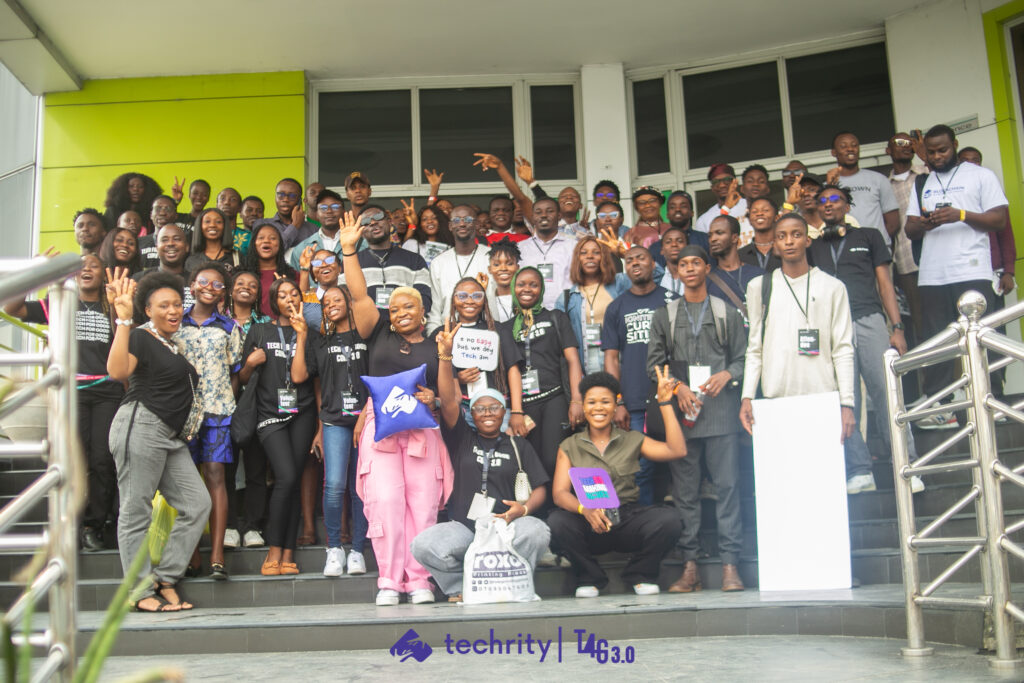


 Chibuzo Madumere, Godwin Jimmy, Akuma Isaac, Sagir Garba, Daniel Emmanuel, Segun Francis, Felix Ogbuji, Paula Daopuye, Chekwube Peters, Stephen Okonkwo, Karla Obakpolor, who enthusiastically participated in the #PayItForwardChallenge, enabling over 102 sponsored (free) tickets.