Categories
General Kickstart Mentorship News Social Tech Uncategorized

Empowering a Continent: Five Years of Techrity Championing “Tech for Good” in Africa.

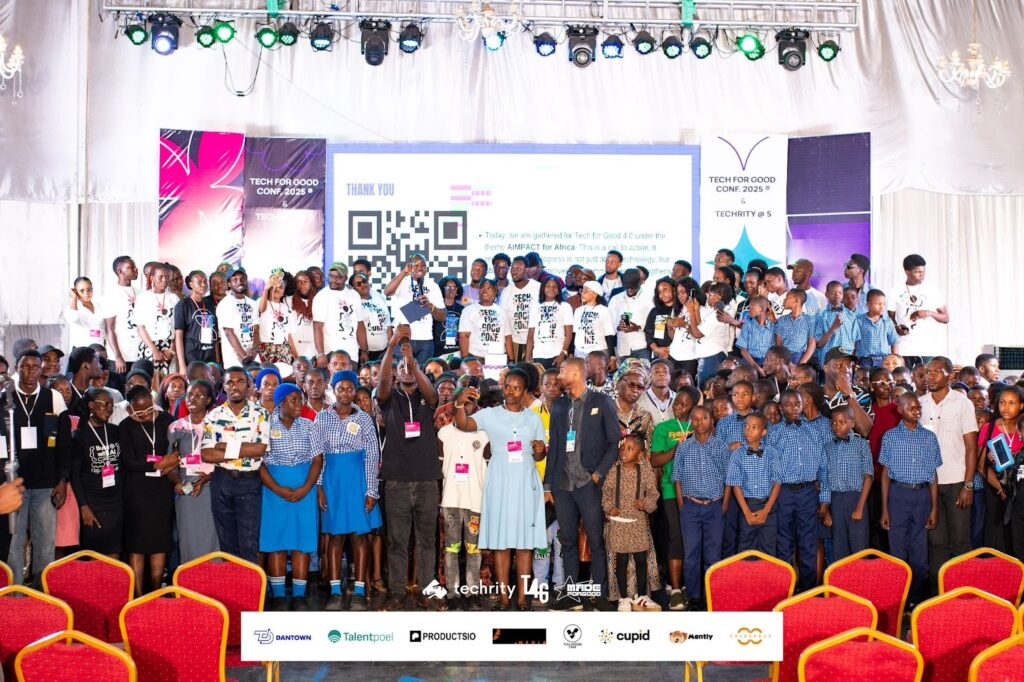
For half a decade, the Techrity Innovation Foundation has been on a steadfast mission to transform Africa’s digital landscape. What began in December 2020 has evolved into a continental movement dedicated to bridging the digital divide. On October 25, 2025, Techrity marked its 5th Anniversary by celebrating this journey of empowerment at the fourth edition of its flagship conference, themed AIMPACT Africa, held in Port Harcourt.

The milestone event brought together over 500 innovators, entrepreneurs, and educators to explore how Artificial Intelligence (AI) and emerging technologies can drive inclusion, digital literacy, and sustainable development across the continent.

Grassroots Impact: The Road to Tech for Good

Techrity’s commitment to “Empowering a Continent” begins in the classroom. Leading up to the anniversary conference, the team embarked on the “Road to Tech for Good” outreach, visiting Rumuokuta Girls Secondary School and Community Secondary School. The mission was to inspire young students to view technology not just as a subject, but as a critical tool for shaping their futures and solving real-world problems.

To solidify this commitment to early access, Techrity sponsored 120 students from public and private secondary schools across Rivers State to attend the conference. A powerful highlight of their participation was the emergence of Emmanuel Amaechi, an SS1 student from Christ Army Educational School, as the winner of the interschool Q&A session. He received a ₦50,000 cash prize and a full Tech Scholarship from Mr. Chinoso Chijoke, Founder of Cupid Technologies.

Key Takeaways: The Moments and Highlights That Shaped the Conference

Opening the conference, Islamiat Arinola Oseni, Senior Project Officer at Techrity, described Tech for Good as “more than an event, it is a movement to leverage technology for empowerment, community growth, and social impact.” She highlighted Techrity’s commitment to bridging the digital divide through mentorship, capacity building, and inclusion-focused initiatives.

Delivering the 5th anniversary speech and  Impact story, Techrity’s Founder and Team Lead, Mrs Owanate Amachree, reflected on the foundation’s growth since its establishment in 2020. She said Techrity has evolved into “a pan-African force for social innovation and digital empowerment,” citing initiatives such as Hack for Good, the Techrity Mentorship Program, the Kickstart Initiative, and the Laptop Support Scholarship. “Technology has the power to redefine Africa’s growth narrative. At Techrity, we are building an ecosystem that enables learning, innovation, and impact,” she said.

The Keynote Sessions offered thought-provoking insights into the transformative power of technology in shaping Africa’s digital future. Mr Kenneth Nwokoro opened with “Building an Inclusive Digital Economy: Empowering Communities and Closing the Digital Divide,” emphasising the need for equitable access to technology and digital opportunities across all communities. Chimene Chinah followed with “AI for Inclusive Growth: Harnessing Artificial Intelligence to Drive Africa’s Transformation,” exploring how artificial intelligence can catalyse sustainable development and inclusive progress across the continent.

The Guest Speakers further enriched the discussions with practical perspectives on innovation and empowerment. Mrs Amarachi Stanley-Duru delivered a compelling session on “Shaping Africa’s Workforce for the Future: Embracing Digital Transformation and Skills Development,” highlighting the importance of upskilling and adaptability in a rapidly evolving world. Mrs Karla Obakpolor rounded off the segment with “Building for Social Good: Scaling Innovation and Creating Impact,” emphasising the role of purpose-driven innovation in driving meaningful change across Africa.

The Speaker Session featured Harmony Elendu, who delivered an insightful presentation titled “People Behind Models: How AI is Elevating Careers and Skills Expansion.” Her talk shed light on the human side of artificial intelligence, exploring how AI is transforming industries and empowering individuals to build new skills, enhance their careers, and thrive in the digital age.

The conference also featured engaging panel sessions, lightning talks and a fireside chat that explored innovation, inclusion, and Africa’s digital future. The first Panel Session focused on the topic, From Learner to Leader: Forging a Resilient Tech Talent Pipeline through Ecosystem Collaboration hosted by Bliss Isioma Ajie (HR/Operations Manager, Mently) and the Panelists were Richard Pepple (Founder, Technoville) and Shammah Nei (Director, Engineering Philanthrolab), The second Panel session focused on Navigating The New Financial Frontier: Regulation, Innovation and The Future of Crypto in Nigeria hosted Mr Godwin Jimmy (CTO, Dantown HQ) and the panelists were Godfrey Kelechukwu (Founder, Boardroom), Favourite Henry (Product Marketing Manager), Chininso Chijioke (Founder, Cupid Technologies), The Third Panel session focused on the topic, The Global Talent Playbook: Unlocking Remote Opportunities and Building a Competitive African Workforce, was moderated by Fano Oyin Jessica, Techrity’s Chief Administrative Officer. Panellists included Lloyd Otu, Co-Founder of TalentPoel, and Newton Adiari Newton, Product Manager at Cre8Space Africa, shared insights on remote work, digital tools, and how African youths can compete in a borderless economy.

The fireside chat with Julian Duru (ex Moniepoint engineer and now an independent researcher) hosted by Daniel Obiyo (Founder, Quint Impact Initiative), offered an inspiring story of resilience and leadership, as he discussed personal experiences and lessons from Africa’s evolving innovation space.

The Lightning Talk Breakout Sessions featured a series of simultaneous, high-energy presentations where speakers shared unique insights on technology, creativity, and artificial intelligence. Chibuzo Madumere explored “From Curiosity to Code: How AI and Creativity Empower Tech Beginners,” emphasising how innovation often begins with curiosity. Opuine Kayode Fowora presented “AI for Differentiated Instruction & Inclusivity: A Teacher’s Perspective on Empowering Every Learner with AI,” shedding light on AI’s role in inclusive education. Yves Kwameh V. delivered “Beginner Skills You’ll Need Before the Boots Take Your Briefs,” a dynamic talk on essential skills for those starting their tech journey. Numbere Tehila Tamunobakam discussed “Agentic AI and Liability: Who Bears the Burden When Mishaps Occur?” examining accountability in the age of intelligent systems. Meanwhile, Precious Sunday inspired attendees with “Unlocking the Future: Navigating Tech’s Uncharted Territory,” encouraging bold exploration of technology’s evolving landscape.

A key highlight of the event was the official launch of Made for Good, presented by Peculiar Akinloye, Techrity’s Operations Manager. Made for Good is a purpose-driven brand that embodies the spirit of paying it forward using proceeds from its merchandise and initiatives to support causes such as providing laptops, internet data, and digital tools for young Africans. The initiative also connects startups, organisations, and innovators working on technology-driven impact projects across the continent. According to Akinloye, the platform aims to “promote partnerships, shared learning, and scalable innovation for development.

In addition, there was the Techrity Laptop Support Scholarship presentation. This initiative equips young Nigerians with laptops, internet access, and mentorship to enhance their digital skills and create career growth opportunities. Following a transparent selection process guided by passion, need, and commitment to social good, 11 (eleven) young Nigerians were awarded laptops, data support, and mentorship to boost their digital careers at the conference. Among these beneficiaries were Ikordeme Confidence Barikui, Onaeko Emmanuel Oladipupo, Ozuru Irenma Pearl, Ozuru Olanma Jewel, Philomena Nkereuwem Nyah, Iyke Victor Chidera, Winner Osinachi Offor, Elekwachi Zion Chibuchi, Emeka Victor Chigozie, Okonkwo Ckaima Peniel, and Ebubechukwu Osy-Uzoekwe. “We believe in using technology to transform lives, one person and one community at a time,” Oseni said.

Another major highlight of the day was the Techrity Social Impact Awards, which honours individuals and organisations using technology to drive mentorship, digital inclusion and social good. The award recipients included Renaissance Innovation Labs (Tech Community Partner of the Year), Kenneth Nwokoro ( Social Impact Award (Mentorship), Stakeholders Democracy Network (Social Impact Award – Tech for Gender Equality), Bright Chinenyeze (Social Impact Award (Digital Inclusion Advocate), Richard Sodienye Pepple (Social Impact Award – Mentorship), and Richard Tamunotonye (Social Impact Award – Mentorship).

A Five-Year Legacy and a Call to the Future

In just five years, Techrity has grown into a global community of 886 innovators with over 12,000 digital followers across Nigeria, Kenya, India, Botswana, Ghana, Rwanda, and Uganda. Through initiatives like the Kickstart Initiative, which has provided 35 laptops and ₦5 million in data support, and a mentorship program engaging over 100 participants, Techrity is actively nurturing Africa’s next wave of tech talents.

The success of the 5th anniversary celebration was bolstered by several partners, including Dantown (Key donor and partner for the Laptop Support Scholarship), Productsio, TalentPoel, Cre8Space, Artful Media, Cupid Technologies, Volunteers Crib, Mently, and Made for Good.

In her closing remarks, Owanate Amachree thanked all partners, speakers, and volunteers for their contributions, noting that “the true impact of Techrity lies not only in its social impact programs but in the lives we transform.” She reaffirmed the foundation’s goal to continue empowering Africans through technology, mentorship, and innovation — inspiring, coaching, and building for social good.

As part of its five-year milestone, Techrity is extending an open call to corporate partners, development organisations, startups, and philanthropists to collaborate in building the future of young Africans through mentorship, digital education, and social impact programs designed to bridge gaps in unemployment, inclusion, and opportunity across Africa. 

Let us drive this mission together by equipping young people with laptops, internet access, and digital skills, fostering innovation through SDG-focused hackathons and mentorship programs, and promoting inclusion and gender equality through technology-driven education.

Organisations and individuals interested in partnering can reach out via hello@techrity.org or visit www.techrity.org to learn more.

Categories
Mentorship Tech Techrity Programmes Uncategorized

From Cobbler Dreams to Tech Innovation: Stella’s Journey of Impact with Techrity Mentorship Program 

Introduction

When you think about a cobbler, what comes to mind?

Maybe an old workshop, the scent of leather, and someone hammering away on a sole.

For Stella, becoming a cobbler wasn’t just a fleeting childhood dream. It never sounded demeaning because it was an unusual and deeply personal ambition.

While her peers imagined hanging stethoscopes around their necks or being seen in courtrooms and called “the law”, Stella was sketching shoe designs and pulling apart worn-out sandals to see how they were made. It was raw curiosity and creativity in its purest form.

But life, as it often does, had other plans for her.

The Tech Path That She Never Had in Sight

Francis Odeyemi via Unsplash

Years later, Stella found herself studying computer science at university. It was a prestigious degree by most standards, future-proof, globally relevant, and full of possibilities. But for Stella, it didn’t feel like a calling. While she passed her courses and learned to write code, there was a lingering question that never left her: what exactly do I want to build?

She knew she was creative. She knew she liked working with her hands. She even liked tech a bit. But she hadn’t yet figured out how all these passions could intersect.

That’s when the Techrity’s Mentorship Programme came into the picture.

Finding Clarity and Her Calling Through Community

Stella joined the programme, unsure of what to expect. What she found was a structured yet warm environment, mentors who listened, peers who were on similar paths of discovery, and sessions that focused not just on skills but also on purpose.

Stella took her time immersing herself in the mud of the program, but it wasn’t long before Stella began connecting the dots to her lightbulb moment.

What if she could combine her childhood love for shoemaking with her knowledge of technology? What if she could create something truly African, handcrafted but scalable, an innovative brand that bridges tradition and tech?

These bubbling questions became the seeds of a powerful idea:

A home-made leather shoe brand with a tech-driven twist.

Today, Stella is not just building shoes; she’s building a tech brand. A sustainable business that uses tech to improve production, reach more customers, and tell a unique story of African tech talents.

And it all began with clarity, the kind of clarity that can only come from having the proper support, structure, and mentorship.

The Bigger Picture: Techrity’s Mission

Stella’s story is inspiring, but it’s not rare.

At Techrity, we’ve seen countless young Africans grappling with purpose, creativity, and a desire to build something meaningful. Often, all they need is a spark, a guiding hand, a community, a structured programme that helps them align their skills with their dreams.

We created our Mentorship Programme for exactly this reason. And the results? They speak for themselves.

From fashion tech to fintech, from storytelling to software, our mentees are launching startups, building solutions, and rewriting the narrative of what’s possible for the African youth.

Be a Witness: Join the Techrity Impact Series

If Stella’s story moved you, you’re not alone. That’s why we created the Techrity Impact Series, an Instagram live storytelling experience that showcases the journeys of real people whose lives have been transformed by mentorship, tech, and community.

Hear their voices. Learn from their journeys. Be part of the impact.

Whether you’re a student, a builder, a dreamer, or someone searching for direction, these stories might just spark something in you, too.

Hear Stella’s full story here 

We are featuring others just like her to share their inspiring stories because every impact begins with a moment of clarity. And that moment could start here for you, too.

Don’t miss the next session of our Impact Series on 1st August 2025

I am in right away.

Categories
Uncategorized

How AI Agents Can Improve Social Impact for Non-Governmental Organizations (NGOs)

Introduction: AI as a Catalyst for Social Change

Non-governmental organisations (NGOs) are pivotal in addressing society’s most pressing issues, often with limited resources and immense operational challenges. From tackling poverty and advancing education to responding to disasters and fighting misinformation, NGOs are tasked with bridging gaps where governments and private sectors may fall short. Artificial Intelligence (AI) agents are revolutionising the nonprofit sector by enabling more efficient operations, smarter decision-making, and better engagement with beneficiaries.

The adoption of AI agents in the NGO space signals the onset of an era where technology drives transformative social change. Whether deployed for predictive analytics, personalised communication, or crisis management, AI agents amplify NGOs’ ability to scale their missions, streamline processes, and solve complex problems. In this article, we will explore how AI is reshaping the nonprofit landscape, highlight successful case studies, and discuss the ethical and practical considerations critical to responsible AI implementation.

Understanding AI Agents

freepik.com

AI agents are software systems designed to process information, learn from data, and autonomously perform tasks to achieve predefined goals. These intelligent systems are capable of adapting their responses based on environmental inputs, making them highly versatile and impactful for NGOs.

Core Functions of AI Agents:

  • Data Analysis: Extracting actionable insights from large datasets to inform strategy.
  • Task Automation: Automating repetitive processes to reduce human workload.
  • Natural Language Processing (NLP): Understanding and generating human-like text for communication tasks.
  • Predictive Analytics: Forecasting trends, risks, and outcomes using statistical models.
  • Decision-Making Support: Providing data-backed recommendations to aid complex decisions.

For NGOs, these functions translate into enhanced resource management, better communication, and more effective program delivery, all essential to achieving social impact at scale.

Top Ways AI Agents Drive Social Impact for NGOs

1. Optimising Resource Allocation

AI agents are redefining how NGOs manage resources, ensuring aid is delivered efficiently and effectively. By analysing real-time data, such as demographic trends, climate patterns, and disaster forecasts, AI systems can help organisations prioritise interventions and allocate limited resources to where they are needed most.

Applications:

  • Disaster response planning using climate and satellite data.
  • Predicting food shortages in vulnerable regions.
  • Enhancing logistical planning for large-scale relief efforts.

Example in Action: The World Food Programme (WFP) utilises AI to analyse satellite imagery and weather conditions, enabling it to anticipate food scarcity in disaster-affected areas. This has resulted in faster and more targeted aid delivery.

2. Enhancing Fundraising and Donor Engagement

Fundraising is the lifeblood of most NGOs, but engaging donors effectively is challenging. AI agents simplify this process by analysing donor behaviour and crafting personalised outreach strategies. Automated communication tools ensure donors receive targeted messages, increasing the likelihood of sustained contributions.

Applications:

  • Dynamic email campaigns tailored to individual donor preferences.
  • AI-powered chatbots to answer donor queries instantly.
  • Behavioural analysis to predict which donors are most likely to contribute.

Case Study: The Kids Cancer Project in Australia leveraged AI-driven financial tools to optimise its donor communication strategy, leading to a nearly twofold increase in recurring donations. Automated outreach campaigns personalised each message based on donor profiles.

3. Combating Misinformation During Humanitarian Crises

In times of crisis, misinformation can exacerbate challenges by spreading panic and confusion. AI agents play a crucial role in monitoring social media platforms, flagging fake news, and disseminating verified information to the right audiences. This builds trust and ensures transparency.

Applications:

  • Sentiment analysis to track public perception during emergencies.
  • Detection of false information in online discussions.
  • Real-time crisis communication with affected communities.

Impactful Initiative: The Signpost Project, led by the International Rescue Committee (IRC), employs AI-driven chatbots to provide accurate crisis information to refugees and displaced populations. This initiative fosters clarity during times of uncertainty.

4. Bridging Gaps in Healthcare Access

In regions with scarce medical infrastructure, AI agents serve as virtual health assistants, enabling NGOs to provide healthcare services without relying exclusively on human personnel. These systems can diagnose common illnesses, recommend treatments, and even predict disease outbreaks.

Applications:

  • Remote diagnostics via AI-powered chatbots.
  • Early detection of public health threats through predictive models.
  • Digital tools to assist community health workers.

Example: In sub-Saharan Africa, NGOs deploy AI chatbots to assist community health workers, monitor patient symptoms, and recommend treatments. This has improved healthcare delivery in underserved areas.

5. Personalised Learning in Education

AI agents are transforming education by delivering customised learning experiences. NGOs working in conflict zones or disaster-hit regions can use AI to create tailored remote learning platforms, adapting content to students’ individual needs and proficiency levels.

Applications:

  • AI-powered platforms that adjust learning material based on students’ progress.
  • Remote teaching tools for areas lacking qualified educators.
  • Language translation and accessibility features for diverse populations.

Example: AprendAI has developed AI-driven educational platforms catering to children in disaster zones, making quality education accessible even in challenging circumstances.

6. Supporting Agricultural Development

Agriculture and food security remain critical priorities for many NGOs. AI agents empower farmers by offering precise climate forecasts, pest control advice, and soil analysis. These technologies improve crop yields and foster sustainable farming practices.

Applications:

  • Advising farmers on planting schedules and fertiliser usage.
  • Predicting crop diseases and pests.
  • Connecting farmers to market insights for better pricing strategies.

Project Highlight: Opportunity International created Ulangizi, an AI chatbot that supports small-scale farmers in Malawi by offering real-time agricultural advice. This project has expanded to help school administrators enhance their management practices.

Real-World Case Studies

  1. Omdena: Omdena collaborates with NGOs worldwide to implement AI solutions for flood prediction, child protection, and poverty alleviation. Their community-focused approach ensures that grassroots organisations benefit from advanced AI tools.
  2. World Wildlife Fund (WWF): WWF uses AI to combat illegal poaching and conserve biodiversity. Drones equipped with AI algorithms identify suspicious activities and alert rangers.
  3. Save the Children: Save the Children leverages AI to evaluate educational interventions, providing data-backed insights to improve learning outcomes for children.

Challenges and Ethical Considerations

As NGOs adopt AI, they must navigate challenges to ensure ethical and sustainable deployment:

Key Challenges:

  1. Data Privacy: Protecting sensitive information about beneficiaries.
  2. Algorithmic Bias: Preventing inequitable outcomes caused by biased data models.
  3. Infrastructure Gaps: Ensuring grassroots organisations have access to advanced AI tools.
  4. Transparency: Making AI systems accountable and easy to understand.

Ethical Considerations:

NGOs must adopt ethical AI principles, emphasising inclusivity, fairness, and transparency. Regular audits and community feedback loops can help mitigate risks.

Getting Started: Practical Steps for NGOs

For NGOs considering AI implementation, here’s a roadmap to success:

  1. Identify Use Cases: Focus on high-impact areas where AI can address challenges.
  2. Start Small: Launch pilot projects with accessible AI tools.
  3. Partner Strategically: Collaborate with organisations like Omdena and DataKind for support.
  4. Build Capacity: Train staff on AI applications and ethics.
  5. Curate Quality Data: Collect clean, relevant data for training AI systems.

Conclusion: Charting a Tech-Enabled Future

Artificial Intelligence represents a transformative force in the nonprofit sector. By automating processes, enhancing decision-making, and enabling personalised services, AI agents empower NGOs to scale their missions and amplify social impact. While challenges exist, responsible deployment ensures AI remains a powerful ally for the greater good.

The future of AI in NGOs lies in collaboration, innovation, and ethics. As these organisations embrace technology, they open doors to new possibilities for solving global challenges and building a brighter, more equitable world.

Categories
Uncategorized

AI at Work: Will A Robot Be My Next Colleague?

Image credit: freepik.com

From scheduling meetings to brainstorming ideas, AI is reshaping the workplace. But will it replace you or empower you?
The workplace is currently experiencing a massive transformation. Artificial intelligence (AI) is no longer a futuristic dream but an active force shaping how we work. From virtual assistants managing schedules to advanced AI models generating creative content, the integration of AI into our daily workflows is accelerating. The question remains: Will AI replace human workers or serve as a valuable colleague, enhancing productivity and efficiency?
This article delves into AI’s role in the workplace, exploring its impact on job roles, automation, and how we collaborate with technology. We will examine the rise of robot assistants, the future of automation, and how professionals can adapt to an AI-driven work environment.

The Rise of AI in the Workplace

Artificial intelligence has become an essential part of modern business operations. Companies across industries leverage AI-powered tools to improve efficiency, reduce costs, and enhance decision-making. AI is no longer confined to tech giants; small businesses, healthcare providers, financial institutions, and retail chains are all integrating AI into their operations.

How AI is Changing Workplaces

AI is changing workplaces in the following ways:
1. Automating Repetitive Tasks: AI excels at handling repetitive and time-consuming tasks, such as data entry, appointment scheduling, and customer service inquiries.
2. Enhanced Decision-Making: AI-driven analytics provide businesses with deep insights, helping managers make informed decisions based on real-time data.
3. Personalised User Experience: AI-powered recommendations and predictive analytics personalise customer interactions, improving satisfaction and engagement.
4. Workforce Augmentation: AI does not necessarily replace employees but augments their abilities, enabling them to focus on strategic and creative work.

Examples of AI in Action

  • Chatbots and Virtual Assistants: AI chatbots like ChatGPT, Siri, Gemini, and Google Assistant streamline communication by answering queries and performing tasks. Businesses also use AI-driven chatbots like Ziva and Leo to handle customer inquiries, reducing wait times and improving service.
  • AI in Finance: Financial institutions rely on AI algorithms for fraud detection, credit scoring, and investment analysis.
  • AI in Healthcare: AI-powered diagnostic tools assist doctors in identifying diseases, enhancing accuracy and efficiency.

Robot Assistants: Colleagues, Not Competitors

Image credit: freepik.com

One of the most visible manifestations of AI in the workplace is the rise of robot assistants. These AI-powered tools and machines are designed to collaborate with humans, improving efficiency rather than replacing human workers.

How Robot Assistants Benefit the Workplace

  • Increased Productivity: Robots can work 24/7 without breaks, ensuring continuous operations.
  • Cost Savings: Automating tasks reduces labour costs and minimises errors.
  • Improved Safety: In high-risk industries like construction and manufacturing, robots handle dangerous tasks, protecting human workers.
  • Enhanced Creativity: By taking over tedious tasks, AI allows employees to focus on innovation and problem-solving.

The Future of Automation and Job Roles

While AI-driven automation is changing how we work, it also creates new jobs. The future workforce must adapt to an AI-integrated environment, focusing on skills that complement automation rather than compete with it.

Job Roles That will be immensely Affected by AI

  • Repetitive Task-Based Roles: Jobs that involve routine, predictable tasks—such as data entry, telemarketing, and certain administrative functions—are more susceptible to automation.
  • Customer Service and Support: AI chatbots handle basic inquiries, reducing the need for extensive customer support teams.
  • Manufacturing and Logistics: Robotic automation in warehouses and factories is reducing reliance on manual labour.
  • Financial Analysis: AI-driven predictive analytics assist in risk assessment, investment management, and fraud detection.

Emerging Job Roles

AI is not just eliminating jobs—it is also creating new ones. As automation takes over repetitive tasks, new roles are emerging in AI development, maintenance, and ethics.

  • AI Ethics Consultants: Ensure AI systems are transparent, fair, and unbiased.
  • Data Scientists: Analyse large datasets to derive actionable insights.
  • AI Trainers: Teach AI models to improve accuracy and reliability.
  • AI Maintenance and Support Specialists: Ensure AI-driven systems function efficiently.

Skills for the AI-driven workforce

To stay relevant in an AI-powered workplace, professionals need to develop the following skills:

  • Critical Thinking: AI excels at processing data, but humans are needed for interpretation and strategic decision-making.
  • Emotional Intelligence: AI lacks human empathy, making soft skills essential for leadership and teamwork.
  • Adaptability: The ability to learn new technologies and adapt to changing job requirements will be crucial.
  • AI Literacy: Understanding how AI works and leveraging it effectively will be key skills across industries.

Will AI Replace or Empower Workers?

Image credit: freepik.com

The debate over AI replacing jobs versus empowering workers continues. The truth lies somewhere in between. While AI will inevitably automate specific tasks, it will also enhance human capabilities, leading to greater efficiency and innovation.

Ethical Considerations and Challenges

Despite its advantages, AI poses ethical and social challenges:

  • Job Displacement: Certain roles may become obsolete, requiring reskilling initiatives.
  • Bias in AI Systems: AI algorithms can reflect biases in training data, leading to ethical concerns.
  • Privacy and Security Risks: AI systems collect and analyze vast amounts of data, raising concerns about data security and privacy.

Preparing for the AI-Integrated Future

Organizations and employees alike must prepare for an AI-driven future. Here’s how:

What Organizations Can Do

  • Invest in Employee Training: Providing upskilling opportunities ensures a smooth transition to an AI-powered workplace.
  • Adopt Ethical AI Practices: Implementing transparent AI governance prevents bias and ensures fairness.
  • Foster Human-AI Collaboration: Encouraging teamwork between AI tools and human employees maximizes productivity.

What Employees Can Do

  • Embrace Lifelong Learning: Staying updated with AI trends and acquiring relevant skills will enhance career prospects.
  • Develop a Growth Mindset: Being open to change and continuous learning will make employees more adaptable.
  • Leverage AI Tools: Understanding how to use AI effectively can enhance productivity and job performance.

Final Thoughts

AI in the workplace is here to stay. Rather than fearing automation, professionals should focus on automation to enhance their skills and productivity rather than fearing it. The future of work isn’t about humans vs. robots—it’s about working together for more incredible innovation and efficiency.
As AI continues to evolve, the key to success will be collaboration, adaptability, and a commitment to lifelong learning. Whether AI becomes a valuable colleague or a disruptive force depends on how we choose to integrate and manage it within our workplaces.

Categories
Uncategorized

The Rise of New Jobs: 10 Careers That Will Thrive by 2030

Introduction

Rapid technological advancements, climate change, and evolving societal needs are shaping the future of work globally. By 2030, the job market will look vastly different, with roles that seems exciting.

From designing and communicating through the virtual worlds to auditing AI systems and navigating the decentralized economy, future careers will require a unique mix of technical expertise, creativity, and adaptability.

In this article, we’ll explore some of the most intriguing and unexpected jobs that will emerge by 2030 due to advancements in artificial intelligence, machine learning, data analysis and other emerging technologies.

10 Job roles that will trend by 2030

1. AI and Machine Learning Specialists

Artificial intelligence is becoming increasingly sophisticated, intelligent systems that perform tasks on behalf of humans will play an important role in the workforce.

AI/machine learning specialists design and develop AI models to automate processes and solve complex problems. They use machine learning concepts to optimize data processing and create predictive models.

What they’ll do:

  • Designing and validating AI models.
  • Extracting insights using AI tools.
  • Fine-tune AI systems to improve accuracy and efficiency.
  • Working with teams to integrate AI solutions.
  • Develop and train AI systems to automate processes, analyze data and improve decision-making.

This will be a key role because their work will efficiently revolutionize industries by leveraging AI to enhance efficiency and decision-making across industries. automating repetitive tasks, and enabling humans to focus on higher-value work.

Opportunities will be open in several companies, such as OpenAI, Google (DeepMind), Microsoft, Facebook (Meta) and Apple.

2. Prompt Engineers

As AI language models like ChatGPT become more sophisticated, prompt engineers will specialize in crafting adequate inputs to optimize AI outputs.

What they’ll do:

  • Develop strategies for interacting with AI systems.
  • Train teams on how to use AI tools effectively.
  • Continuously refine prompts to improve accuracy and relevance.

Prompt engineering is a hotcake, most especially with the adoption of AI in almost every business case, from note-taking to research and marketing.

Having a skill that can unlock the full potential of AI and bridge the gap between human intent and machine understanding is crucial and will be heavily rewarded.

Companies interested in these skills include serial marketing companies, research institutes, and tech companies.

3. Metaverse Planners

The metaverse, a collective virtual shared space, is no longer a futuristic concept. It is here to stay and by 2030, Metaverse planners will be in high demand and big companies like Meta, Microsoft, and Roblox are investing heavily in building immersive digital worlds.

What they’ll do:

  • Design and manage virtual environments for work, education, and entertainment.
  • Collaborate with architects, game designers, and software developers.
  • Ensure user-friendly and inclusive experiences in the metaverse.

With multibillion-dollar tech companies investing in creating the metaverse and rapidly integrating it into everyday life, the need for Metaverse planners will shape how we interact with digital worlds.

4. Blockchain Technology Developers and Experts

The future of decentralization, spanning blockchain technology and the decentralized internet or Web3, depends heavily on the skills of developers, key opinion leaders or KOLs, content creators, marketers, and others to influence the rapid digital economy movement. Companies with high interest include Coinbase, Binance, Ripple, Consensys, IBM Blockchain, JP Morgan, and Accenture.

What they’ll do:

  • Build decentralized applications (dApps) and smart contracts.
  • Develop and manage blockchain-based financial systems.
  • Educate businesses and individuals on Web3 technologies.

User ownership of the internet, Defi, and other decentralized technology use cases are revolutionizing industries like finance, gaming, and supply chain management, creating a demand for skilled professionals to tap into by 2030.

5. Environmental Engineer

Climate change and social issues are on the rise daily. Climate change has led to increasing the frequency and intensity of natural disasters, including earthquakes, fire outbreaks in America, and floods in Africa and other parts of the world.

Environmental engineers will leverage technology to design systems to prevent, control, or remediate environmental hazards. They work on waste treatment, pollution control, and environmental compliance.

What they’ll do:

  • Design systems for pollution control.
  • Create and coordinate waste treatment and recycling.
  • Create digital systems to ensure environmental regulations are met.
  • Analyze geological data to identify patterns and risks.
  • Develop and implement technologies to reduce atmospheric carbon.

Other roles like earthquake forecasters, climate change reversers, and change advocates will help reverse the effects of climate change, save lives, reduce economic losses, and ensure a sustainable future.

These engineers will play a vital role in protecting public health and the environment by developing sustainable solutions.

Companies hiring include environmental consultancies, NGOs, government agencies such as UNICEF, WHO, Bill and Melinda Gates Foundation, Ford Foundation ad more.

6. Big Data Specialist

Big Data Specialists are crucial in today’s world, where every decision is influenced by numbers. Their role involves using statistical and analytical techniques to collect, analyze, identify trends, correlations, and anomalies in large datasets to provide actionable insights that inform business decisions.

What they’ll do:

  • Collect, gather and analyze data from various sources.
  • Applying statistical data analysis techniques to extract insights.
  • Creating visual representations of data for stakeholders.
  • Identifying recurring patterns for strategic planning.
  • Building predictive models for future trends.

Big Data Specialists bridge the gap between raw data and strategic business decisions, making them indispensable in a data-centric economy.

Companies hiring include Tech firms (Google, Amazon), financial institutions, healthcare institutes.

7. AI-Powered Healthcare Specialists

Medical professionals like doctors, nurses and other healthcare workers provide critical healthcare services, addressing aging populations and global health demands.

AI is revolutionizing the way healthcare is administered by healthcare professionals from using AI-driven solutions for diagnostics, treatment planning, and personalized medicine to building custom healthcare solutions.

What they’ll do:

  • Interpret medical data using AI tools.
  • Providing patient care in various settings.
  • Managing remote healthcare services.
  • Coordinating with healthcare teams.
  • Develop personalized treatment plans based on AI insights.
  • Collaborate with doctors and researchers to improve diagnostic methods.

Background knowledge of AI, healthcare informatics, and medical knowledge would be of great advantage to enable early detection and personalized care, transforming healthcare outcomes.

Mental health care will leap forward with VR therapy, exploring VR environments to treat conditions like PTSD, anxiety, and phobias.

You can work in hospitals, clinics, telehealth providers such as IBM Watson Healthcare, NVIDIA Clara, John’s Hopkins Hospital, Healthcare, Philips, Siemens Healthineers, and Tempus.

8. Cyber-security Specialists

Cybersecurity is a field that will always need skilled talents. Cybersecurity specialists protect digital and physical assets from threats by developing, improving, and monitoring security measures. They assess risks, manage encryption protocols, and respond to cybersecurity incidents.

With recent account hacks and cyber attacks on financial institutions and large corporations using AI, these specialists are vital for safeguarding sensitive data and infrastructure.

What they’ll do:

  • Actively search for and neutralizes cyber threats before they can cause harm.
  • Ensure that organizations comply with data protection regulations and safeguard user data.
  • Carryout risk assessment to identify security risks to data and systems.
  • Applying encryption protocols to manage encryption.
  • Responding to cybersecurity incidents, threats and attacks.

Certain skills make this job role exceptional for professionals such as knowledge of data privacy laws, risk management, and cyber ethics can get you started.

Companies such as Palo Alto Networks, CrowdStrike, IBM Security, Darktrace, FireEye, Cisco, Symantec, McAfee, and Fortinet.

9. FinTech Analyst

FinTech analysts analyze financial technologies to optimize digital banking, payments, and blockchain systems. They assess the impact of new technologies on finance and develop strategies for emerging FinTech solutions.

What they’ll do:

  • Forecasting financial trends using AI and data models.
  • Evaluating the impact of new technologies.
  • Creating strategies for emerging FinTech solutions.

FinTech Analysts play a crucial role in shaping the future of digital finance by integrating technology and financial expertise.

Companies that will hire actively include Banks (JPMorgan Chase), cryptocurrency platforms (Coinbase), payment processors (PayPal).

10. Robotics Engineer

You must have heard of Silas Adekunle, who is currently the highest paid robotics engineer in the world. Known for creating the first intelligent gaming robot, MekaMon and other innovative works like Reach Robotics and Awarri.

Robotics engineers design and implement robotic systems to enhance automation and efficiency. They develop algorithms for motion control and collaborate with cross-functional teams.

What they’ll do:

  • Creating robotic systems for business needs.
  • Programming motion control algorithms.
  • Working with teams to integrate robotic solutions.

Robotics Engineers drive innovation by developing cutting-edge automation technologies.

You can get started in Automotive companies like Tesla, GAC, Ford, Toyota, Ecommerce and manufacturing giants like ABB, Walmat, etc.

Conclusion

Technological innovation, environmental challenges, and societal evolution will shape the jobs of 2030. The future workforce is brimming with new and exciting roles however, a recent report from the World Economic Forum (WEF) suggests that about 50 – 59% of workers will need reskilling by 2030 to avoid losing their jobs.

This has been validated by a huge decline in roles such as administrative assistants, cashiers, and content writers due to the implementation of AI in those case studies.

The possibilities are endless for those willing to embrace change and develop new skills.

Are you ready to step into the careers of tomorrow? Take that step now.

Categories
Uncategorized

Mindfulness Meditation for Tech Professionals: A Guide to Regaining Focus and Power

Introduction

Software developers, programmers, designers, writers or testing professionals often face what we call mental blocks. These high levels of stress lead to decreased productivity and burnout as a result of constant switching between solving complex problems, tight deadlines, and juggling multiple tasks.

Mindfulness meditation can significantly improve mental well-being and productivity.

Mindfulness means paying attention to the present moment while acknowledging and accepting one’s thoughts and feelings without judgment. For developers, this practice can enhance focus during coding sessions, reduce stress during debugging, and improve overall problem-solving capabilities.

It helps you focus on your breath, bodily sensations, or surroundings while calmly acknowledging distractions and bringing attention back to the present. Mindfulness meditation is a powerful tool for software developers and tech professionals to maintain mental clarity and emotional balance.

What is Mindfulness?

Mindfulness means paying attention to the present moment while acknowledging and accepting one’s thoughts and feelings without judgment. For developers, this practice can enhance focus during coding sessions, reduce stress during debugging, and improve overall problem-solving capabilities. It helps you focus on your breath, bodily sensations, or surroundings while calmly acknowledging distractions and bringing attention back to the present.

Mindfulness meditation is a powerful tool for software developers and tech professionals to maintain mental clarity and emotional balance.

Why You Need to Meditate

According to several research reports, ample evidence validates the high impact of regular meditation practice on an individual. Meditation can increase gray matter in areas responsible for memory and learning, reduce mind-wandering activity, enhance error detection and bug-finding capabilities, and ultimately Improve focus during long coding or meeting sessions.

Proven Benefits of Meditation

Better Focus and Concentration

Meditation helps train the brain to maintain attention, reducing distractions and improving deep work sessions.

Reduced Stress and Anxiety

Regular mindfulness practice lowers cortisol levels, helping developers manage stress better.

Improves Problem-Solving Skills

A calm and clear mind allows for better logic and decision-making in coding and troubleshooting.

Increased Creativity

Decluttering the mind, meditation fosters creative thinking and innovation.

Better Work-Life Balance

Mindfulness helps maintain a healthy separation between work and personal life.

Improved Collaboration

Being mindful enhances empathy and communication, making teamwork more effective.

These benefits directly translate to reduced stress, better code quality, increased productivity, and improved mental well-being.

Practical Mindfulness Exercises to Practice

To effectively integrate mindfulness into coding routines, developers can adopt several practical exercises:

Mindful Coding Sprints

Set a timer for 25 minutes to utilize the Pomodoro Technique. Before starting, take three deep breaths and set an intention for the session. After coding intensely for 25 minutes, take a 5-minute break to stretch or practice a quick mindfulness exercise.

Mindful Code Reviews

Approach code reviews with curiosity rather than judgment. Center yourself before starting the review process and focus on one line or block of code at a time.Breath Awareness: Before beginning work each day, spend a few minutes focusing solely on your breath. This simple practice helps clear mental clutter and prepares you for.

Code Block Meditation (5-10 minutes)

This practice helps maintain focus during intensive coding sessions:

What to do:

  • Sit comfortably at your desk
  • Take three deep breaths
  • Open your code editor
  • Focus on a single block of code
  • Read each line slowly, observing without making changes
  • Notice thoughts about “improving” or “fixing” the code
  • Let these thoughts pass without acting on them
  • Return focus to simply observing the code

This practice helps develop the ability to observe code objectively before making changes, leading to better architectural decisions.

Debug Breath (1-2 minutes)

Use this technique when feeling frustrated during debugging:

What to do:

  • Stop typing
  • Place your hands on your desk
  • Take five slow breaths, on each inhale, acknowledge the bug’s complexity, on each exhale, release the urge to solve it immediately
  • Return to debugging with renewed patience

Recommended Resources to Help You Practice Meditation

Books

Here are 11 go-to books to help you practice meditation and mindfulness:

  1. “Wherever You Go, There You Are” by Jon Kabat-Zinn

A practical guide to mindfulness, this book teaches you how to be fully present in your daily life. Through simple meditation practices, it helps you slow down, reduce stress, and find peace in the moment.

2. “Digital Minimalism” by Cal Newport

This book explores the impact of digital overload and offers strategies to reclaim focus and happiness. Newport encourages intentional tech use, helping you disconnect from distractions and live more meaningfully.

3. “The Miracle of Mindfulness” by Thich Nhat Hanh

A timeless classic on mindfulness, this book introduces meditation as a way to bring peace into everyday tasks. Whether washing dishes or walking, Hanh teaches how to be present in everything you do.

4. “The Little Book of Mindfulness” by Dr. Patrizia Collard

This quick read offers simple, 10-minute mindfulness exercises to reduce stress and boost well-being. It’s perfect for anyone looking to start a mindfulness practice without feeling overwhelmed.

5. “Planting Seeds” by Thich Nhat Hanh

Designed for families and educators, this book teaches mindfulness to children through fun activities. It helps kids (and adults) develop kindness, focus, and emotional resilience.

6. “Meditation for Busy People” by Rajneesh Osho

Osho offers a practical approach to meditation for modern, hectic lives. It offers easy techniques that fit into daily routines, helping you find calm without needing hours of stillness.

7. “The Science of Being and Art of Living” by Maharishi Mahesh Yogi

A deep dive into Transcendental Meditation, this book explains how meditation can unlock human potential, reduce stress, and create a happier, more fulfilling life.

8. “Awakening the Mindless Life and How to Live in the Present Age” by Dr. Sanjeev Goel

This book blends mindfulness with modern science. It shows how to live in the present moment despite life’s distractions and offers practical tools to reduce stress and boost well-being.

9. “The Things You Can See Only When You Slow Down” by Haemin Sunim

A beautifully written guide on slowing down and appreciating life. Through short reflections, Sunim shares wisdom on love, work, and mindfulness in a fast-paced world.

10. “The Mindfulness Solution” by Ronald D. Siegel

A science-backed guide to using mindfulness for mental health and well-being. It provides practical exercises to manage stress, anxiety, and daily challenges.

11. “Ikigai” by Hector Garcia & Francesc Miralles

This book uncovers the Japanese secret to a long and happy life: finding your purpose (Ikigai). It blends philosophy, science, and real-life examples to help you live passionately and meaningfully.

Applications

Conclusion

Mindfulness serves as an invaluable tool to regain control of your mind and calmness; the way we work and live is being challenged every day as the need to maintain work life balance continues to grow at a rapid pace; your ability to embrace these practices will not only support your performance as a developer or tech professional but also contributes to healthier ways of life, relationships with people, and positive moods to tap into productivity.

Categories
Uncategorized

Building an Attractive Personal Brand Online as a Tech Person in 2025

Image Credit: Freepik.com

In today’s competitive job market, having a strong personal brand is essential for standing out, gaining credibility, and attracting new opportunities. This is especially true for tech professionals, where innovation, skill-sets, and the ability to solve real-world problems can be game-changers. Establishing a compelling personal brand can catapult your career to new heights, whether you’re a software developer, data analyst, product manager, or cybersecurity expert.

In this article, we will be looking at the details of building an attractive personal brand online. We will provide detailed strategies, case studies, and actionable steps to help you position yourself as a go-to expert in your field.

1. Understanding Personal Branding in 2025

What is Personal Branding?

Personal branding encompasses how you present your professional identity, both in the offline and online world. For tech professionals, this means highlighting your technical skills, problem-solving abilities, and personal values. It also involves showcasing your personality, work ethic, and vision. A well-established personal brand helps you connect with your target audience, employers, clients, or peers.

Why is Personal Branding Important?

i. Career Growth

In 2025, recruiters and hiring managers often review your online presence before considering your resume. A strong personal brand increases your chances of being found and recognized for opportunities that match your skill set. For instance, tech professionals who have made a name for themselves by consistently sharing knowledge and showing off their skills on platforms like LinkedIn or GitHub have potentials of attracting job opportunities.

ii. Networking

In tech, networking isn’t just about attending events and building relationships online. A powerful personal brand allows you to network effortlessly with like-minded people in your field.

Networking and meeting other professionals in your field exposes you to various opportunities.

iii. Influence and Authority

Tech professionals who consistently share valuable insights and content are perceived as thought leaders. Your expertise in a niche area can be recognized, allowing you to become an authority in your field. This is a significant advantage when it comes to personal branding.

iv. Opportunities

Having a personal brand can open doors to high-profile speaking engagements, collaborations with industry leaders, and opportunities for brand partnerships. Furthermore, a solid brand helps with business development, attracting potential clients or employers looking for your expertise.

Monetization

A personal brand also provides an avenue for monetizing your knowledge. Whether through content creation on YouTube, selling an online course, or consulting, your brand is the foundation for these income-generating opportunities.

2. Defining Your Unique Value Proposition (UVP)

What is a UVP?

Your Unique Value Proposition (UVP) is essentially the thing that makes you stand out from the crowd. Having a clear UVP helps you communicate your strengths effectively in a world filled with tech professionals. It’s what will help you attract the right audience—whether employers, clients, or peers.

How to Define Your UVP

i. Identify What Sets You Apart

Think about the skills, experiences, and values that distinguish you from others. Are you a developer who specializes in AI-driven applications? Are you a cybersecurity expert passionate about ethical hacking? Your UVP needs to highlight this uniqueness. Write down the things that make you different from others in your field. This could be technical skills, personal passions, or a unique problem-solving perspective.

ii. Focus on Solving Problems

A powerful UVP solves a problem. Ask yourself: “What problems do I help others solve with my skills?” Maybe you help startups optimize their data infrastructure or offer affordable, high-quality web development services for small businesses.

Example: A data analyst focusing on turning raw data into actionable insights for small businesses could define their UVP as “Helping small businesses make data-driven decisions with affordable, user-friendly solutions.”

iii. Your Mission

Your mission also drives your UVP. What is your greater purpose in the tech space? Are you focused on accessibility in tech? On solving a particular societal issue through technology? Your mission becomes your UVP’s foundation and should resonate with your target audience.

Actionable Tip: Write a mission statement that reflects your purpose in tech and tie it to your UVP. This mission statement can evolve but helps you maintain focus as your brand grows.

3. Optimizing Your Online Presence

Image Credit: Freepik.com

A. Crafting a Professional LinkedIn Profile

LinkedIn remains the one of the most powerful tool for professional networking in the tech world. To build a compelling personal brand, your LinkedIn profile must reflect your UVP and engage visitors immediately.

i. Profile Photo

Your profile photo is the first thing people see, so make it count. A high-quality, professional head-shot creates an impression of competence and seriousness. Avoid using casual pictures or selfies.

ii. Headline

Your LinkedIn headline is critical. Rather than just stating your job title, make it compelling by explaining what you do and how you create value.

Example: “Data Scientist | Empowering businesses with AI-driven solutions” or “Cybersecurity Specialist | Protecting organizations from evolving cyber threats.”

iii. Summary

The summary section is your opportunity to tell your story. Explain who you are, what you do, and why you do it. Use storytelling to make it engaging; this section is often the first one potential employers or clients read.

Example: “I’m a passionate data scientist who thrives on solving complex problems with innovative AI solutions. With over 5 years of experience working with Fortune 500 companies, I help businesses turn data into actionable insights that drive growth.”

iv. Experience and Skills

Your experience and skills should directly reflect your UVP. Showcase your most relevant work experience, achievements, and the projects that best demonstrate your capabilities.

Tip: Don’t just list your roles—talk about specific accomplishments. For example, if your SEO strategy increased website traffic by 30%, make sure that’s mentioned!

v. Engagement

Engage with others’ posts by commenting on trends, sharing your thoughts, or providing value through your posts. This boosts visibility and reinforces your expertise.

B. Creating a Personal Website or Portfolio

Image Credit:Freepik.com

A personal website or portfolio is essential for showcasing your work. It’s more than just a digital resume; it’s a space to display your achievements, thought leadership, and unique perspective.

i. About Page

The About page should introduce you to your visitors. Who are you, what do you do, and why are you passionate about it? This is where your personal story matters—let it shine!

ii. Blog Section

A blog section is a powerful way to share your thoughts and experiences. You can write about current trends, new technologies, or personal lessons you’ve learned in your career. Regularly posting to your blog boosts SEO, keeps your audience engaged, and positions you as an authority in your field.

iii. Portfolio Page

Your portfolio should showcase your best work, including case studies, code samples, or product designs. It’s essential to demonstrate your abilities rather than just talking about them.

iv. Contact Page

Make it easy for people to contact you for opportunities, collaborations, or advice. A contact form, email address, or even links to your social media profiles are essential.

C. Optimizing Your Twitter/X and Other Social Media

While LinkedIn is professional, Twitter (now X) allows you to engage with a broader tech community. Many tech thought leaders and industry experts have built their brands mainly on Twitter.

D. Share Valuable Content

Share your thoughts, experiences, and insights into the tech industry on Twitter. It is an excellent platform to discuss emerging trends, tools, and topics that excite you.

E. Engage with Industry Leaders

By commenting on and retweeting the content of industry leaders, you can catch the attention of others in your space. Engaging with key influencers can open doors to collaborative opportunities.

F. Use Relevant Hashtags

Hashtags like #AI, #DataScience, #DevOps, and #TechTips allow your content to reach a broader audience interested in your niche.

4. Content Creation: The Key to Thought Leadership

Image Credit: Freepik.com

Creating and sharing valuable content positions you as a thought leader and establishes your authority, allowing you to connect deeply with your audience.

A. Blogging

Writing blog posts on platforms like Medium and Dev.to, or your website can help showcase your knowledge and establish authority in your field. Topics can range from tutorials to industry insights.

B. Video Content

YouTube is an excellent platform for tutorials, sharing how you were able to solve various problems with your code, and product demos. You can also create shorter videos for platforms like TikTok or Instagram.

C. Open Source Contributions and GitHub Projects

Contributing to open-source projects on GitHub shows practical proof of your skills. It also helps you build connections with other developers and demonstrates your commitment to the community.

D. Podcasts and Webinars

Starting a podcast or hosting a webinar allows you to share knowledge, interact with other thought leaders, and engage with a broader audience.

E. Writing an E-book or Online Course

Creating an e-book or online course can significantly amplify your brand. Platforms like Udemy and Teachable provide the tools to monetize your knowledge while further establishing your authority in your field.

6. Networking and Community Engagement

Networking is a crucial component of building your brand. It’s not just about meeting new people; it’s about cultivating meaningful relationships with individuals with similar professional interests. Networking helps you to stay informed, receive support, and create collaborative opportunities.

Image Credit: Freepik.com

7. Personal Branding Strategies for Tech Professionals

A. Continuous Learning and Skill Development

A strong personal brand requires constant improvement. Technology evolves quickly, and staying up-to-date with the latest trends and acquiring new skills is essential.

i. Upskilling and Certifications

As technology rapidly evolves, staying relevant means learning new skills. Platforms like Coursera, Udemy, and edX offer certifications in various tech fields, including AI, machine learning, cloud computing, and cybersecurity. Obtaining certifications helps improve your knowledge and adds to your credibility.

ii. Attending Events

In addition to formal courses, attending events like Tech for Good and Hack for Good, is another great way to stay ahead of the curve. These events often provide insights into the latest technologies, tools, and frameworks shaping the tech industry.

B. Creating a Strong Online Presence with Consistency

Having an online presence is crucial, but consistency is key. Regularly posting valuable content on platforms like LinkedIn, Twitter, or personal blogs is essential for reinforcing your brand.

i. Consistency in Content Creation

Whether you post about industry news, share tutorials, or write blogs, your content should align with your expertise. Consistent posting increases your visibility and demonstrates your commitment to your niche.

ii. Branding Your Online Presence

All your online profiles—whether on LinkedIn, Twitter, or personal websites—should be cohesive and reflect your UVP. This includes your professional profile photos, bios, and content themes.

C. Leveraging Analytics and Feedback

Understanding how your audience engages with your content allows you to refine your personal branding strategy.

i. Monitor Engagement Metrics

Using analytics tools like Google Analytics for your website, or LinkedIn and Twitter insights for social platforms, helps you track how your content is performing. Are people engaging with your posts? Are they commenting or sharing?

ii. Gathering Feedback

Don’t be afraid to ask your network for feedback. This could be through surveys, informal conversations, or feedback on your blog posts. Feedback helps you understand how your brand is perceived and where you can improve.

8. Measuring and Adjusting Your Personal Brand

A. Setting Personal Branding Goals

Like any professional endeavor, personal branding requires goals. Without clear goals, it’s easy to become lost in the noise.

Short-Term Goals

Short-term goals could include tasks like optimizing your LinkedIn profile, writing a blog post, or getting more involved in online communities. Set clear deadlines for these tasks to ensure steady progress.

Long-Term Goals

Long-term goals might involve becoming a recognized thought leader in a specific area of tech, publishing a book, or landing speaking engagements at top tech conferences.

Tip: Write down your goals and revisit them regularly to track your progress. It will help keep you motivated and focused.

Conclusion: The Power of Personal Branding

Personal branding is no longer optional; it’s a necessity, especially in the ever-evolving world of technology. By understanding your unique value proposition, optimizing your online presence, creating valuable content, networking, and constantly improving your skills, you can build a powerful personal brand that will open doors to new opportunities, collaborations, and career growth.

The key is consistency, authenticity, and dedication. Personal branding is a continuous process, and as long as you remain engaged with your community, stay committed to learning, and build meaningful relationships, your brand will continue to grow and thrive.

Categories
Uncategorized

How to Crack Interviews to Get Your Desired Job in 2025

LinkedIn Sales Solution Via Unsplash

Nigeria’s tech sector is on an exciting journey of rapid growth, playing a key role in contributing about 20% to the country’s economic progress. With the government’s inspiring 3 Million Technical Talent Programme, the goal is to empower three million individuals with training by 2027, greatly enhancing our industry’s talent pool. 

In addition to governmental efforts, more people are getting remote work for local and international clients and companies. Preparing for your dream job in 2025 can be an exciting journey, and strategic interview preparation is key! 

This guide is packed with friendly tips and valuable insights specially designed for tech professionals of all levels. Together, let’s navigate the changing interview landscape with confidence and ease!

1. Understand the Job Market in 2025

Bekeen.co via Unsplash

The first step towards positioning yourself as a top candidate is being adaptable. Whether you’re looking for remote work, on-site, or hybrid, you need to be adaptable to the demands and needs of your industry. 

Employers highly value professionals who swiftly adjust to new technologies and methodologies. Demonstrating a history of embracing change and learning new skills can set you apart.

Having soft skills in 2025 is another way to be adaptable. Beyond technical expertise, qualities such as effective communication, teamwork, and problem-solving are important. Employers seek individuals who collaborate seamlessly and contribute to a positive work environment.

Our Tip: Try to conduct thorough research on your prospective employers. Understand their technological frameworks, organizational culture, and some recent projects or achievements. That way, you can tailor your application and interview responses to align with the company’s specific vision and demonstrate genuine interest and initiative.

2. Master the Basics: Building a Strong Foundation

HJ via Unsplash

Sometimes, we find ourselves rushing to learn complex concepts and overlook the importance of the basics. It’s truly essential for everyone, whether you’re just starting out or already have experience, to have a solid understanding of these fundamental ideas. 

If you’re a beginner, focus on understanding data structures (like arrays, linked lists, trees, and graphs) and algorithms (such as sorting and searching techniques). Engage in regular coding exercises to enhance problem-solving skills. Platforms like Khan Academy, freeCodeCamp, and even YouTube, offer a plethora of problems tailored for beginners.

For experts, be prepared to discuss your significant projects in detail. Highlight the challenges encountered, the solutions implemented, and the impact of your work. This showcases your depth of experience and problem-solving abilities.

Explore complex areas such as system architecture, scalability issues, and performance optimization. Demonstrating expertise in these select areas can separate you from other candidates.

Our Tip: Regularly participate in coding challenges and hackathons. These not only sharpen your skills but also provide practical experience in problem-solving under time constraints.

3. Ace the Behavioral Interview

In 2024, behavioral interviews became a standard recruitment practice, and they will remain essential in 2025. These interviews aim to evaluate how you have managed different situations in the past. 

The picture that hiring managers get from your response will provide them with an insight into your future performance. To ace the behavioral interview, think of the highly effective STAR technique (Situation, Task, Action, Result) when answering your questions.

Our Tip: Reflect on your past experiences and identify key moments that highlight your skills and growth. Practice articulating these stories concisely, focusing on your specific contributions and the outcomes achieved.

4. Technical Interviews: Go Beyond the Code

In 2025, technical interviews will have evolved beyond the traditional sense of what job candidates were used to in 2024 to assess a broader range of competencies beyond mere coding.

There has always been a clamor for real-world problem-solving. Instead of generic technical interview questions, expect scenario-based questions that require you to devise solutions to complex, real-world challenges in the world you see and interact with daily. This tests your ability to apply theoretical knowledge practically.

While artificial intelligence and machine learning may not be directly related to the role you are applying to, understanding their basics can be beneficial. Familiarity with concepts like neural networks, supervised vs. unsupervised learning, and common algorithms can give you an edge.

Additionally, interviews for senior positions will emphasize creating scalable and efficient systems. It’s a great opportunity to showcase your understanding of system components, and data flow, and share how you would tackle potential bottlenecks!

Our Tips:

Use Coding Platforms like LeetCode, HackerRank, and AlgoExpert to practice coding problems. Also, consider system design resources and books that offer deep insights into building robust systems. 

Enroll in introductory courses on platforms like Coursera or Udemy to build a foundational understanding. Finally, mock interviews with peers or mentors also help to simulate the interview environment. This practice can help reduce anxiety and improve your delivery during actual interviews.

5. Practice Virtual Interviews

Olga Gryb via Unsplash

The prevalence of remote work has made virtual interviews a standard part of the hiring process. Nowadays people wear sweatpants under their very formal shirt and tie to seal 6 figure job interviews in their bedroom. 

There is a high need to make a good impression and your technical setup is one way. Ensure your internet connection is stable, and your webcam and microphone are functioning correctly. Always test your setup before the interview to avoid technical glitches.

Our Tip: Keep your interview environment as professional as possible. Pick out a quiet, well-lit space free from distractions. A neutral background minimizes potential distractions and keeps the focus on you. As always, maintain eye contact by looking at the camera, using appropriate gestures, and nodding.

Conclusion

2025 is all about making conscious efforts that bring you closer to your dream tech job and understanding the hiring landscape. Industry experts expect rapid advancements and changes in employer expectations. 

Remember, interviewers often look for foundational knowledge to make sure candidates can confidently tackle core responsibilities. Look out for resources and tips from the Techrity blog as we update our community with goodies from time to time.

Frequently Asked Interview Questions (FAQs)

Ian Mikraz via Unsplash

What are the most common technical questions asked in 2025?

Questions often revolve around algorithms, data structures, and system design. For example, you might be asked to optimize a large-scale search engine query.

How should I prepare for AI-related interview questions?

Start by understanding basic AI concepts like neural networks and machine learning models. Use beginner-friendly courses on platforms like edX or Coursera.

What should I focus on as a beginner in tech?

Build a strong foundation in coding and problem-solving. Highlight any projects, internships, or certifications to showcase your skills.

How do I negotiate salary after an offer?

Research market trends using platforms like Payscale or Levels.fyi. Clearly articulate your value, and don’t hesitate to counteroffer professionally.

How can I handle rejection after an interview?

Seek constructive feedback, analyze areas of improvement, and focus on upskilling. Rejection is part of the process so use it as a learning opportunity.

Categories
General News Tech Techrity Programmes Uncategorized

Techrity Launch/Fundraising

Techrity, is a non-profit social enterprise, a community of people contributing to advance humanity through their time, money and skills. We believe in the power of using technology for sustainable human capital advancement. We’re all about inspiring the youth to take up careers in tech, through our Mentorship and Kickstart programs, we are also committed to solving social good problems using tech through our Build4SocialGood program.

The Techrity Launch/Fundraising event is set to take place in December, 2020.

Follow our social media channels; @techrityorg for more updates and sign up to our newsletter.

At Techrity, we believe your donates open doors of opportunities for everyone including the donor, receiver, this creates a circle of givers paying it forward for technology.

We encourage you to donate to fund any of our programmes as mentioned. Visit the Techrity Donation page to help someone kickstart their tech career today!.

To find out more about what we have in store for our partners, please fill the contact form and we will get back to you in no time.

Categories
General News Social Tech Uncategorized

Welcome To Techrity!

Techrity Community

Inspire. Coach. Build

Techrity, is a non-profit social enterprise, a community of people contributing to advance humanity through their time, money and skills. We believe in the power of using technology for sustainable human capital advancement. We’re all about inspiring the youth to take up careers in tech, through our Mentorship and Kickstart programs, we are also committed to solving social good problems using tech through our Build4SocialGood program.

Our Vision

Engineering a community of givers for technology across Africa and beyond. 

Mission

Helping New Talents. Building Tech Solutions.

Values: 

  • Teamwork and Community
  • Technical Growth
  • Diversity and Inclusion
  • Pay it Forward

Slogan/Motto

  • Paying it forward for technology

Watch this short explainer video;

Techrity explainer video

Our Programs:

  • Tech Mentorship

This program aims at gathering a community of mentors helping beginners based on their fields in tech. They have access to a hero badge and would be published on the Techrity org as mentors.

Register to be a mentor or mentee and gain access to our community of Mentors, specialised in different tech fields – our Mentors help to make the Mentees learning; a solid and enjoyable experience.

To find out more, visit the Techrity Mentorship page.

  • Build4SocialGood
techrity build for social images
techrity build for social good image

This is a hackathon aimed at encouraging developers to build products aimed at solving a local problem in their areas, winners of this hackathon would be published on the Techrity org website and their project would be published under the build4SocialGood page.

Social good is an action that defines some sort of benefit to the general public. Are you passionate about applying your skills for social good, but no funds to kickstart it? Participate in our #Build4SocialGood Hackathon and get a chance to fund your ideas/startup. Hackathon winners will have access to hub support to assist them in their unique innovations. 

#Build4SocialGood Hackathon identify specific challenges for teams to build and provide solutions for social good problems. 

Hackathon participants also get access to mentors to support and direct them during the hackathon phase. 

Come join us, learn new skills, and build functioning prototypes to solve those challenges.

Visit the build4SocialGood page to learn more.

  • Kickstart program

Our Kickstart focuses on the orientation, growth, and development of her beginners intent upon kickstarting their tech journey. With our Kickstart program, you get access to a mentor who guides you through your Tech journey, that is, you get automatic access to our free mentorship program. You also get an opportunity to be featured as a Techrity Top Learner on our blog and get a chance to impact the skills learned to others by joining our mentorship program.

Find out more, visit the Techrity Kickstart page.

Want to Support or Partner?

Your donation plants seeds of kindness in others, and this promotes a world of revolving kind-hearted people. Help learners get laptops and data to kickstart and make their journey in tech a success.

Show your support with a one-time or recurring donation, visit the donation page to get started.

For more enquiries, send us an email: hello@techrity.org or visit the contact page and fill the contact form and we’ll get back to you in no time.

Thank you!