Categories
General Kickstart Mentorship News Social Tech Uncategorized

Empowering a Continent: Five Years of Techrity Championing “Tech for Good” in Africa.

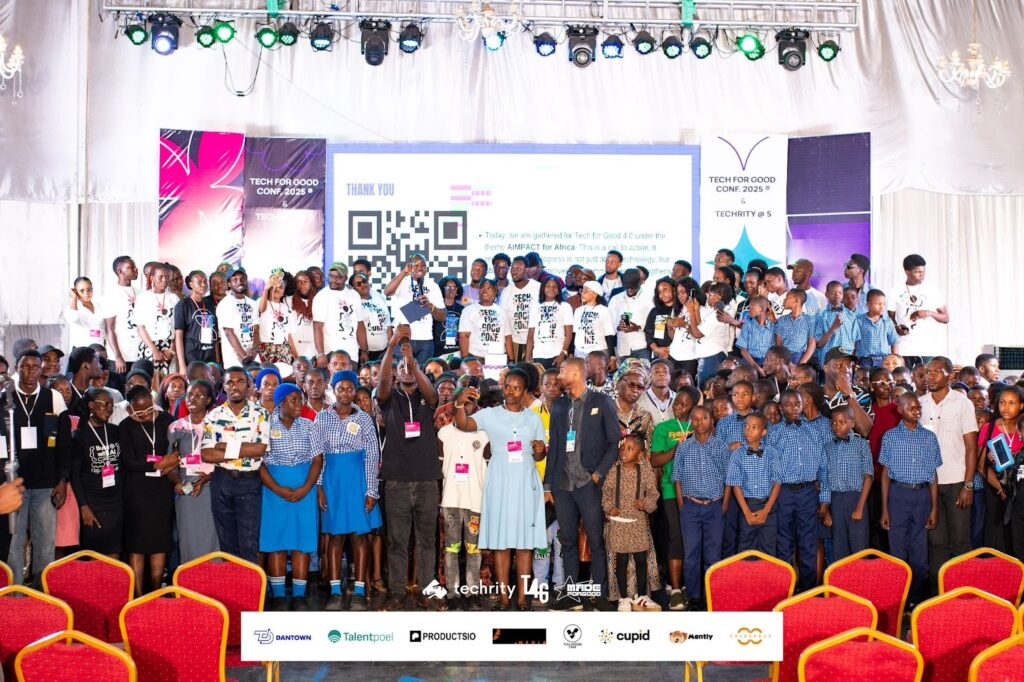
For half a decade, the Techrity Innovation Foundation has been on a steadfast mission to transform Africa’s digital landscape. What began in December 2020 has evolved into a continental movement dedicated to bridging the digital divide. On October 25, 2025, Techrity marked its 5th Anniversary by celebrating this journey of empowerment at the fourth edition of its flagship conference, themed AIMPACT Africa, held in Port Harcourt.

The milestone event brought together over 500 innovators, entrepreneurs, and educators to explore how Artificial Intelligence (AI) and emerging technologies can drive inclusion, digital literacy, and sustainable development across the continent.

Grassroots Impact: The Road to Tech for Good

Techrity’s commitment to “Empowering a Continent” begins in the classroom. Leading up to the anniversary conference, the team embarked on the “Road to Tech for Good” outreach, visiting Rumuokuta Girls Secondary School and Community Secondary School. The mission was to inspire young students to view technology not just as a subject, but as a critical tool for shaping their futures and solving real-world problems.

To solidify this commitment to early access, Techrity sponsored 120 students from public and private secondary schools across Rivers State to attend the conference. A powerful highlight of their participation was the emergence of Emmanuel Amaechi, an SS1 student from Christ Army Educational School, as the winner of the interschool Q&A session. He received a ₦50,000 cash prize and a full Tech Scholarship from Mr. Chinoso Chijoke, Founder of Cupid Technologies.

Key Takeaways: The Moments and Highlights That Shaped the Conference

Opening the conference, Islamiat Arinola Oseni, Senior Project Officer at Techrity, described Tech for Good as “more than an event, it is a movement to leverage technology for empowerment, community growth, and social impact.” She highlighted Techrity’s commitment to bridging the digital divide through mentorship, capacity building, and inclusion-focused initiatives.

Delivering the 5th anniversary speech and  Impact story, Techrity’s Founder and Team Lead, Mrs Owanate Amachree, reflected on the foundation’s growth since its establishment in 2020. She said Techrity has evolved into “a pan-African force for social innovation and digital empowerment,” citing initiatives such as Hack for Good, the Techrity Mentorship Program, the Kickstart Initiative, and the Laptop Support Scholarship. “Technology has the power to redefine Africa’s growth narrative. At Techrity, we are building an ecosystem that enables learning, innovation, and impact,” she said.

The Keynote Sessions offered thought-provoking insights into the transformative power of technology in shaping Africa’s digital future. Mr Kenneth Nwokoro opened with “Building an Inclusive Digital Economy: Empowering Communities and Closing the Digital Divide,” emphasising the need for equitable access to technology and digital opportunities across all communities. Chimene Chinah followed with “AI for Inclusive Growth: Harnessing Artificial Intelligence to Drive Africa’s Transformation,” exploring how artificial intelligence can catalyse sustainable development and inclusive progress across the continent.

The Guest Speakers further enriched the discussions with practical perspectives on innovation and empowerment. Mrs Amarachi Stanley-Duru delivered a compelling session on “Shaping Africa’s Workforce for the Future: Embracing Digital Transformation and Skills Development,” highlighting the importance of upskilling and adaptability in a rapidly evolving world. Mrs Karla Obakpolor rounded off the segment with “Building for Social Good: Scaling Innovation and Creating Impact,” emphasising the role of purpose-driven innovation in driving meaningful change across Africa.

The Speaker Session featured Harmony Elendu, who delivered an insightful presentation titled “People Behind Models: How AI is Elevating Careers and Skills Expansion.” Her talk shed light on the human side of artificial intelligence, exploring how AI is transforming industries and empowering individuals to build new skills, enhance their careers, and thrive in the digital age.

The conference also featured engaging panel sessions, lightning talks and a fireside chat that explored innovation, inclusion, and Africa’s digital future. The first Panel Session focused on the topic, From Learner to Leader: Forging a Resilient Tech Talent Pipeline through Ecosystem Collaboration hosted by Bliss Isioma Ajie (HR/Operations Manager, Mently) and the Panelists were Richard Pepple (Founder, Technoville) and Shammah Nei (Director, Engineering Philanthrolab), The second Panel session focused on Navigating The New Financial Frontier: Regulation, Innovation and The Future of Crypto in Nigeria hosted Mr Godwin Jimmy (CTO, Dantown HQ) and the panelists were Godfrey Kelechukwu (Founder, Boardroom), Favourite Henry (Product Marketing Manager), Chininso Chijioke (Founder, Cupid Technologies), The Third Panel session focused on the topic, The Global Talent Playbook: Unlocking Remote Opportunities and Building a Competitive African Workforce, was moderated by Fano Oyin Jessica, Techrity’s Chief Administrative Officer. Panellists included Lloyd Otu, Co-Founder of TalentPoel, and Newton Adiari Newton, Product Manager at Cre8Space Africa, shared insights on remote work, digital tools, and how African youths can compete in a borderless economy.

The fireside chat with Julian Duru (ex Moniepoint engineer and now an independent researcher) hosted by Daniel Obiyo (Founder, Quint Impact Initiative), offered an inspiring story of resilience and leadership, as he discussed personal experiences and lessons from Africa’s evolving innovation space.

The Lightning Talk Breakout Sessions featured a series of simultaneous, high-energy presentations where speakers shared unique insights on technology, creativity, and artificial intelligence. Chibuzo Madumere explored “From Curiosity to Code: How AI and Creativity Empower Tech Beginners,” emphasising how innovation often begins with curiosity. Opuine Kayode Fowora presented “AI for Differentiated Instruction & Inclusivity: A Teacher’s Perspective on Empowering Every Learner with AI,” shedding light on AI’s role in inclusive education. Yves Kwameh V. delivered “Beginner Skills You’ll Need Before the Boots Take Your Briefs,” a dynamic talk on essential skills for those starting their tech journey. Numbere Tehila Tamunobakam discussed “Agentic AI and Liability: Who Bears the Burden When Mishaps Occur?” examining accountability in the age of intelligent systems. Meanwhile, Precious Sunday inspired attendees with “Unlocking the Future: Navigating Tech’s Uncharted Territory,” encouraging bold exploration of technology’s evolving landscape.

A key highlight of the event was the official launch of Made for Good, presented by Peculiar Akinloye, Techrity’s Operations Manager. Made for Good is a purpose-driven brand that embodies the spirit of paying it forward using proceeds from its merchandise and initiatives to support causes such as providing laptops, internet data, and digital tools for young Africans. The initiative also connects startups, organisations, and innovators working on technology-driven impact projects across the continent. According to Akinloye, the platform aims to “promote partnerships, shared learning, and scalable innovation for development.

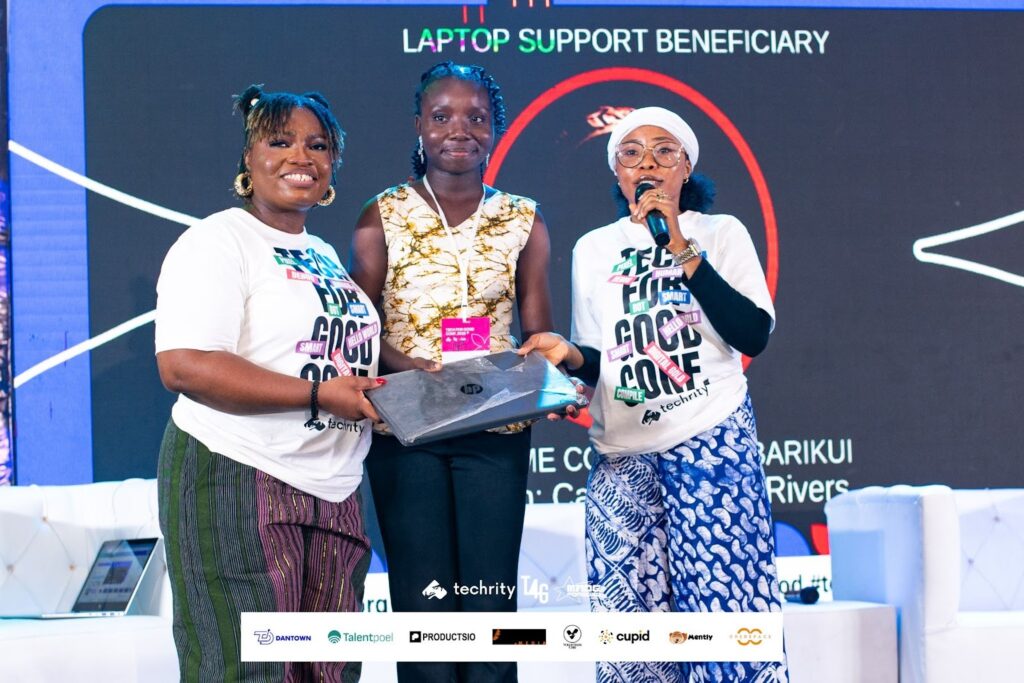
In addition, there was the Techrity Laptop Support Scholarship presentation. This initiative equips young Nigerians with laptops, internet access, and mentorship to enhance their digital skills and create career growth opportunities. Following a transparent selection process guided by passion, need, and commitment to social good, 11 (eleven) young Nigerians were awarded laptops, data support, and mentorship to boost their digital careers at the conference. Among these beneficiaries were Ikordeme Confidence Barikui, Onaeko Emmanuel Oladipupo, Ozuru Irenma Pearl, Ozuru Olanma Jewel, Philomena Nkereuwem Nyah, Iyke Victor Chidera, Winner Osinachi Offor, Elekwachi Zion Chibuchi, Emeka Victor Chigozie, Okonkwo Ckaima Peniel, and Ebubechukwu Osy-Uzoekwe. “We believe in using technology to transform lives, one person and one community at a time,” Oseni said.

Another major highlight of the day was the Techrity Social Impact Awards, which honours individuals and organisations using technology to drive mentorship, digital inclusion and social good. The award recipients included Renaissance Innovation Labs (Tech Community Partner of the Year), Kenneth Nwokoro ( Social Impact Award (Mentorship), Stakeholders Democracy Network (Social Impact Award – Tech for Gender Equality), Bright Chinenyeze (Social Impact Award (Digital Inclusion Advocate), Richard Sodienye Pepple (Social Impact Award – Mentorship), and Richard Tamunotonye (Social Impact Award – Mentorship).

A Five-Year Legacy and a Call to the Future

In just five years, Techrity has grown into a global community of 886 innovators with over 12,000 digital followers across Nigeria, Kenya, India, Botswana, Ghana, Rwanda, and Uganda. Through initiatives like the Kickstart Initiative, which has provided 35 laptops and ₦5 million in data support, and a mentorship program engaging over 100 participants, Techrity is actively nurturing Africa’s next wave of tech talents.

The success of the 5th anniversary celebration was bolstered by several partners, including Dantown (Key donor and partner for the Laptop Support Scholarship), Productsio, TalentPoel, Cre8Space, Artful Media, Cupid Technologies, Volunteers Crib, Mently, and Made for Good.

In her closing remarks, Owanate Amachree thanked all partners, speakers, and volunteers for their contributions, noting that “the true impact of Techrity lies not only in its social impact programs but in the lives we transform.” She reaffirmed the foundation’s goal to continue empowering Africans through technology, mentorship, and innovation — inspiring, coaching, and building for social good.

As part of its five-year milestone, Techrity is extending an open call to corporate partners, development organisations, startups, and philanthropists to collaborate in building the future of young Africans through mentorship, digital education, and social impact programs designed to bridge gaps in unemployment, inclusion, and opportunity across Africa. 

Let us drive this mission together by equipping young people with laptops, internet access, and digital skills, fostering innovation through SDG-focused hackathons and mentorship programs, and promoting inclusion and gender equality through technology-driven education.

Organisations and individuals interested in partnering can reach out via hello@techrity.org or visit www.techrity.org to learn more.

Categories
Uncategorized

Building an Attractive Personal Brand Online as a Tech Person in 2025

Image Credit: Freepik.com

In today’s competitive job market, having a strong personal brand is essential for standing out, gaining credibility, and attracting new opportunities. This is especially true for tech professionals, where innovation, skill-sets, and the ability to solve real-world problems can be game-changers. Establishing a compelling personal brand can catapult your career to new heights, whether you’re a software developer, data analyst, product manager, or cybersecurity expert.

In this article, we will be looking at the details of building an attractive personal brand online. We will provide detailed strategies, case studies, and actionable steps to help you position yourself as a go-to expert in your field.

1. Understanding Personal Branding in 2025

What is Personal Branding?

Personal branding encompasses how you present your professional identity, both in the offline and online world. For tech professionals, this means highlighting your technical skills, problem-solving abilities, and personal values. It also involves showcasing your personality, work ethic, and vision. A well-established personal brand helps you connect with your target audience, employers, clients, or peers.

Why is Personal Branding Important?

i. Career Growth

In 2025, recruiters and hiring managers often review your online presence before considering your resume. A strong personal brand increases your chances of being found and recognized for opportunities that match your skill set. For instance, tech professionals who have made a name for themselves by consistently sharing knowledge and showing off their skills on platforms like LinkedIn or GitHub have potentials of attracting job opportunities.

ii. Networking

In tech, networking isn’t just about attending events and building relationships online. A powerful personal brand allows you to network effortlessly with like-minded people in your field.

Networking and meeting other professionals in your field exposes you to various opportunities.

iii. Influence and Authority

Tech professionals who consistently share valuable insights and content are perceived as thought leaders. Your expertise in a niche area can be recognized, allowing you to become an authority in your field. This is a significant advantage when it comes to personal branding.

iv. Opportunities

Having a personal brand can open doors to high-profile speaking engagements, collaborations with industry leaders, and opportunities for brand partnerships. Furthermore, a solid brand helps with business development, attracting potential clients or employers looking for your expertise.

Monetization

A personal brand also provides an avenue for monetizing your knowledge. Whether through content creation on YouTube, selling an online course, or consulting, your brand is the foundation for these income-generating opportunities.

2. Defining Your Unique Value Proposition (UVP)

What is a UVP?

Your Unique Value Proposition (UVP) is essentially the thing that makes you stand out from the crowd. Having a clear UVP helps you communicate your strengths effectively in a world filled with tech professionals. It’s what will help you attract the right audience—whether employers, clients, or peers.

How to Define Your UVP

i. Identify What Sets You Apart

Think about the skills, experiences, and values that distinguish you from others. Are you a developer who specializes in AI-driven applications? Are you a cybersecurity expert passionate about ethical hacking? Your UVP needs to highlight this uniqueness. Write down the things that make you different from others in your field. This could be technical skills, personal passions, or a unique problem-solving perspective.

ii. Focus on Solving Problems

A powerful UVP solves a problem. Ask yourself: “What problems do I help others solve with my skills?” Maybe you help startups optimize their data infrastructure or offer affordable, high-quality web development services for small businesses.

Example: A data analyst focusing on turning raw data into actionable insights for small businesses could define their UVP as “Helping small businesses make data-driven decisions with affordable, user-friendly solutions.”

iii. Your Mission

Your mission also drives your UVP. What is your greater purpose in the tech space? Are you focused on accessibility in tech? On solving a particular societal issue through technology? Your mission becomes your UVP’s foundation and should resonate with your target audience.

Actionable Tip: Write a mission statement that reflects your purpose in tech and tie it to your UVP. This mission statement can evolve but helps you maintain focus as your brand grows.

3. Optimizing Your Online Presence

Image Credit: Freepik.com

A. Crafting a Professional LinkedIn Profile

LinkedIn remains the one of the most powerful tool for professional networking in the tech world. To build a compelling personal brand, your LinkedIn profile must reflect your UVP and engage visitors immediately.

i. Profile Photo

Your profile photo is the first thing people see, so make it count. A high-quality, professional head-shot creates an impression of competence and seriousness. Avoid using casual pictures or selfies.

ii. Headline

Your LinkedIn headline is critical. Rather than just stating your job title, make it compelling by explaining what you do and how you create value.

Example: “Data Scientist | Empowering businesses with AI-driven solutions” or “Cybersecurity Specialist | Protecting organizations from evolving cyber threats.”

iii. Summary

The summary section is your opportunity to tell your story. Explain who you are, what you do, and why you do it. Use storytelling to make it engaging; this section is often the first one potential employers or clients read.

Example: “I’m a passionate data scientist who thrives on solving complex problems with innovative AI solutions. With over 5 years of experience working with Fortune 500 companies, I help businesses turn data into actionable insights that drive growth.”

iv. Experience and Skills

Your experience and skills should directly reflect your UVP. Showcase your most relevant work experience, achievements, and the projects that best demonstrate your capabilities.

Tip: Don’t just list your roles—talk about specific accomplishments. For example, if your SEO strategy increased website traffic by 30%, make sure that’s mentioned!

v. Engagement

Engage with others’ posts by commenting on trends, sharing your thoughts, or providing value through your posts. This boosts visibility and reinforces your expertise.

B. Creating a Personal Website or Portfolio

Image Credit:Freepik.com

A personal website or portfolio is essential for showcasing your work. It’s more than just a digital resume; it’s a space to display your achievements, thought leadership, and unique perspective.

i. About Page

The About page should introduce you to your visitors. Who are you, what do you do, and why are you passionate about it? This is where your personal story matters—let it shine!

ii. Blog Section

A blog section is a powerful way to share your thoughts and experiences. You can write about current trends, new technologies, or personal lessons you’ve learned in your career. Regularly posting to your blog boosts SEO, keeps your audience engaged, and positions you as an authority in your field.

iii. Portfolio Page

Your portfolio should showcase your best work, including case studies, code samples, or product designs. It’s essential to demonstrate your abilities rather than just talking about them.

iv. Contact Page

Make it easy for people to contact you for opportunities, collaborations, or advice. A contact form, email address, or even links to your social media profiles are essential.

C. Optimizing Your Twitter/X and Other Social Media

While LinkedIn is professional, Twitter (now X) allows you to engage with a broader tech community. Many tech thought leaders and industry experts have built their brands mainly on Twitter.

D. Share Valuable Content

Share your thoughts, experiences, and insights into the tech industry on Twitter. It is an excellent platform to discuss emerging trends, tools, and topics that excite you.

E. Engage with Industry Leaders

By commenting on and retweeting the content of industry leaders, you can catch the attention of others in your space. Engaging with key influencers can open doors to collaborative opportunities.

F. Use Relevant Hashtags

Hashtags like #AI, #DataScience, #DevOps, and #TechTips allow your content to reach a broader audience interested in your niche.

4. Content Creation: The Key to Thought Leadership

Image Credit: Freepik.com

Creating and sharing valuable content positions you as a thought leader and establishes your authority, allowing you to connect deeply with your audience.

A. Blogging

Writing blog posts on platforms like Medium and Dev.to, or your website can help showcase your knowledge and establish authority in your field. Topics can range from tutorials to industry insights.

B. Video Content

YouTube is an excellent platform for tutorials, sharing how you were able to solve various problems with your code, and product demos. You can also create shorter videos for platforms like TikTok or Instagram.

C. Open Source Contributions and GitHub Projects

Contributing to open-source projects on GitHub shows practical proof of your skills. It also helps you build connections with other developers and demonstrates your commitment to the community.

D. Podcasts and Webinars

Starting a podcast or hosting a webinar allows you to share knowledge, interact with other thought leaders, and engage with a broader audience.

E. Writing an E-book or Online Course

Creating an e-book or online course can significantly amplify your brand. Platforms like Udemy and Teachable provide the tools to monetize your knowledge while further establishing your authority in your field.

6. Networking and Community Engagement

Networking is a crucial component of building your brand. It’s not just about meeting new people; it’s about cultivating meaningful relationships with individuals with similar professional interests. Networking helps you to stay informed, receive support, and create collaborative opportunities.

Image Credit: Freepik.com

7. Personal Branding Strategies for Tech Professionals

A. Continuous Learning and Skill Development

A strong personal brand requires constant improvement. Technology evolves quickly, and staying up-to-date with the latest trends and acquiring new skills is essential.

i. Upskilling and Certifications

As technology rapidly evolves, staying relevant means learning new skills. Platforms like Coursera, Udemy, and edX offer certifications in various tech fields, including AI, machine learning, cloud computing, and cybersecurity. Obtaining certifications helps improve your knowledge and adds to your credibility.

ii. Attending Events

In addition to formal courses, attending events like Tech for Good and Hack for Good, is another great way to stay ahead of the curve. These events often provide insights into the latest technologies, tools, and frameworks shaping the tech industry.

B. Creating a Strong Online Presence with Consistency

Having an online presence is crucial, but consistency is key. Regularly posting valuable content on platforms like LinkedIn, Twitter, or personal blogs is essential for reinforcing your brand.

i. Consistency in Content Creation

Whether you post about industry news, share tutorials, or write blogs, your content should align with your expertise. Consistent posting increases your visibility and demonstrates your commitment to your niche.

ii. Branding Your Online Presence

All your online profiles—whether on LinkedIn, Twitter, or personal websites—should be cohesive and reflect your UVP. This includes your professional profile photos, bios, and content themes.

C. Leveraging Analytics and Feedback

Understanding how your audience engages with your content allows you to refine your personal branding strategy.

i. Monitor Engagement Metrics

Using analytics tools like Google Analytics for your website, or LinkedIn and Twitter insights for social platforms, helps you track how your content is performing. Are people engaging with your posts? Are they commenting or sharing?

ii. Gathering Feedback

Don’t be afraid to ask your network for feedback. This could be through surveys, informal conversations, or feedback on your blog posts. Feedback helps you understand how your brand is perceived and where you can improve.

8. Measuring and Adjusting Your Personal Brand

A. Setting Personal Branding Goals

Like any professional endeavor, personal branding requires goals. Without clear goals, it’s easy to become lost in the noise.

Short-Term Goals

Short-term goals could include tasks like optimizing your LinkedIn profile, writing a blog post, or getting more involved in online communities. Set clear deadlines for these tasks to ensure steady progress.

Long-Term Goals

Long-term goals might involve becoming a recognized thought leader in a specific area of tech, publishing a book, or landing speaking engagements at top tech conferences.

Tip: Write down your goals and revisit them regularly to track your progress. It will help keep you motivated and focused.

Conclusion: The Power of Personal Branding

Personal branding is no longer optional; it’s a necessity, especially in the ever-evolving world of technology. By understanding your unique value proposition, optimizing your online presence, creating valuable content, networking, and constantly improving your skills, you can build a powerful personal brand that will open doors to new opportunities, collaborations, and career growth.

The key is consistency, authenticity, and dedication. Personal branding is a continuous process, and as long as you remain engaged with your community, stay committed to learning, and build meaningful relationships, your brand will continue to grow and thrive.

Categories
Tech For Good

Tech for Good 2023: Exploring Tech for Good Conferences and its Transformative Impact

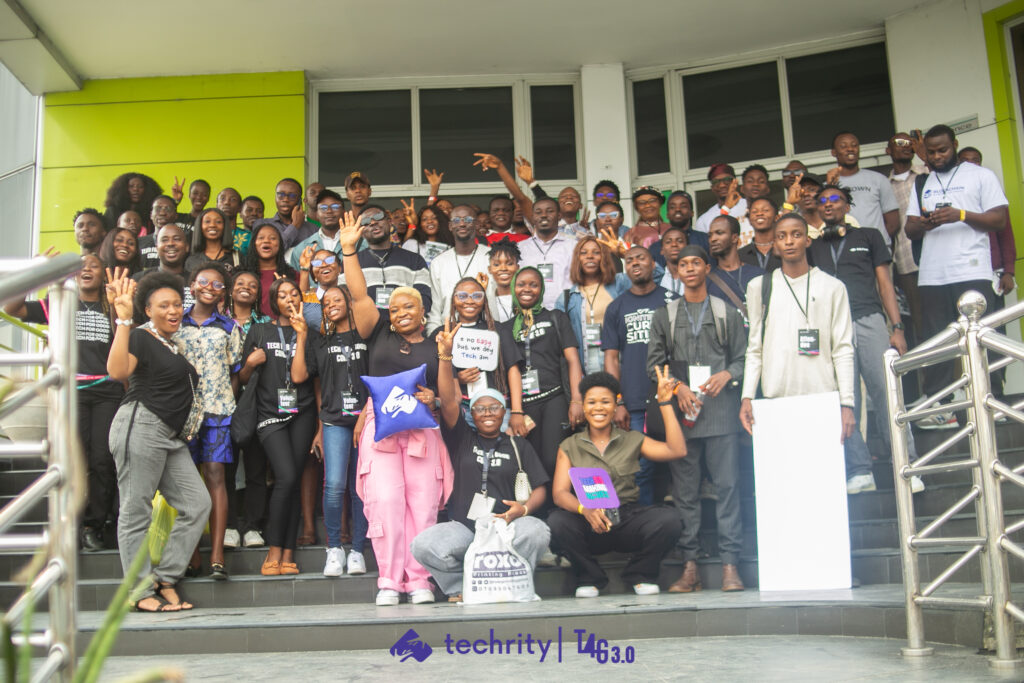
Tech for Good 2023 Group Photo

Have you ever anticipated an event only to find that when it unfolds, it surpasses all your expectations?

That was the feeling I got from the Tech for Good 3.0 event ????

What is Tech for Good?

Tech for Good (T4G) is an annual conference that aims to highlight technological advancements benefiting African communities for social progress. Tech for Good was established to counteract the negative information circulating about technology and its utilization in Africa. For further insight into the conference’s mission, delve into the details of the inaugural edition.

Past editions have been truly amazing, as evidenced by the positive feedback received. Now, let me take you through all the exciting details of the recently concluded third edition (3.0) of Tech for Good, which took place on October 21, 2023, at The Autograph, Port Harcourt, Nigeria. Don’t miss out on this exciting update! 

See past Tech for Good Conferences on the website or read the feature on Vanguard and This Day Live.

Tech for Good 3.0: Unveiling Impactful Moments and Innovations 

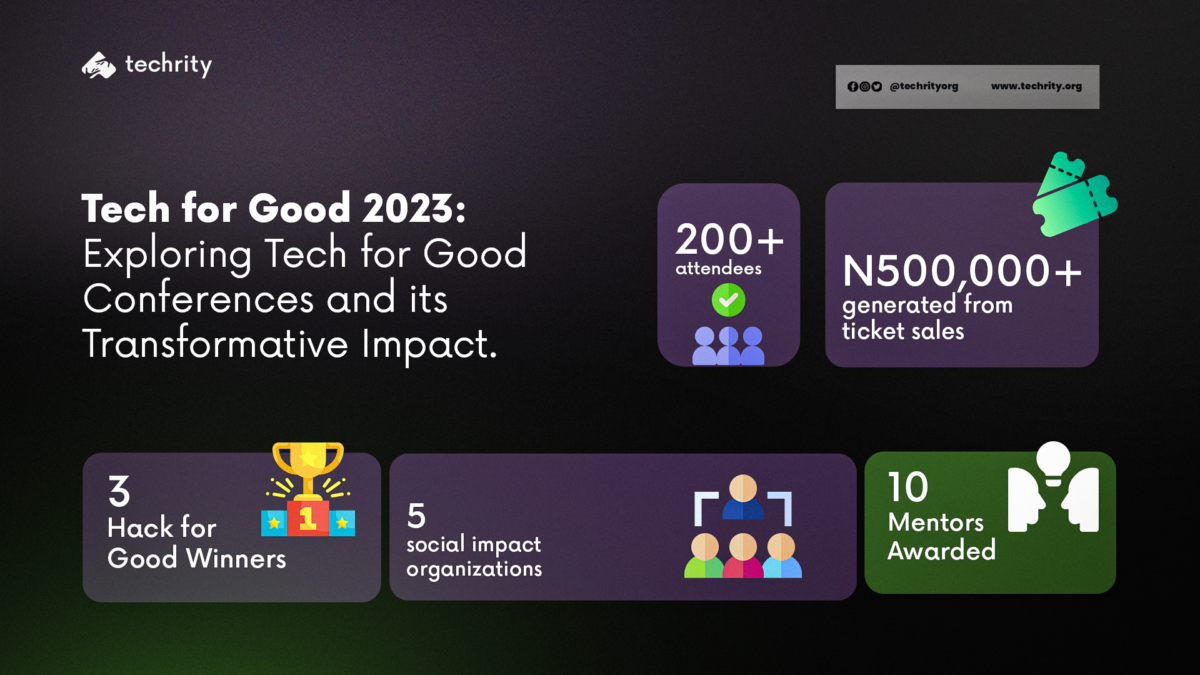
Tech for Good 3.0 was incredibly impactful, drawing a crowd of 200+ attendees, featuring 8 speakers and 8 social impact organizations, and awarded 10 mentors in the Tech for Good Social Impact Awards. 

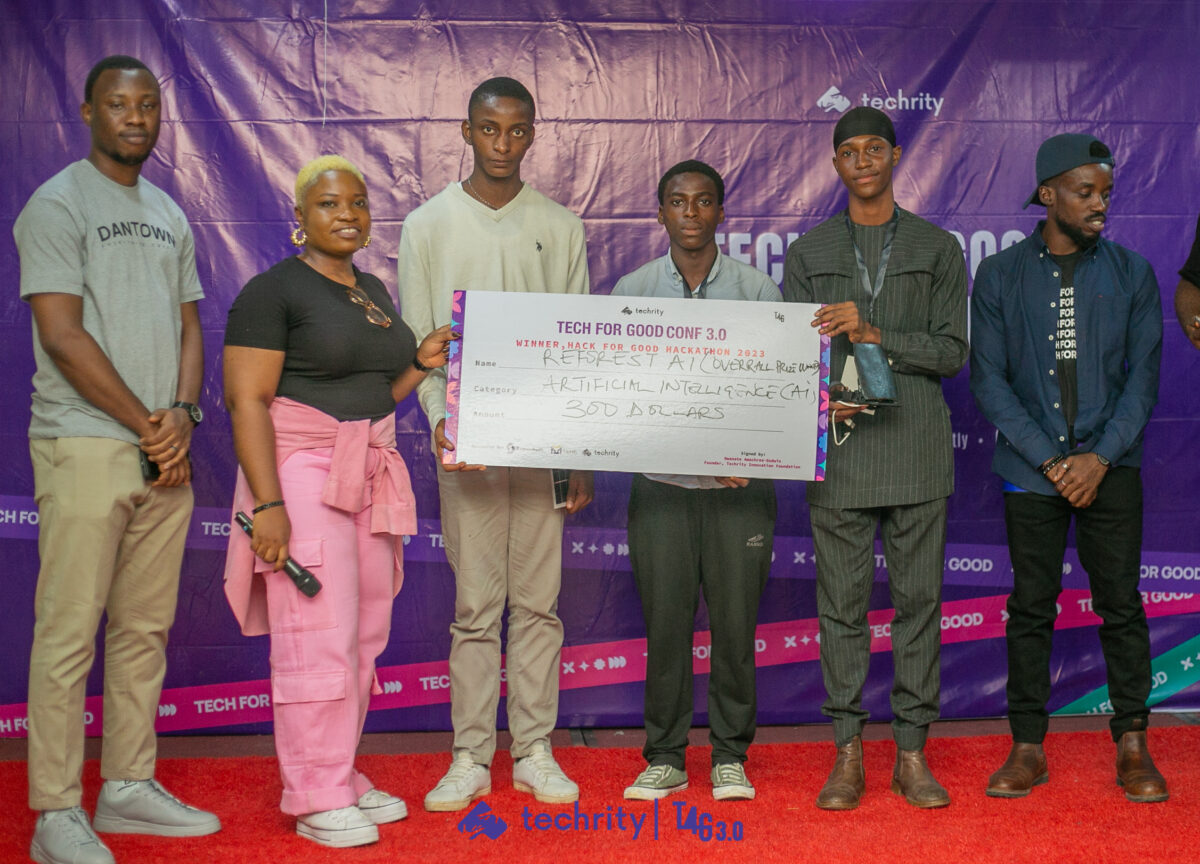
Team ReforestAI 

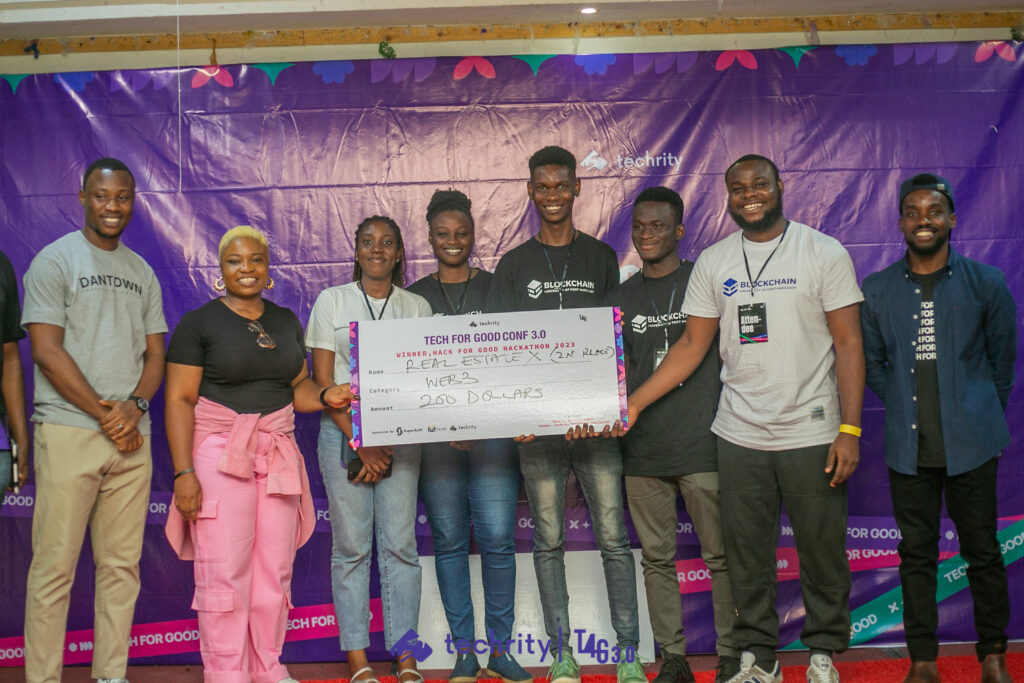
The event also received 21 submissions in the Hack for Good Hackathon through DoraHacks and GitHub. The three winning teams were: 

  • Crypto Mayhem – This game enlightens the player on the importance of water pollution (3rd Place). Watch the demo on Youtube.

They were rewarded with a total of $650 in cash and $700 in XuperAuth credits, generously sponsored by Techrity, XuperAuth, and Mently

Team Real Estate X 

This year’s edition stood out with the introduction of paid ticketing, elevating the event management experience to a whole new level. The ticketing revenue exceeded #500,000, including sales from the regular, VIP, and Company Access categories, all made possible through the Nftikets Event Ticketing Platform. 

See past Tech for Good Conferences on the website or read the feature on Vanguard and This Day Live.

This achievement was thanks to the incredible support from community members like Chibuzo Madumere, Akuma Isaac, Paula Daopuye, Stephen Okonkwo, Chekwube Peters, Felix Ogbuji, Karla Obakpolor, Sagir Garba, Daniel Emmanuel, and Segun Francis, who enthusiastically participated in the #PayItForwardChallenge, enabling over 100 sponsored tickets.

Ticket registration stand 

This year’s conference started with an opening speech from the founder, Mrs. Owanate Amachree-Godwin, 

It also showcased experienced speakers, including Uche Aniche, the Convener of Startup South, discussing how African startups can utilize technology. 

Mr. Uche Aniche Preaching the Gospel of Startups

Jephtah Abu, founder of Talentpoel, talked about the impact of exporting tech talents in Africa

Jephthah Abu

while Susan Odurinde, founder of Cactus Tech, focused on innovative thinking for social impact.

See past Tech for Good Conferences on the website or read the feature on Vanguard and This Day Live.

Kelvin Ogba Dafiaghor, Regional Manager in Africa for Global STEM Initiative, highlighted how AI is transforming Africa positively. 

Mr Kelvin Dafiaghor highlights the benefits of AI transformation in Africa 

Wisdom Nwokocha shared insights on finding and securing freelance technical writing clients

Wisdom Nwokocha

Ayoleyi Lurogho discussed evolving UX thinking beyond drag and drop, 

Ayoleyi Lurogho

and Kelechi Oliver addressed cloud adoption for early-stage startups.

Kelechi Oliver 

Ibe Andyson focused on choosing a tech career based on understanding personality traits and more.

Ibe Andrew Andyson

Social Impact Organizations 

Social impact organizations and companies dedicated to realizing the vision of Tech for Good were actively involved. These entities were invited to share their impactful stories, to highlight their contributions to the tech sector. Participating organizations included:

SpitalLabs

Spital Labs is a community and tech hub with a vision to provide high-quality technical training through cohort programmes and diverse channels, to scale digital education to millions.

Code Ambassadors

Code Ambassadors Academy is a STEM.org Accredited academy that inspires and equips kids/teens between the ages of 5 and 17 with coding, problem-solving, and critical-thinking skills to turn their ideas into solutions. We achieve this by providing training, mentorship, and exhibition events.

Technoville

Technoville was founded in 2018, by passionate young people who believe that technology can transform individuals and nations. We are equipping the next generation of innovators with in-demand digital skills. Nurturing tech talent, bridging the talent gap with well-curated programs, fostering digital excellence, and driving the future of tech innovation.

Dantown

Dantown is a crypto exchange that offers buy and sell services for crypto, fast payments, and 24/7 customer service. Other benefits include airtime purchases, cable TV subscriptions, utility bill payments, and virtual USD cards.

XuperAuth

XuperAuth is a walletless, passwordless authentication system that leverages blockchain technology to provide secure and convenient access to Web3 products. It eliminates the need for users to manage complex private keys or remember passwords, making it easier for them to engage with blockchain applications.

Our suite of APIs and SDKs is designed to empower DApps with walletless, and passwordless authentication, revolutionizing user experiences, and increasing adoption rates in the Web3 ecosystem. 

Mently

The Mently Mentorship platform enables you to scale your mentorship programs with ease, automate, host and manage the entire lifecycle of your mentorship program. The platform provides automated matching of mentors to mentees, creates curriculums and manages your training in one place.

NFTikets

NFTikets is an online ticketing for any type of live and virtual event.

Highlights

Another interesting moment observed at Tech for Good 3.0 was the showcase of two children from Code Ambassadors. These children showcased and talked about the work they have been building at Code Ambassadors. The first one is GBS Alert. You can watch the demo video and the pitch video. The second one is the Hazel App. You can watch the demo video and pitch video.

Tech for Good Awards

The Tech for Good Social Impact Awards honors individuals, startups, non-profits, and volunteers who use their platforms to better their community and the global community at large

At the third edition of Tech for Good 3.0, we are celebrated mentors who have dedicated their time and resources to sharing knowledge and mentoring newbies into Tech careers.

At the heart of Techrity’s mission lies its annual mentorship program, which nurtures and guides aspiring tech talents, empowering them to become agents of change in their communities. This program provides mentorship, workshops, and networking opportunities, fostering a supportive environment where young innovators can thrive.

Through its mentorship program, Techrity has played a crucial role in shaping the tech landscape of the Niger Delta. Mentors, drawn from a pool of experienced professionals and industry experts, provide invaluable guidance and support to mentees, helping them develop their technical skills, entrepreneurial mindset, and problem-solving abilities. This nurturing environment has nurtured a new generation of tech leaders equipped with the skills and knowledge to tackle their communities’ challenges.

The impact of Techrity’s mentorship program extends far beyond individual mentees, shaping the trajectory of innovation and social impact in the region. By empowering young talents to harness the power of technology, Techrity is fostering a culture of innovation that is addressing real-world challenges and creating a more sustainable future for the Niger Delta.

Techrity’s efforts are not limited to mentorship; the foundation also provides Data support and laptops to beginners looking to kickstart their careers. This comprehensive approach to nurturing innovation has resulted in the development of homegrown solutions that address critical issues in education, healthcare, agriculture, and environmental sustainability.

Our handsome Host – Felix Ogbuji

Beautiful co-host – Joy Nwaiwu

Smiley face ???? and serious face ???? 

Community Manager and Volunteers

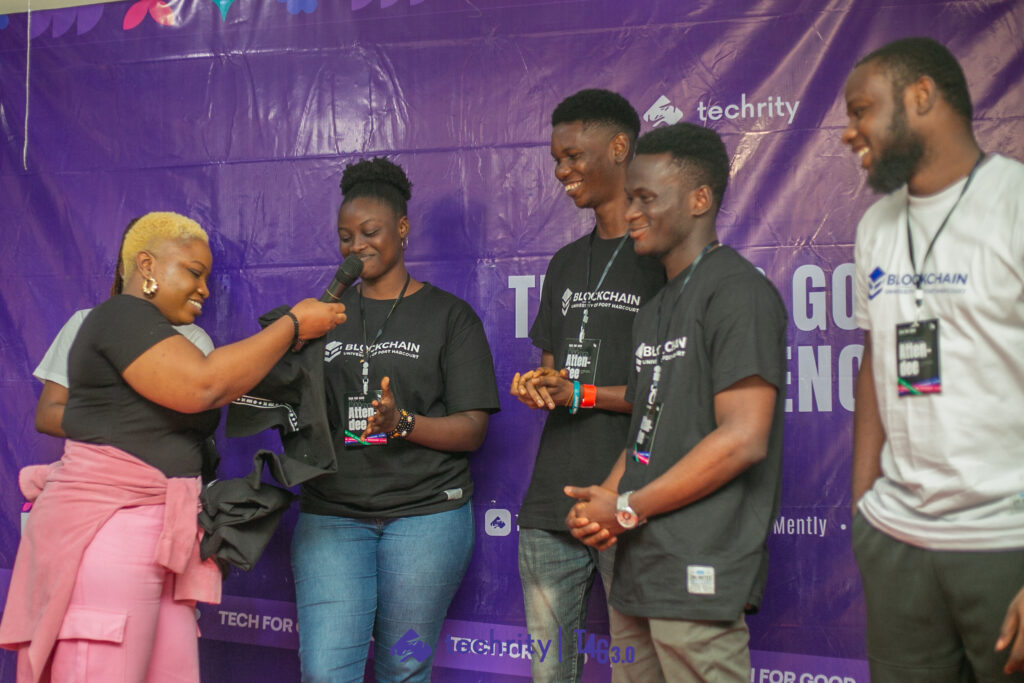
Founder of Blockchain Uniport – Proudly talking about how his community was a winner in the hackathon ????
Founder and Team Lead – Owanate Amachree-Godwin giving the keynote address

We would like to thank our sponsors, partners, organization, attendees who helped make the Tech for Good Conference a success. Special thanks to those who participated in the #PayItForward Challenge which helped to provide 100+ sponsored tickets to attendees of the event.

 Chibuzo Madumere, Godwin Jimmy, Akuma Isaac, Sagir Garba, Daniel Emmanuel, Segun Francis, Felix Ogbuji, Paula Daopuye, Chekwube Peters, Stephen Okonkwo, Karla Obakpolor, who enthusiastically participated in the #PayItForwardChallenge, enabling over 102 sponsored (free) tickets.
As the convener of the Tech for Good Annual Conference, Techrity Innovation Foundation has established itself as a driving force behind the region’s tech ecosystem. The foundation’s unwavering commitment to empowering young innovators, fostering collaboration, and promoting the responsible use of technology for social good is making a tangible impact on the lives of communities across the Niger Delta and Nigeria at large.

The success of T4G 3.0 is a testament to the transformative power of technology and the unwavering dedication of individuals and organizations working to harness its potential for positive change. The conference has set a new standard for innovation and social impact in Africa, inspiring a new generation of tech leaders to embrace technology as a tool for creating a brighter future for Africa.

Important Links

For more inquiries about the Tech for Good conference, sponsorship and donation, send an email to hello@techrity.org, or techrityorg@gmail.com

Wow! That was a lot to digest. I hope I have been able to summarize all about Tech for Good 3.0.

Don’t miss out on future updates, follow @techrityorg on all socials ????

Categories
Build4SocialGood Hackathon Tech Tech For Good Techrity Programmes

Hack for Good: ReForestAI: Virtual Hackathon Challenge Accepted

My name is Lesley John-Jumbo. I am 18 years old and an embedded systems developer. I like to explore the realms of Artificial Intelligence and Robotics.

My team members: Blessed Pepple (19, Hardware designer), Bright Sunday (17, Embedded systems engineering specialist) and I recently developed a project called, “ReForestAI” for the HackforGood hackathon challenge 2023 organized by Techrity.

Problem Statement

Illegal logging has deteriorated the forest ecosystem, leading to the deforestation and extinction of some animals. The problem of deforestation poses harmful threats to biodiversity, carbon sequestration, and cultural heritage, emphasizing the urgent need for effective forest conversation and protective measures. And here comes ReForestAI.

Solution Overview

ReForestAI is a project that harnesses artificial intelligence, robotics and environmental science to tackle one of Africa’s most pressing environmental issues—deforestation. With ReForestAI, the global governments and environmental biologists can combat illegal logging and revive the forest ecosystem again.

Challenges Faced

For this project, we stepped out on a completely new terrain. We experienced difficulties with advanced batteries and was bamboozled by the unfamiliar electrical connections we tried. I would say these setbacks occurred because we tried new construction methods for the project.

But thanks to our thorough research skills, we found a way to correct the wiring without overloading the components with a high voltage capacity. In turn, not only did this aggressive research pay off in saving our project, we learnt a lot as a team. 

Aside from the hiccups we faced in our construction method, we also battled with unstable power supply in Port-Harcourt. To solve this, we used a friend’s robotics workstation, which operated on solar power. At night, after our friend’s operating hours, we continued building, demonstrating our commitment to overcoming challenges and advancing our project despite external limitations.

Technologies Used

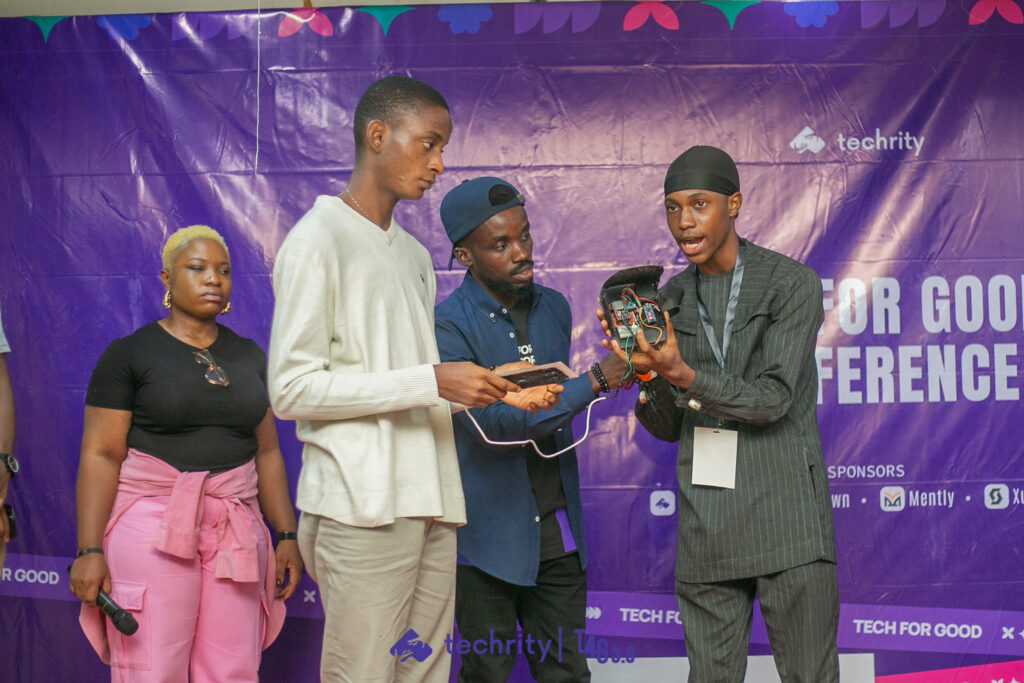
  1. AI and Machine Learning: We used tailor-made AI models for detecting deforestation and performing predictive analytics.
  2. Robotics: With AI embedded robots, we monitored the forest.
  3. Cloud computing: We used expandable cloud infrastructure for processing and storing data.
  4. IoT Sensors: IoT was used as an environmental sensors for collecting data.

View the ReforestAI project demo here or view the code submission on GitHub

Hackathon Experience

A special highlight for me during this hackathon challenge was the improvement of my circuit design skills. I learned the importance of running and testing codes in increments and meticulously defining algorithms based on specific circumstances. With this new knowledge I learnt, debugging my codes became a lot easier. 

ReforestAI Presentation at Tech for Good 2023

For my team also, our journey was punctuated with memorable moments that highlighted our individual growth. Despite our strong belief in the success of our project, we stayed grounded, acknowledging that the experience gained was a victory in itself no matter the outcome of the result. This perspective propelled us forward, creating an environment where learning and growth were just as important as the outcome.

Future Developments

Our vision goes beyond what we see; we aspire to scale this project globally by partnering with international entities, and building a network that will amplify our project’s reach.

Conclusion

We are sincerely thankful for the opportunity given to us by Techrity to participate in this hackathon challenge. The hackathon not only enabled us to showcase our skills but also offered an environment that fostered growth and creativity.

Categories
Build4SocialGood Hackathon Tech For Good Techrity Programmes

Our HackforGood Story – Real Estate X

RealEstateX

My team, the Blockchain Uniport built a platform called, “Real Estate X”, a project that allows real estate industries use NFTs (Non-Fungible Tokens) as a secure proof-of-payment. I’m Daniel Onyebuchi, and on behalf of my team, I will be sharing our Hack for Good hackathon challenge organized by Techrity experience with you in this blog post.

Problem Statement

From our research, we observed that in the real estate market, it is not easy to buy and sell properties as it takes longer time to meet potential buyers. We also noticed that owning a real estate property has become way too expensive for individuals and big investors to participate in this lucrative type of investment, indirectly limiting the flow of capital in the real estate market. 

How Limited Fluidity Affects Real Estate Investment

Due to the limited liquidity in the real estate market, many individuals and investors interested in the real estate market are currently battling with:

  1. A lack of access to real estate investments owing to the high down payment required from buyers before investing in a real estate property. 
  2. Difficulty in buying and selling properties to investors and individuals as a result of the fluctuating market prices.
  3. Conventional method of real estate investing, which hampers innovation and slows down the modernization of the industry.

Solution Overview

Our project, Real Estate X, tackles these problems by capitalizing on the power of blockchain technology and NFTs. We developed a user-friendly website that would allow investors to collectively pool their funds to invest in a portion of real estate asset. To this effect, instead of a single investor buying an entire property, which may be too expensive, co-investors interested in the same property can each co-own a fraction of the real asset property collectively purchased with smaller capital commitment. Additionally, it will allow these investors to benefit from the real estate property as it surges in price year after year.

Key Features and Functionalities

  • Shared ownership: Real Estate X uses NFTs (non-fungible tokens) to show partial ownership of real estate. These NFTs give users a safe and provable right to a fraction of the property.
  • Efficient Investment Steps: Real Estate X makes real estate investing easy. Users can check out available properties, get detailed information, and buy shared ownership NFTs using cryptocurrency.
  • Clear and Safe Transactions: Real Estate X uses blockchain technology’s built-in security and transparency to guarantee safe and transparent transactions. Every transaction is noted on the blockchain, giving an unchangeable and verifiable record of ownership.
  • Automatic Profit Sharing: Real Estate X automates sharing rental income and capital gains with NFT holders. This guarantees that investors get their rightful portion of the property’s earnings.
  • Distributed Marketplace: Real Estate X works as a marketplace without middlemen, cutting down on transaction costs. This distributed approach boosts market efficiency and accessibility.

How Real Estate X Works

  1. Real Estate X carefully selects and evaluates properties for sharing. Once a property is chosen, it’s tokenized, and a unique NFT is created that represents partial ownership.
  2. The tokenized NFTs go on the Real Estate X platform where users can check available properties, get details, and buy NFTs using cryptocurrency.
  3. The NFT ownership is securely stored on the blockchain, creating an unchangeable ownership record. With this, investors can easily handle their NFTs and monitor investment performance through the platform.
  4. Next, Real Estate X automates sharing rental income and capital gains with NFT holders and investors get their fair portion of the property’s returns directly to their cryptocurrency wallets.
  5. Then, the NFT holders can trade their ownership NFTs on the secondary market, offering flexibility and liquidity for their investments.

Challenges Faced

  • Navigating the Regulatory Landscape:

The rules around real estate investment, especially in the context of blockchain technology, are still in early development. This made it tricky to comply with the regulations while keeping the innovative aspects of our platform intact. To tackle this, we conducted thorough research and sought advice from legal and regulatory experts to stay updated and identify potential compliance needs. We also actively took part in industry discussions to advocate for a regulatory environment that encourages innovation while safeguarding investors.

  • Balancing Security and Accessibility:

Our priority was to guarantee top-notch security for user funds and data, given the type of assets involved. On the flip side, we wanted the platform to be user-friendly for a wide audience, including less tech-savvy individuals. To strike this balance, we implemented strong security measures like multi-factor authentication, encryption, and access controls. We simplified the user interface and provided clear instructions to make the platform easy to navigate and use. We kept refining our security measures and user experience based on feedback from our community and industry experts.

  • Educating The Market:

We teamed up with industry leaders, educational institutions, and media outlets to spread awareness of shared real estate and its potential use by creating informative content, hosting workshops and seminars, and actively communicating with the community to clear up misunderstandings and encourage well-informed choices.

View the RealEstateX project demo or see our code submission on Github

Technologies Used

  1. Blockchain Technology: Blockchain technology formed the basic building block for Real Estate X. Blockchain helped us provide a secure and transparent way to manage ownership records to prevent fraud and manipulation.
  2. Non-Fungible Tokens (NFTs): NFTs represented the shared real estate property asset. As each NFT is unique, it specifically signified a portion of the real estate property assigned to the owner to ensure ownership integrity.
  3. Smart Contracts: Smart contracts are self-executing contracts embedded in the blockchain. With this technology, we automated predefined terms and conditions for managing fractional ownership, distributing rental income, and handling capital gains sharing to reduce the need for intermediaries.
  4. Cryptocurrency Payments: Cryptocurrency is the primary mode for purchasng any property on Real Estate X. This is because cryptocurrency is fast, more secure, and less expensive compared to the traditional mode of payment options.

Our Hackathon Experience In Details

My Team members were:

Pascal Abams – The crypto researcher

Onu Daniel – The full-stack blockchain developer

Jude Abara – The blockchain developer, and

Angel Ademakin – The UI/UX designer

Participating in Techrity’s Tech4Good hackathon was an enriching experience for us that reshaped our view of how blockchain technology can transform the real estate industry. From brainstorming ideas to the final presentation, we were absorbed in a whirlwind of creativity, collaboration, and learning. The hackathon provided a platform to bring our vision for Real Estate X to life and share it with a passionate community of techies and industry experts.

Despite facing technical challenges and time constraints, my team’s resolve was unbroken. We gained the superpower for adapting, prioritizing, and maximizing the adeptness of our diverse team members. Overcoming each challenge brought us closer to our goal of creating a groundbreaking platform that opens up real estate investment to everyone.

Our most memorable moments were the collaborative brainstorming sessions and supportive environment where we met with other tech gurus who shared our passion for technology and innovation. We learned from one another’s perspective, challenged our assumptions, and hacked more innovative solutions.

Future Development

Our journey at the Tech4Good hackathon has only just begun. We are committed to further developing Real Estate X, expanding its features, and making it a vital platform for shared real estate investment.

Here are some of our key plans for future development:

  • We aim to broaden the range of available properties in different locations, types, and price ranges, offer various asset classes and investment opportunities.
  • We aim to improve the user experience by simplifying the platform navigation, enhance visuals, and provide comprehensive support resources.
  • We aim to introduce advanced analytics and reporting for investors, offering insights into their investments and include real-time property performance tracking, detailed financial data, and market trends analysis.
  • We aim to extend smart contract capabilities to automate more aspects of the investment process, streamline property management, integrate with third-party services, and support complex investment strategies.
  • We will also engage actively with our growing investor community by providing educational resources, host events, and encourage knowledge sharing for a supportive and informed community.
  • We will explore integrating Real Estate X with other blockchain networks and allow the use of different cryptocurrencies for transactions and access to a wider range of properties.

Conclusion

Our journey at the Tech4Good hackathon has transformed our vision for a more inclusive real estate market. We’re grateful for the opportunity to showcase Real Estate X and contribute to blockchain solutions for real-world issues.