Categories
General Kickstart Mentorship News Social Tech Uncategorized

Empowering a Continent: Five Years of Techrity Championing “Tech for Good” in Africa.

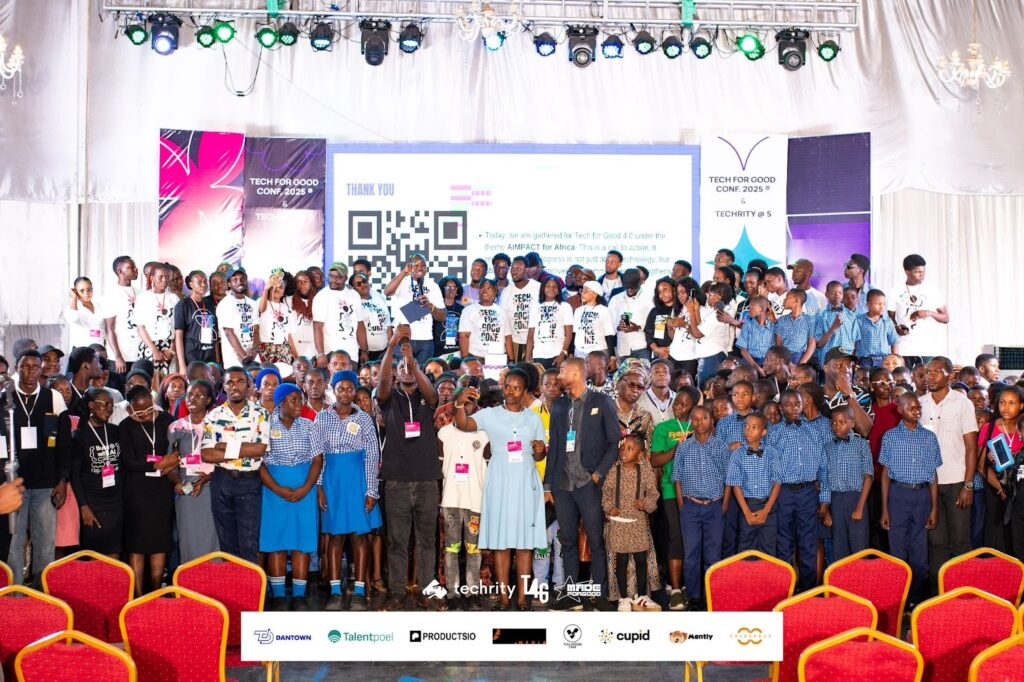
For half a decade, the Techrity Innovation Foundation has been on a steadfast mission to transform Africa’s digital landscape. What began in December 2020 has evolved into a continental movement dedicated to bridging the digital divide. On October 25, 2025, Techrity marked its 5th Anniversary by celebrating this journey of empowerment at the fourth edition of its flagship conference, themed AIMPACT Africa, held in Port Harcourt.

The milestone event brought together over 500 innovators, entrepreneurs, and educators to explore how Artificial Intelligence (AI) and emerging technologies can drive inclusion, digital literacy, and sustainable development across the continent.

Grassroots Impact: The Road to Tech for Good

Techrity’s commitment to “Empowering a Continent” begins in the classroom. Leading up to the anniversary conference, the team embarked on the “Road to Tech for Good” outreach, visiting Rumuokuta Girls Secondary School and Community Secondary School. The mission was to inspire young students to view technology not just as a subject, but as a critical tool for shaping their futures and solving real-world problems.

To solidify this commitment to early access, Techrity sponsored 120 students from public and private secondary schools across Rivers State to attend the conference. A powerful highlight of their participation was the emergence of Emmanuel Amaechi, an SS1 student from Christ Army Educational School, as the winner of the interschool Q&A session. He received a ₦50,000 cash prize and a full Tech Scholarship from Mr. Chinoso Chijoke, Founder of Cupid Technologies.

Key Takeaways: The Moments and Highlights That Shaped the Conference

Opening the conference, Islamiat Arinola Oseni, Senior Project Officer at Techrity, described Tech for Good as “more than an event, it is a movement to leverage technology for empowerment, community growth, and social impact.” She highlighted Techrity’s commitment to bridging the digital divide through mentorship, capacity building, and inclusion-focused initiatives.

Delivering the 5th anniversary speech and  Impact story, Techrity’s Founder and Team Lead, Mrs Owanate Amachree, reflected on the foundation’s growth since its establishment in 2020. She said Techrity has evolved into “a pan-African force for social innovation and digital empowerment,” citing initiatives such as Hack for Good, the Techrity Mentorship Program, the Kickstart Initiative, and the Laptop Support Scholarship. “Technology has the power to redefine Africa’s growth narrative. At Techrity, we are building an ecosystem that enables learning, innovation, and impact,” she said.

The Keynote Sessions offered thought-provoking insights into the transformative power of technology in shaping Africa’s digital future. Mr Kenneth Nwokoro opened with “Building an Inclusive Digital Economy: Empowering Communities and Closing the Digital Divide,” emphasising the need for equitable access to technology and digital opportunities across all communities. Chimene Chinah followed with “AI for Inclusive Growth: Harnessing Artificial Intelligence to Drive Africa’s Transformation,” exploring how artificial intelligence can catalyse sustainable development and inclusive progress across the continent.

The Guest Speakers further enriched the discussions with practical perspectives on innovation and empowerment. Mrs Amarachi Stanley-Duru delivered a compelling session on “Shaping Africa’s Workforce for the Future: Embracing Digital Transformation and Skills Development,” highlighting the importance of upskilling and adaptability in a rapidly evolving world. Mrs Karla Obakpolor rounded off the segment with “Building for Social Good: Scaling Innovation and Creating Impact,” emphasising the role of purpose-driven innovation in driving meaningful change across Africa.

The Speaker Session featured Harmony Elendu, who delivered an insightful presentation titled “People Behind Models: How AI is Elevating Careers and Skills Expansion.” Her talk shed light on the human side of artificial intelligence, exploring how AI is transforming industries and empowering individuals to build new skills, enhance their careers, and thrive in the digital age.

The conference also featured engaging panel sessions, lightning talks and a fireside chat that explored innovation, inclusion, and Africa’s digital future. The first Panel Session focused on the topic, From Learner to Leader: Forging a Resilient Tech Talent Pipeline through Ecosystem Collaboration hosted by Bliss Isioma Ajie (HR/Operations Manager, Mently) and the Panelists were Richard Pepple (Founder, Technoville) and Shammah Nei (Director, Engineering Philanthrolab), The second Panel session focused on Navigating The New Financial Frontier: Regulation, Innovation and The Future of Crypto in Nigeria hosted Mr Godwin Jimmy (CTO, Dantown HQ) and the panelists were Godfrey Kelechukwu (Founder, Boardroom), Favourite Henry (Product Marketing Manager), Chininso Chijioke (Founder, Cupid Technologies), The Third Panel session focused on the topic, The Global Talent Playbook: Unlocking Remote Opportunities and Building a Competitive African Workforce, was moderated by Fano Oyin Jessica, Techrity’s Chief Administrative Officer. Panellists included Lloyd Otu, Co-Founder of TalentPoel, and Newton Adiari Newton, Product Manager at Cre8Space Africa, shared insights on remote work, digital tools, and how African youths can compete in a borderless economy.

The fireside chat with Julian Duru (ex Moniepoint engineer and now an independent researcher) hosted by Daniel Obiyo (Founder, Quint Impact Initiative), offered an inspiring story of resilience and leadership, as he discussed personal experiences and lessons from Africa’s evolving innovation space.

The Lightning Talk Breakout Sessions featured a series of simultaneous, high-energy presentations where speakers shared unique insights on technology, creativity, and artificial intelligence. Chibuzo Madumere explored “From Curiosity to Code: How AI and Creativity Empower Tech Beginners,” emphasising how innovation often begins with curiosity. Opuine Kayode Fowora presented “AI for Differentiated Instruction & Inclusivity: A Teacher’s Perspective on Empowering Every Learner with AI,” shedding light on AI’s role in inclusive education. Yves Kwameh V. delivered “Beginner Skills You’ll Need Before the Boots Take Your Briefs,” a dynamic talk on essential skills for those starting their tech journey. Numbere Tehila Tamunobakam discussed “Agentic AI and Liability: Who Bears the Burden When Mishaps Occur?” examining accountability in the age of intelligent systems. Meanwhile, Precious Sunday inspired attendees with “Unlocking the Future: Navigating Tech’s Uncharted Territory,” encouraging bold exploration of technology’s evolving landscape.

A key highlight of the event was the official launch of Made for Good, presented by Peculiar Akinloye, Techrity’s Operations Manager. Made for Good is a purpose-driven brand that embodies the spirit of paying it forward using proceeds from its merchandise and initiatives to support causes such as providing laptops, internet data, and digital tools for young Africans. The initiative also connects startups, organisations, and innovators working on technology-driven impact projects across the continent. According to Akinloye, the platform aims to “promote partnerships, shared learning, and scalable innovation for development.

In addition, there was the Techrity Laptop Support Scholarship presentation. This initiative equips young Nigerians with laptops, internet access, and mentorship to enhance their digital skills and create career growth opportunities. Following a transparent selection process guided by passion, need, and commitment to social good, 11 (eleven) young Nigerians were awarded laptops, data support, and mentorship to boost their digital careers at the conference. Among these beneficiaries were Ikordeme Confidence Barikui, Onaeko Emmanuel Oladipupo, Ozuru Irenma Pearl, Ozuru Olanma Jewel, Philomena Nkereuwem Nyah, Iyke Victor Chidera, Winner Osinachi Offor, Elekwachi Zion Chibuchi, Emeka Victor Chigozie, Okonkwo Ckaima Peniel, and Ebubechukwu Osy-Uzoekwe. “We believe in using technology to transform lives, one person and one community at a time,” Oseni said.

Another major highlight of the day was the Techrity Social Impact Awards, which honours individuals and organisations using technology to drive mentorship, digital inclusion and social good. The award recipients included Renaissance Innovation Labs (Tech Community Partner of the Year), Kenneth Nwokoro ( Social Impact Award (Mentorship), Stakeholders Democracy Network (Social Impact Award – Tech for Gender Equality), Bright Chinenyeze (Social Impact Award (Digital Inclusion Advocate), Richard Sodienye Pepple (Social Impact Award – Mentorship), and Richard Tamunotonye (Social Impact Award – Mentorship).

A Five-Year Legacy and a Call to the Future

In just five years, Techrity has grown into a global community of 886 innovators with over 12,000 digital followers across Nigeria, Kenya, India, Botswana, Ghana, Rwanda, and Uganda. Through initiatives like the Kickstart Initiative, which has provided 35 laptops and ₦5 million in data support, and a mentorship program engaging over 100 participants, Techrity is actively nurturing Africa’s next wave of tech talents.

The success of the 5th anniversary celebration was bolstered by several partners, including Dantown (Key donor and partner for the Laptop Support Scholarship), Productsio, TalentPoel, Cre8Space, Artful Media, Cupid Technologies, Volunteers Crib, Mently, and Made for Good.

In her closing remarks, Owanate Amachree thanked all partners, speakers, and volunteers for their contributions, noting that “the true impact of Techrity lies not only in its social impact programs but in the lives we transform.” She reaffirmed the foundation’s goal to continue empowering Africans through technology, mentorship, and innovation — inspiring, coaching, and building for social good.

As part of its five-year milestone, Techrity is extending an open call to corporate partners, development organisations, startups, and philanthropists to collaborate in building the future of young Africans through mentorship, digital education, and social impact programs designed to bridge gaps in unemployment, inclusion, and opportunity across Africa. 

Let us drive this mission together by equipping young people with laptops, internet access, and digital skills, fostering innovation through SDG-focused hackathons and mentorship programs, and promoting inclusion and gender equality through technology-driven education.

Organisations and individuals interested in partnering can reach out via hello@techrity.org or visit www.techrity.org to learn more.

Categories
Uncategorized

AI at Work: Will A Robot Be My Next Colleague?

Image credit: freepik.com

From scheduling meetings to brainstorming ideas, AI is reshaping the workplace. But will it replace you or empower you?
The workplace is currently experiencing a massive transformation. Artificial intelligence (AI) is no longer a futuristic dream but an active force shaping how we work. From virtual assistants managing schedules to advanced AI models generating creative content, the integration of AI into our daily workflows is accelerating. The question remains: Will AI replace human workers or serve as a valuable colleague, enhancing productivity and efficiency?
This article delves into AI’s role in the workplace, exploring its impact on job roles, automation, and how we collaborate with technology. We will examine the rise of robot assistants, the future of automation, and how professionals can adapt to an AI-driven work environment.

The Rise of AI in the Workplace

Artificial intelligence has become an essential part of modern business operations. Companies across industries leverage AI-powered tools to improve efficiency, reduce costs, and enhance decision-making. AI is no longer confined to tech giants; small businesses, healthcare providers, financial institutions, and retail chains are all integrating AI into their operations.

How AI is Changing Workplaces

AI is changing workplaces in the following ways:
1. Automating Repetitive Tasks: AI excels at handling repetitive and time-consuming tasks, such as data entry, appointment scheduling, and customer service inquiries.
2. Enhanced Decision-Making: AI-driven analytics provide businesses with deep insights, helping managers make informed decisions based on real-time data.
3. Personalised User Experience: AI-powered recommendations and predictive analytics personalise customer interactions, improving satisfaction and engagement.
4. Workforce Augmentation: AI does not necessarily replace employees but augments their abilities, enabling them to focus on strategic and creative work.

Examples of AI in Action

  • Chatbots and Virtual Assistants: AI chatbots like ChatGPT, Siri, Gemini, and Google Assistant streamline communication by answering queries and performing tasks. Businesses also use AI-driven chatbots like Ziva and Leo to handle customer inquiries, reducing wait times and improving service.
  • AI in Finance: Financial institutions rely on AI algorithms for fraud detection, credit scoring, and investment analysis.
  • AI in Healthcare: AI-powered diagnostic tools assist doctors in identifying diseases, enhancing accuracy and efficiency.

Robot Assistants: Colleagues, Not Competitors

Image credit: freepik.com

One of the most visible manifestations of AI in the workplace is the rise of robot assistants. These AI-powered tools and machines are designed to collaborate with humans, improving efficiency rather than replacing human workers.

How Robot Assistants Benefit the Workplace

  • Increased Productivity: Robots can work 24/7 without breaks, ensuring continuous operations.
  • Cost Savings: Automating tasks reduces labour costs and minimises errors.
  • Improved Safety: In high-risk industries like construction and manufacturing, robots handle dangerous tasks, protecting human workers.
  • Enhanced Creativity: By taking over tedious tasks, AI allows employees to focus on innovation and problem-solving.

The Future of Automation and Job Roles

While AI-driven automation is changing how we work, it also creates new jobs. The future workforce must adapt to an AI-integrated environment, focusing on skills that complement automation rather than compete with it.

Job Roles That will be immensely Affected by AI

  • Repetitive Task-Based Roles: Jobs that involve routine, predictable tasks—such as data entry, telemarketing, and certain administrative functions—are more susceptible to automation.
  • Customer Service and Support: AI chatbots handle basic inquiries, reducing the need for extensive customer support teams.
  • Manufacturing and Logistics: Robotic automation in warehouses and factories is reducing reliance on manual labour.
  • Financial Analysis: AI-driven predictive analytics assist in risk assessment, investment management, and fraud detection.

Emerging Job Roles

AI is not just eliminating jobs—it is also creating new ones. As automation takes over repetitive tasks, new roles are emerging in AI development, maintenance, and ethics.

  • AI Ethics Consultants: Ensure AI systems are transparent, fair, and unbiased.
  • Data Scientists: Analyse large datasets to derive actionable insights.
  • AI Trainers: Teach AI models to improve accuracy and reliability.
  • AI Maintenance and Support Specialists: Ensure AI-driven systems function efficiently.

Skills for the AI-driven workforce

To stay relevant in an AI-powered workplace, professionals need to develop the following skills:

  • Critical Thinking: AI excels at processing data, but humans are needed for interpretation and strategic decision-making.
  • Emotional Intelligence: AI lacks human empathy, making soft skills essential for leadership and teamwork.
  • Adaptability: The ability to learn new technologies and adapt to changing job requirements will be crucial.
  • AI Literacy: Understanding how AI works and leveraging it effectively will be key skills across industries.

Will AI Replace or Empower Workers?

Image credit: freepik.com

The debate over AI replacing jobs versus empowering workers continues. The truth lies somewhere in between. While AI will inevitably automate specific tasks, it will also enhance human capabilities, leading to greater efficiency and innovation.

Ethical Considerations and Challenges

Despite its advantages, AI poses ethical and social challenges:

  • Job Displacement: Certain roles may become obsolete, requiring reskilling initiatives.
  • Bias in AI Systems: AI algorithms can reflect biases in training data, leading to ethical concerns.
  • Privacy and Security Risks: AI systems collect and analyze vast amounts of data, raising concerns about data security and privacy.

Preparing for the AI-Integrated Future

Organizations and employees alike must prepare for an AI-driven future. Here’s how:

What Organizations Can Do

  • Invest in Employee Training: Providing upskilling opportunities ensures a smooth transition to an AI-powered workplace.
  • Adopt Ethical AI Practices: Implementing transparent AI governance prevents bias and ensures fairness.
  • Foster Human-AI Collaboration: Encouraging teamwork between AI tools and human employees maximizes productivity.

What Employees Can Do

  • Embrace Lifelong Learning: Staying updated with AI trends and acquiring relevant skills will enhance career prospects.
  • Develop a Growth Mindset: Being open to change and continuous learning will make employees more adaptable.
  • Leverage AI Tools: Understanding how to use AI effectively can enhance productivity and job performance.

Final Thoughts

AI in the workplace is here to stay. Rather than fearing automation, professionals should focus on automation to enhance their skills and productivity rather than fearing it. The future of work isn’t about humans vs. robots—it’s about working together for more incredible innovation and efficiency.
As AI continues to evolve, the key to success will be collaboration, adaptability, and a commitment to lifelong learning. Whether AI becomes a valuable colleague or a disruptive force depends on how we choose to integrate and manage it within our workplaces.

Categories
How-Tos Tech

How Techrity is Building Africa’s Tech Workforce with The Opportunity Board

Introduction

The African tech space is leading in the global digital revolution, with the largest youth population brimming with potential. This agile, young, and creative population is poised with problem-solving skills, motivation, and the ability to compete on a global scale

What This Means for Africa and The Tech Space

According to Statista, over 28 million jobs in Nigeria and 17 million in Kenya will require digital skills by 2030. The number of jobs requiring digital skills in Africa is expected to grow exponentially annually, with a high demand for skilled, vibrant, and motivated tech talent.

Africa is rightly positioned to take advantage of the current shortfall in the global tech workforce. This is due to a report from the World Economic Forum (WEF) in 2017, which stated that Sub-Saharan Africa is the world’s youngest region. By 2030, the continent’s working-age population is set to increase by two-thirds, from 370 million adults in 2010 to over 600 million in 2030.

Yet a significant gap persists between the skills available, access to work tools, opportunities, and demands of the rapidly evolving digital economy.

The Growing Problem

Sub-Saharan Africa has the world’s second-largest youth population after Asia. With more than 60% of its population under the age of 25, Sub-Saharan Africa is already the world’s youngest region today – and, by 2030 more than one-quarter of the world’s total under-25 population.

However, skilled professionals in the tech industry struggle to connect their skills to available opportunities. Many struggle with unreliable job postings and limited access to opportunities, such as a lack of data and a laptop, to help them on their career journey.

This is a far cry for a continent that currently has 13% of the world’s working-age population, which is set to increase rapidly to more than 17% by 2030.

A New Dawn for African Tech Professionals

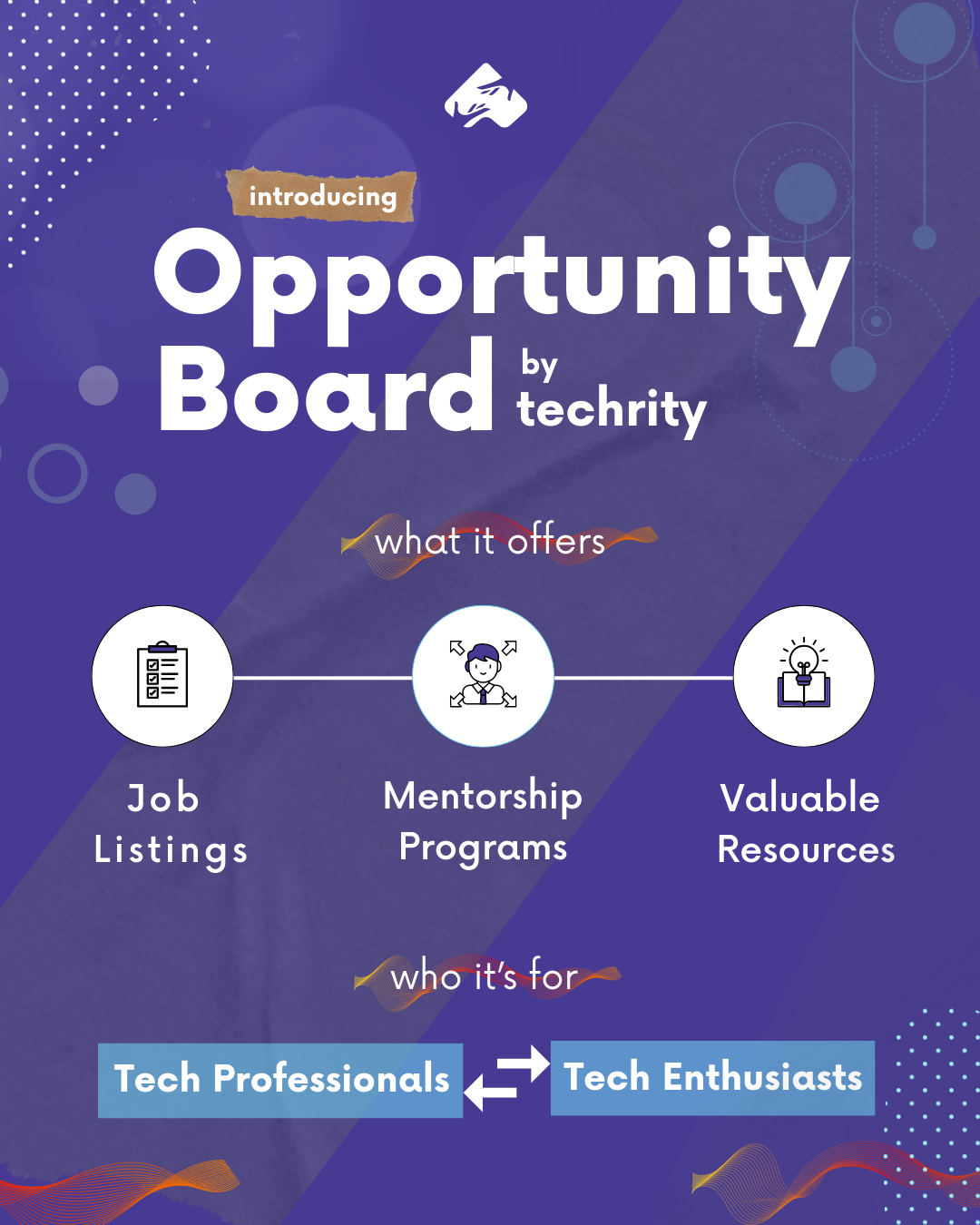
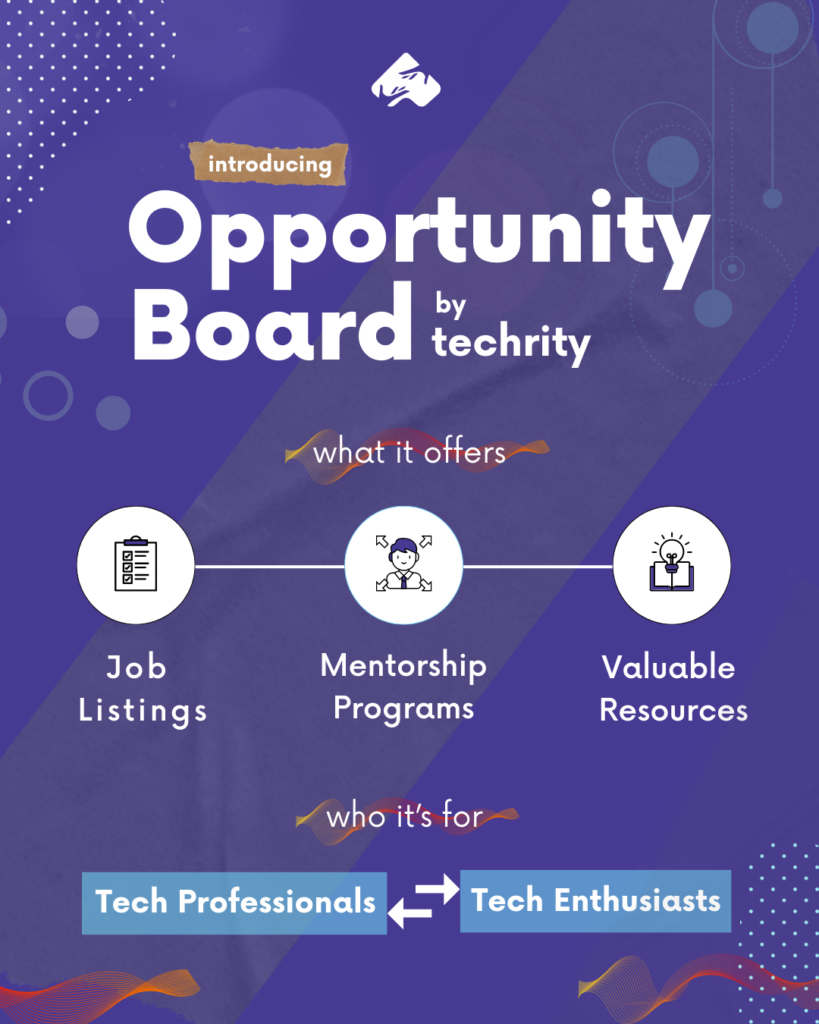
Techrity is stepping up to provide a bold and innovative solution; the Opportunity Board is a platform designed to connect aspiring African professionals with the resources and openings they need to amplify their hard work and talent.

The Opportunity Board will be more than just a job board; it is a home for techies like you and the next generation of professionals to gain access to everything they need to get a job, learn a new tech skill, get data support to enter the tech space, master a tech skill, and digital tools to aid their work.

Connecting Talents with Opportunities

At its core, the Opportunity Board is a vital link between African talent and the global marketplace. It curates a diverse range of opportunities, including:

Job Openings

The board features listings from companies across various tech sectors actively seeking African talent, from entry-level positions to senior management roles.

Internships

Recognizing the importance of practical experience, the platform highlights internship programs that allow students and recent graduates to gain valuable on-the-job training.

Mentorship and Training Programs

To address skills gaps, Techrity partners with leading technical professionals, educational institutions and tech companies to offer guided mentorship training programs, workshops, and certifications that equip individuals with in-demand skills.

Laptop and Data Support

Financial and connectivity constraints can often hinder further learning and training for tech enthusiasts in Africa. The Opportunities Board provides information on how to apply for unlimited access to laptops, grants, and data support from several organizations specifically targeted at African professionals.

Volunteer Opportunities

Get real-world experiences to master your skills with many listings and volunteer opportunities from credible tech companies. These opportunities allow individuals to give back to their communities and make a meaningful impact in the tech space.

Who is This Platform For?

  • Techies looking to compete globally from Africa
  • Motivated and enthusiastic tech talents that do not have access to data to continue learning and mastering a tech skill
  • African tech companies looking to hire the best tech talents in Africa
  • African tech talents looking to practice their skills in a reputable startup through an internship
  • African tech professionals looking for digital work tool support to enable them compete equally.

Empowering You for The Future You Deserve

Beyond simply listing opportunities, Techrity aims to empower individuals with all they need to make informed career decisions. The opportunity board also offers resources such as:

Career Guides

Providing insights into different tech roles, required skills, and career paths.

Salary Benchmarks

Helping individuals understand their market value and negotiate fair compensation.

Company Reviews

Offering insights into company culture and employee experiences

Conclusion

Techrity’s Opportunity Board is transforming tech hiring in Africa by addressing the core challenges faced by job seekers, tech enthusiasts and employers. The platform creates a more efficient and inclusive job market by connecting talents to unseen opportunities and facilitating global job access.

Whether you’re a tech professional seeking your next opportunity, need data support, workplace tools for productivity, or an employer looking for top-tier talent, Techrity’s Opportunity Board is the ideal solution.

It’s a platform to watch and that holds immense promise for unlocking the continent’s vast potential.

Categories
Career advice How-Tos Team Management

How Remote Workers Are Staying Motivated During the Holidays

Christmas, Easter, Salah, National Days, no matter the one, the holiday season can be challenging for freelancers who need to stay productive while the world takes a break. If you are a newbie freelancer experiencing the holiday season for the first time, it can all be overwhelming.

While some established freelancers might have the luxury or freedom to take days off during the holidays, others might not. Imagine having to deal with tasks on Christmas Eve while your family is two rooms away laughing over Home Alone 2 (that is a Christmas classic; no one should be missing that!). 

So how do you, as a remote worker, stay motivated during these festive periods, complete tasks, and still manage to celebrate? This article bares all the tricks to escape “vacation mode.”

First Things First, Should I Be Working During Holidays?

The holiday period allows remote workers to spend more time with family, travel, or focus on that hobby they’ve been ignoring all year. Most freelancers make enough to turn down jobs during this busy time of the year. 

However, people new to their respective niches or industries might not have that luxury. The holiday period presents an opportunity for some to earn extra cash heading into the new year.  

Remember that flexibility is one of the reasons people work remotely. People who work from home can go grocery shopping in between checking off tasks from their holiday jobs. But this has big implications. 

It sometimes encroaches on the work-life balance, and if your client is in a different time zone or simply impatient, you might have a harder time than most. But it is perfectly normal to work during the holidays if you can manage to do so and still keep up with the festivities.

Six Ways To Self-Motivate During the Holidays

Image from Unsplash

For the most part, the holiday spirit and desire to lay in bed all day sets in. You stare at blank screens where codes should be. In the worst-case scenario, instead of feeling the Christmas spirit, you get Christmas blues. How can you stay on top of your goals and complete your tasks? 

1. Redecorate Your Workspace

Holiday decorations add to the feel of the season and the celebration. Most of the time, they kindle joy and happiness for the spirited. Imagine the dopamine rush you could get just by staring at that winter wonderland snow globe. If candles, lights, and paper ornaments are more your style, please use them around your office or directly on your desk. The goal is to add elements of the holiday season that trigger happy thoughts and feelings, keeping you enthusiastic in your home office.

2. Set Up Holiday Schedule

Tis the season of good cheer, but ’tis also the season of busy schedules and, sometimes, marketing budget cuts. If you seek career or business growth during the holidays or are new to remote work, you desperately need a holiday schedule. While this might seem out of character for the traditional nature of what freelance workers are used to, it will do you a world of good. For one, it will help you find that work-life balance and avoid “desk-rotting.” Here are a few tips to set up that EOTY holiday schedule:

  • Prioritize tasks
  • Organize according to deadlines and difficulty
  • Take meal breaks, chore breaks, and family time 
  • Use panner tools

3. Reward Your Milestones and Progress

The concept of self-reward might seem a little difficult for most people but it is a great way to stay highly motivated during the holidays. You are never going to run short of distractions during festive seasons. Even if you live alone, you still need to make visits, jump on personal calls, receive visitors, or make a snack. 

You could factor in walks, snacky treats, half an hour of leisure, or a warm bath as rewards for progress recorded on your tasks. This not only motivates you to do so much more, it also helps you to complete it in record time. You look forward to the next tasks and earn the reward it brings.

4. Open Communication With Clients

Image from Unsplash

It’s easy to get sidetracked and lost in the festivities, and you forget how serious certain projects on your desk are. Keeping an open communication allows for effective two-way conversations during this season concerning assigned tasks. But it makes sense first to communicate the extent of your availability and how frequently they can reach out. This helps all parties involved set and understand clear boundaries but remain flexible.

5. Don’t Ignore Sleep

You cannot expect to maintain high levels of motivation if you are not well-rested. What better time of the year to do so than on the holidays? Sleep is a form of self-care, but it does more than eliminate fatigue. It clears the mind and resets your stress levels. If you don’t get enough sleep during the day because of your work schedule, then night’s rest must be unnegotiable. 

If you are struggling with committing to hours of needed rest, remember that in the long run, this could affect your productivity and concentration. While your busy schedule might not allow you to sleep over long hours, you can keep a regular sleeping and waking schedule. Most freelancers say they make out time for afternoon siestas if they stare at the screen too much.

6. Give Yourself Much-needed Breaks

All work and no play certainly makes Jack a dull freelancer. And all the endless notifications, emails, and irregular distractions can hamper your motivation and productivity. This is why you must give yourself breaks between tasks when you run out of creative juices. 

If you require technology-free timeouts, go for fresh air, meditate a little, or read a few chapters of your current reading list. Taking several short breaks over the day aims to boost your creativity levels and clear your clogged mind.

Conclusion

We are all about surviving these busy schedules while remaining adaptable and flexible. But you need your motivation levels to beat the top and your well-being. With these few tricks and tips, you can stay ahead of your schedules and tasks as you look forward to the new year. Got any more tips for how you are staying motivated these holidays? Share them below!

If you are feeling demotivated this holiday season, join our community at Techrity, where tech and dev professionals work from home and share their experiences.

Categories
Hackathon Mentorship Social Team Management Tech For Good

From Waste to Worth: Revolutionizing Recycling with GreenBounty

Introduction

Did you know that over 2.1 billion tons of waste are produced globally each year, yet only 16% is effectively recycled? This shocking statistic underscores a critical need for innovative solutions in global waste management.

My name is Gold Nse Nseuwem, and together with my incredible team—Nathan-Trust Ekanem (Frontend Developer), Uwakmfon Ekong (Project Manager), and Mercy Vincent (Backend Developer)—we developed GreenBounty during the Techrity Hackathon Challenge 2024. Our mission? To redefine recycling by making it rewarding, accessible, and impactful.

The Problem

In many communities, waste mismanagement remains a persistent challenge. Limited awareness, lack of motivation, and inefficient recycling systems result in:

  • Overflowing landfills
  • Pollution
  • Wasted resources

Without practical and rewarding solutions, people often feel unmotivated to take meaningful steps toward sustainability. This inspired us to create a system that transforms the recycling process into a rewarding habit.

The Solution: GreenBounty

GreenBounty bridges the gap between awareness and action, empowering individuals to turn waste into worth. Our platform makes recycling simple and incentivized.

How It Works:

  1. Collect Waste: Users gather and sort recyclable materials.
  2. Submit Waste: Convenient pickup and drop-off options are provided.
  3. Earn Rewards: Users receive Eco-Coins—a digital currency—for every item recycled.
  4. Redeem Benefits: Eco-Coins can be exchanged for rewards, making recycling both impactful and rewarding.

By encouraging participation, GreenBounty inspires communities to adopt sustainable habits while creating a cleaner, greener planet.

Hackathon Experience

The Techrity Hackathon Challenge 2024 was an exciting, fast-paced journey. As a team, we collaborated, brainstormed, and overcame challenges to bring GreenBounty to life.

Meet the Team:

  • Gold Nse Nseuwem: UI/UX Designer
  • Nathan-Trust Ekanem: Frontend Developer
  • Uwakmfon Ekong: Project Manager
  • Mercy Vincent: Backend Developer

This experience not only strengthened our technical and problem-solving skills but also reinforced the power of teamwork in creating impactful solutions.

Future Development

While GreenBounty has already demonstrated its potential, we envision even greater possibilities:

  1. Enhanced Features: Incorporating analytics to measure individual and community recycling impact.
  2. Global Expansion: Scaling the platform to serve more regions and communities.
  3. Collaborations: Partnering with recycling agencies, businesses, and local governments to enhance accessibility and adoption.

Our ultimate goal is to make recycling engaging, accessible, and impactful for all, creating a global ripple effect of positive change.

Conclusion

GreenBounty is more than a platform—it’s a movement to redefine waste management. By incentivizing recycling, we aim to inspire a culture of responsibility, reward, and sustainability.

Our participation in the Techrity Hackathon Challenge 2024 was a turning point. It allowed us to merge diverse skills and ideas into a unified vision that addresses a pressing problem while encouraging people to take action for a better future.

Let’s turn waste into worth, one step at a time. Together, we can make sustainability rewarding and redefine how the world manages its waste.

Join us in recycling, rewarding, and redefining the future with GreenBounty.

Categories
Hackathon Social Tech For Good

Bridging the Gap in Hiring: The Journey of AssessMe.AI at Hack for Good 2024

Introduction
Hello! I’m Aaditya Srivastava, a Computer Science student specializing in Artificial Intelligence. This year, I had the incredible opportunity to participate in Hack for Good 2024, an esteemed challenge hosted by Techrity. During the event, I introduced AssessMe.AI—a platform aimed at revolutionizing the recruitment and assessment process using AI-driven automation.

The Problem
The hiring process today is fraught with challenges. Companies struggle to attract suitable candidates, ensure fairness, and make data-driven decisions efficiently. These gaps can lead to prolonged hiring cycles, missed opportunities, and even harm to an organization’s reputation.

The Solution: Introducing AssessMe.AI
AssessMe.AI is a comprehensive solution designed to tackle these recruitment challenges. It integrates AI-driven tools to automate, enhance, and simplify hiring workflows for both recruiters and candidates.

Key Features:

  1. Personalized Assessments
    • For Candidates:
      • Curate interview questions tailored to their preparation needs.
      • Conduct AI-powered virtual interviews.
      • Receive detailed feedback and analytics across six key interview parameters.
    • For Recruiters:
      • Host personalized interview assessments.
      • Use virtual AI interviews for unbiased evaluations.
      • Rank candidates based on actionable insights and performance data.
  2. AI Feedback and Analytics
    Candidates gain valuable insights into their strengths and areas for improvement, while recruiters receive a ranked list of candidates to streamline decision-making.
  3. Intuitive User Interface
    The platform ensures a seamless user experience for both recruiters and job seekers through its modern, responsive design.

How It Works

  • Candidate Preparation: Candidates can curate self-interview questions, customize their sessions, and receive feedback based on detailed analytics.
  • Recruiter Assessment: Recruiters can host tailored AI-driven assessments, with results and rankings automatically generated for efficient evaluation.

Technologies Powering AssessMe.AI
To create a robust, user-friendly platform, AssessMe.AI leverages:

  • Next.js & React.js: For fast server-side rendering and responsive UI.
  • TypeScript: Ensuring error-free, maintainable code.
  • TailwindCSS & Shadcn UI: Delivering a sleek, modern design with rapid development capabilities.
  • OpenAI Whisper API: Enabling advanced speech-to-text for accurate transcriptions and analysis.
  • React Flow: For visualizing recruitment workflows with clarity and precision.

Hackathon Experience
Participating in Hack for Good 2024 was both challenging and rewarding. It pushed me to explore new dimensions of problem-solving, including:

  • Enhancing AI prompts to generate precise, JSON-formatted answers.
  • Reducing latency in audio outputs for smoother user interactions.
  • Testing and debugging incrementally proved critical for optimizing algorithms.

Through this experience, I learned that refining code step-by-step significantly improves efficiency. Each hurdle helped me grow as a developer, sharpening my technical and analytical skills.

AssessMe.ai Demo presentation at Hack for Good 2024

AssessMe.ai Demo presentation at Hack for Good 2024

Impact and Future Prospects
AssessMe.AI has the potential to transform the recruitment landscape by:

  • Reducing time-to-hire by up to 50%.
  • Ensuring fairness and improving hiring quality through data-backed decision-making.

Looking ahead, I aim to scale AssessMe.AI globally, tailoring it to meet the unique needs of diverse industries and businesses worldwide.

Conclusion
I am immensely thankful to Techrity for organizing Hack for Good 2024. This platform not only gave me the chance to showcase AssessMe.AI but also offered a space for growth, innovation, and collaboration.

The journey doesn’t end here. I remain committed to enhancing AssessMe.AI—a platform that bridges the gap between candidates and recruiters, making hiring faster, fairer, and more effective.

Thank you for following my story, and I look forward to what the future holds!

Categories
General Software Tech

The Rise Of No-code And Low-code Development

The primary goal of no-code and low-code platforms is to make the building process of software simpler and faster. These tools have been designed to minimize the necessity of extensive coding knowledge by making it quite easy for users to build applications with limited technical knowledge.

Right now, I am going to take you through the difference between No-code and Low-code platforms.

AI generated image

No-code Platforms

No-code platforms are tailored to users who have no programming knowledge. They leverage visual interfaces where users can design and build applications through drag-and-drop functionality. Essentially, no-code platforms abstract away the complexity of programming languages by providing pre-built components that can be assembled into fully functional applications.

No-code platforms allow users to create simple websites and mobile apps to complex business process automation tools and even Customer Relationship Management (CRM) systems. Popular examples include Wix, Bubble, and Airtable.

Low-code Platforms

Low-code platforms target the user who perhaps can understand coding or at least feel comfortable writing a small amount of code. These tools offer more flexibility than no-code options but still greatly reduce how much code needs to be written in application development.

Low-code platforms do support faster development compared to traditional coding; at the same time, they provide an drag-and-drop interface for easy design, while also allowing developers to create custom code for more advanced functionality. Examples of low-code platforms include OutSystems, Mendix, and Microsoft Power Apps.

While no-code platforms are targeted at non-technical users exclusively, in the case of low-code platforms, both technical and non-technical users have a wider scope for complexity and customization with the possibility of rapid development.

Why Are No-code and Low-code Platforms Gaining Popularity?

1. Shortage of Developers: One of the main reasons for the increasing interest in no-code and low-code platforms is the continuous shortage of professional developers. While the demand for tailor-made software and digital solutions grows, it is increasingly hard for businesses to fill in developer positions. According to LinkedIn, there is a huge gap in technological skills, and companies cannot find candidates for software developer positions.

No-code and low-code platforms alleviate this problem by making non-technical resources, popularly known as “citizen developers,” perform the tasks of app development. In other words, no-code and low-code platforms free business teams from the bondage of depending on IT departments or outsourcing agencies to develop applications for their specific needs. This is a big plus for SMBs that cannot afford to have full-time developers on their payrolls.

2. Faster Time-to-Market: In today’s fast-paced business environment, the ability to get products and solutions to market quickly is more important than ever. Traditional development cycles can take months or even years, especially for large-scale projects. No-code and low-code platforms dramatically shorten the development timeline, enabling businesses to create and deploy apps in a fraction of the time.

This speed is particularly valuable for startups and businesses in competitive industries looking to move as fast as possible to stay ahead of the curve. By embracing no-code and low-code platforms, these businesses can iterate and adapt more quickly-testing and refining ideas with minimal risk.

3. Cost Efficiency: Building custom software traditionally involves hiring a team of developers, designers, and project managers. These development projects tend to be expensive, and the costs can easily add up. No-code and low-code development platforms reduce the requirement for large teams, thus cutting down some of the costs related to app development.

No-code and low-code platforms are cost-effective methods for businesses to implement simple applications or develop internal tools. Beyond reduced development costs, the benefits also include lower maintenance expenses, since apps built on such platforms are typically easier to manage and update.

4. Agility and Flexibility: The fast-changing landscape of modern business demands solutions that can be quickly adapted and updated. No-code and low-code platforms offer businesses the agility to make changes in real-time, whether it’s adding new features, fixing bugs, or updating content.

Because these platforms allow users to change and develop applications without having to wait for extensive development cycles, businesses can quickly adapt to market conditions, customer needs, or internal demands. This level of flexibility means that companies can stay competitive, no matter how fast things change.

5. Empowering Non-Technical Users: No-code and low-code development platforms makes it possible for business professionals, marketers, and other employees to be directly involved in contributing to the development process of an application, hence reducing bottlenecks and allowing the business to scale up their operations with no sole dependency on IT.

No-code and low-code platforms provide the tools to the business users to build their own apps. Therefore, it fosters the collaboration of technical and non-technical teams. In turn, all of this builds up a more agile and responsive development process driven by real-world business needs.

Challenges and Considerations

Despite their many advantages, no-code and low-code platforms do not come without challenges and limitations.

  1. Scalability: While no-code and low-code platforms are great for small to medium-sized projects, they’re not always the right solution for enterprise-scale applications. Apps built on these platforms can start to encounter performance issues or struggle to scale with growing demand.
  2. Security and Compliance: All software applications are concerned with security, and no-code and low-code platforms are no exception. While some platforms offer robust security features, they may not meet the same rigorous standards as custom-built applications. For industries with strict compliance requirements (e.g., healthcare, finance), it’s important to thoroughly vet the platform to ensure it adheres to industry regulations.
  3. Limited Customization: Low-code platforms are more customisable than no-code platforms, but low-code platforms can be limited in one way or another. For instance, users may have very specific or complex features that require implementation beyond the capacity of the platform. In such cases, the development process may demand more specialised knowledge or may not be possible at all.
  4. Vendor lock-in: Many of the no-code and low-code platforms are proprietary, meaning the application built on such a platform is often tied to the vendor’s ecosystem. If you ever want to switch to another tool or migrate your app to traditional ways of development, it will be a cumbersome and painful process. To mitigate this risk, businesses should carefully evaluate platform options and consider long-term scalability before fully committing to a particular tool.

The Future of No-code and Low-code Development

The future of no-code and low-code development looks very bright. As these platforms continue to evolve, they will get much more powerful, flexible, and user-friendly. With the improvements in artificial intelligence (AI) and machine learning (ML), we are bound to see no-code and low-code platforms embed much more intelligent automation for much faster and more efficient development.

Moreover, as demand for software applications widens among various industries, no-code and low-code development platforms are positioned to further become highly instrumental in supporting business growth and innovation without requiring large teams of developers.

In the next few years, the future for no-code and low-code tools is probably in addition to usage by citizen developers, integration in enterprise software systems that will allow for hybrid development approaches whereby business teams will develop alongside IT professionals to create such powerful applications.

Conclusively, no-code and low-code platforms provide something for everyone-from entrepreneurs trying to develop their first app, corporate professionals who want to automate some process, all the way to a developer trying to get faster development lifecycles. Understanding the advantages, challenges, and future potential of these platforms gives companies the capability to leverage them to the fullest and shapes the path towards more agile and innovative software development.

Categories
General

Building Inclusive Tech: Why Designing Digital Tools for Underserved Communities is Important

Photo from Unsplash

Some decades ago, you needed different box-shaped bulky devices to listen to the news, listen to music, see a film, or even tell the weather. Today, with your handheld mobile phone and the Internet, you can reach billions of people and web pages while instantly networking with thousands.

In 2024, approximately 4.8 billion people, or 60.42% of the world’s population, will be smartphone users. This shows that the human race has undergone tremendous growth and change with the advancement of new digital tools and technologies. 

Despite these strides, regions without access to digital tools or limited traditional services and infrastructures are still disadvantaged.

The solution? 

This article contains that and more, including an explanation of underserved/marginalized communities and how to provide equitable access to the tech and digital tools they require.

Let’s go!

What are Undeserved or Marginalized Communities?

The concept of marginalization stems from a familiar word: margin.

Think of a sheet of a notebook. The margins are usually the extreme sides of the paper where you get to write numbers. 

The margins of the paper are very small and restricted away from the middle compared to the rest of the paper. With this in mind, we can deduce that marginalized communities are isolated, disempowered, or treated as insignificant relative to the rest. 

These underserved communities are victims of power and economic imbalances, making them susceptible to discrimination and neglect. In the modern society, access to digital tools are either restricted or nearly impossible for such communities. For instance, in India, 650 million people are without internet connection, making it the largest populace of individuals lacking internet connection in 2024.

Photo from Unsplash

In Africa, 87.4% of Burundi’s teeming population lives without internet access. The story isn’t much different in Nigeria. Despite recent positive internet penetration trends, 120 million Nigerians have zero access to mobile internet.

Citing just internet penetration, we can paint a picture of how millions of people from underserved communities will never benefit from certain technological improvements or digital tools like smartphones, the internet, fintech, and digital medical care. 

Marginalized and underserved societies are common in developing nations where millions live below the poverty line. These societies face several barriers and disadvantages, including:

  • Very limited financial infrastructure
  • Poor and slow infrastructural development
  • Poor educational resource
  • Geographical isolation

These factors have possibly accounted for growth stagnation or poor access to innovative digital solutions that could change lives. The global digital economy itself has few restrictions on entry. 

A teenager in the USA could sit in their room hunched over their laptop writing codes for companies or running cyber security services remotely. In an hour’s work, such a privileged teen can earn the yearly earnings of another teenager’s family of five from a disadvantaged community.

The difference?

Access to tech and digital tools at an early age.

But if traditional services and infrastructure have been historically non-existent, what then? 

Inclusive Digital Tools: Definition and Key Characteristics

Photo from Unsplash

Inclusive technology is any digital tool built to offer users equal access to key services and essential infrastructures despite their background or standing in the digital economy.

Without adequate infrastructure that stagnates underserved communities, individuals and well-meaning tech NGOs can bridge this digital divide gap. One of the foremost ways to do so is by providing transformative but inclusive digital tools and promoting digital inclusion campaigns.

These tech or tools foster digital inclusion ,which is simply the unrestricted use of Information and Communication Technology (ICT) by a populace irrespective of:

  • Age 
  • Ethnicity or race
  • Gender 
  • Cognitive ability
  • Socio-economic background 
  • Mobility 
  • Nationality 

Characteristics of Inclusive Digital Tools

Digital inclusion campaigns typically offer digital literacy training, access to the internet, online infrastructures, inclusive technology software, and hardware. For a tool to be considered inclusive, it should meet these criteria:

  • Affordable: Inclusive digital tools must be priced so that low-income or financially disadvantaged users can afford them. Subsidies or differently priced models should be available if possible.
  • Accessible: In addition to being affordable, inclusive digital tools should be easy to use, regardless of the user’s disability or level of education or literacy.
  • Versatility and Interoperability: The ability to function with different platforms and systems while offering variety marks a inclusive digital tool.
  • User-focused: An inclusive digital tool must be designed with user-centricity in mind. From design to manufacture to installation and use, these tools must meet the target user’s needs.
  • Wide Reach: Another mark of digital inclusive tech is its ability to reach large numbers of people with ease and precision while maintaining efficient scalability. 
  • Technical Support: Whether it’s multilingual options or the chance to speak to a skilled professional about existing issues, inclusive tools must have sound technical support so users can successfully and confidently utilize them. 

How Techrity is Bridging the Digital Divide

Techrity is one of Africa’s budding digital inclusion champions, serving underserved communities. When asked why we aspire to a digitally inclusive continent, we say, “Why not?”

Our society has many economic, political, and historical barriers. Nonetheless, through our mentorship programs and Tech For Good initiative, we foster fairness and equity while tearing down structural barriers. 

Techrity

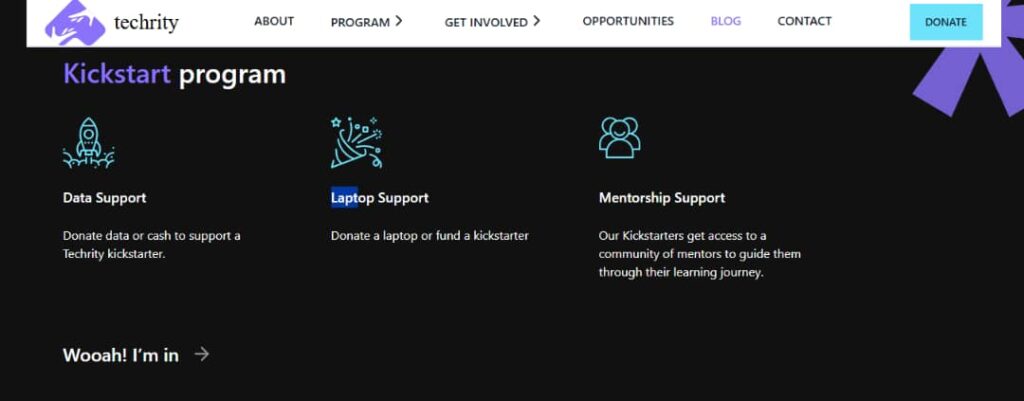
One of the long term missions of Techrity is to onboard disadvantaged newbies in the tech scene with as little confusion and stress as possible. We do this through our effective Kickstart Program:

  • Data Support
  • Laptop Support
  • Mentorship

With this three-fold assistance towards the fight against digital inequity, we are ensuring that thousands of individuals gain needed IT skills, allowing underserved communities actively participate in the digital economy, and boost financial independence and employability!

You can be a part of this unique quest for change by donating here in a few easy steps or by joining our community.

Categories
Career advice

How To Negotiate For A Better Salary

Negotiating a salary can be daunting, especially for tech professionals. However, it’s a crucial skill that can significantly impact your career and financial well-being. This guide provides tips and strategies to help you navigate the process confidently and effectively.

1. Know Your Worth

Do your homework. Check out websites like Glassdoor, Jobberman, and LinkedIn Salary Insights to see what people with similar roles and experience are making. Remember, your tech skills are valuable, so don’t be afraid to leverage them.

2. Focus On Total Compensation

Other than how much your monthly paycheck is, considering the total compensation like bonuses, retirement contributions, health benefits, and more should not be overlooked. And don’t forget about those non-monetary perks like flexible work hours, remote options, and professional development. These can make a big difference in your overall job satisfaction.

3. Timing Matters

Avoid bringing up salary too early in the interview process. Let the employer initiate the conversation, usually after they offer you the job. If they ask about your salary expectations early on, be strategic. You can say you’re open to discussing it once you know more about the role, or give a general range.

4. Be Prepared

Be prepared to make a case for yourself on why you are worth your desired salary. Highlight your relevant experience, key accomplishments, and technical skills. Quantify your contributions whenever possible. For example, if you developed a software application that saved the company time or money, be sure to mention that.

5. Don’t Be Afraid To Counteroffer

If the initial offer isn’t what you were hoping for, don’t be afraid to negotiate. Be specific about what you’re asking for and why. Justify your request based on your market research and your contributions to the company.

6. Know Your Walk-away Point

Before you go into the negotiation, decide on the minimum offer you’re willing to accept. If the offer doesn’t meet your expectations, be prepared to walk away.

7. Consider Long-term Impact

Think about the potential for salary increases, promotions, and bonuses in the future. A company that invests in your career growth is more likely to offer competitive compensation.

8. Document Everything

Once you’ve reached an agreement, make sure it’s in writing. This includes salary, benefits, and any other negotiated terms. A written contract protects both you and the employer.

Remember, negotiating your salary is a skill. It’s about understanding your worth, being prepared, and advocating for yourself. By following these tips, you can increase your chances of getting the compensation you deserve.

Categories
Career advice General

Transitioning Into Tech; What They Never Tell You

Let’s face it, we’ve all dreamt of that lightning-fast transition into tech: conquering a course in six months, landing a high-paying role, and living the dollar dream. But for most of us (including you, newbie!), that fantasy fades fast.

This article isn’t here to frighten you, but to equip you for the real journey. Here’s what you need to know:

Learning Never Stops – Tech is an innovation powerhouse with new tools and trends. As a techie, it would be compulsory for you to be constantly learning, investing time and money in courses, conferences, and staying updated on the latest advancements.

Soft Skills are Superpowers – Don’t underestimate the power of communication, teamwork, and problem-solving. These “soft skills” are gold in the tech industry. They’ll shine through interviews, project presentations, and everyday collaboration.

Imposter Syndrome is Common – Tech can make anyone feel like a beginner, even seasoned pros. This “imposter syndrome” is normal! Remember, everyone feels the self-doubt. Don’t be afraid to ask for help and leverage the next tip.

Find Your Tech Mentor – A mentor is your secret weapon, especially early on. They’ve been there, felt the imposter syndrome, and can offer guidance and perspective. Feeling stuck? They’ll be your cheerleader and help you combat negative self-talk. (Pssst! Techrity is launching a free mentorship program, TMP 4.0 – check it out!)

Embrace the Setback – Social media might portray a world of instant tech success, but the reality is filled with bumps and roadblocks. See these setbacks as learning opportunities, not failures. They’ll shape you into a stronger, more resilient tech professional.

The tech journey is a marathon, not a sprint. It’s about continuous learning, adapting to change, and bouncing back from challenges. While the initial expectations might shift, understanding these realities is crucial for long-term success and fulfillment in this exciting field. So ditch the six-month dream, embrace the lifelong adventure, and get ready to win.